 Society
Vietnamese Prime Minister meets Cambodian National Assembly President
1.
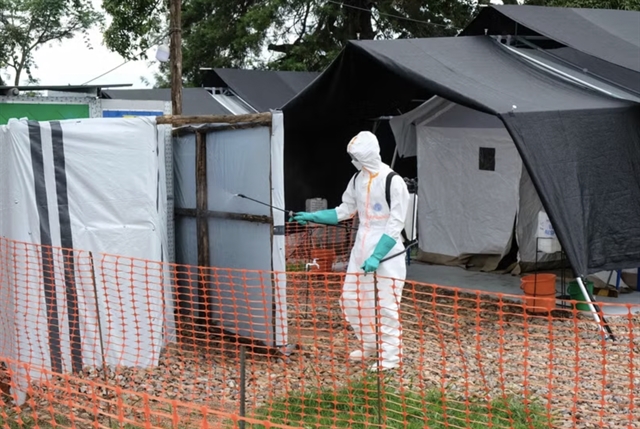 |
| Spray disinfectant to prevent the spread of disease. —VNA/VNS Photo |
HÀ NỘI — The Ministry of Health has issued an updated protocol for the diagnosis and treatment of diseases caused by Ebola virus in the context of the complex developments of Ebola epidemic in Africa and the risk of it spreading to Việt Nam.
The protocol has many new and important points aiming at enhancing early detection, treatment and control of the epidemic.
The new guidelines supplement and adjust the legal basis to conform with current regulations, add information about the causative agent and fully update all six Ebola virus strains, including the Bombali ebolavirus strain discovered in 2018.
Furthermore, the guidelines emphasise that the Zaire strain is currently the only one for which a vaccine and specific treatment are available.
Regarding the expansion of testing methods, the new guidelines add virus detection techniques such as rapid antigen/antibody tests for screening, identify RT-PCR as the gold standard in diagnosis, and update the gene sequencing method.
The standards for diagnosing suspected cases are also tightened.
Accordingly, the diagnostic criteria for suspected cases have been more clearly quantified that patients must have a fever of 38 degrees Celsus or higher, accompanied by at least one specific symptom, and have had an epidemiological risk factor within the past 21 days.
The updated guidelines include supportive treatment measures such as nutrition and psychological care for patients; special attention is paid to monitoring high-risk groups such as the elderly, children, and immunocompromised individuals.
In addition, for the first time, monoclonal antibody drugs such as INMAZEB and EBANGA are added for use against the Zaire strain. According to the guidelines, there are no contraindications, as the risk of death from the disease outweighs the risk of side effects from the drugs.
The professional guidelines also include the Ervebo vaccine (rVSV-ZEBOV), which has been approved by the FDA and WHO since 2019, for the prevention of the Zaire strain.
The new guidelines impose stricter regulations for close contacts such as breastfeeding, blood donation, tissue donation, organ donation, or semen donation are prohibited within 21 days of the last contact.
Hospitals and health care facilities must inform to Centre for Disease Control (CDC) in the localities the infected cases for continuous supervision of patients after being treated.
The handling of corpses must be carried out by cremation as stipulated in Circular No 21/2021/TT-BYT on the management of Group A infectious diseases.
According to the Ministry of Health, the issuance of the 2026 guidelines is of strategic significance, not only improving the capacity for early detection, accurate diagnosis, and increased survival rates for patients, but also ensuring maximum safety for healthcare workers and the community.
This is also seen as a step affirming the integration capacity and proactive approach of the Vietnamese health sector in the face of global health security challenges.
The ministry said that it will continue to closely monitor the developments of dangerous infectious diseases worldwide, and also requested the departments of health, central-level hospitals, and medical examination and treatment facilities nation-wide to urgently disseminate, train, and prepare for the implementation of the new professional guidelines.
On May 17, WHO declared the Ebola outbreak caused by the Bundibugyo strain in Congo and Uganda a public health emergency of international concern. — VNS
Society
 Society
 Society
 Society
 Society
 Society
 Society
 Society
 Society
 Society
 Society
 Society
 Society
 Society
 Society