 Society

VN-Index ends lower despite liquidity hit over $1 billion
1.
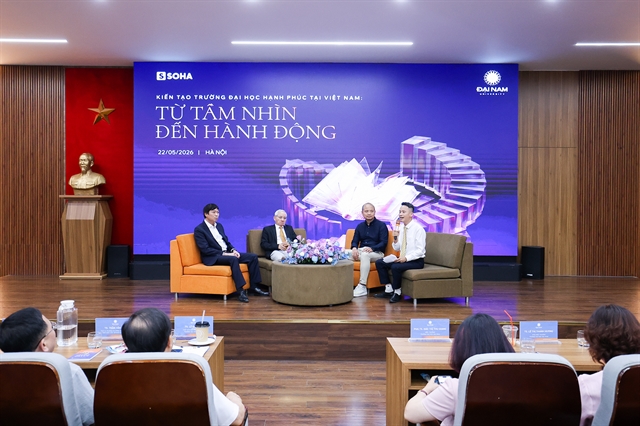 |
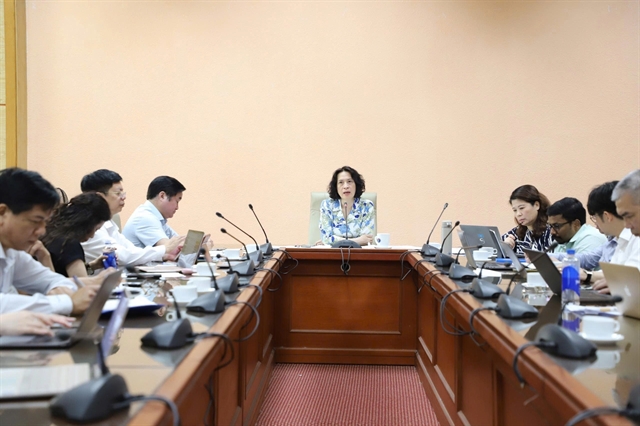
| A panel discussion as part of the seminar on creating happy universities in Việt Nam in Hà Nội on May 22. — Photo courtesy of the organiser |
HÀ NỘI — Đại Nam University and online news portal Soha.vn jointly organised a seminar, themed 'Creating happy universities in Việt Nam: From Vision to Action'.
Speaking at the seminar in Hà Nội on May 22, Bùi Ngọc Hải, Director of Soha.vn, said that the story of a 'happy university;' was not only an educational issue, but also a story of human development for the entire nation.
Hải said that in recent years, higher education has made significant strides to improve student satisfaction and happiness, but given the fierce competition in the labour market as AI develops daily, universities still have much work to do.
Hải said that this insecurity is a common situation for many young people today – those who have more opportunities than previous generations, but also face more pressure and uncertainty than ever before.
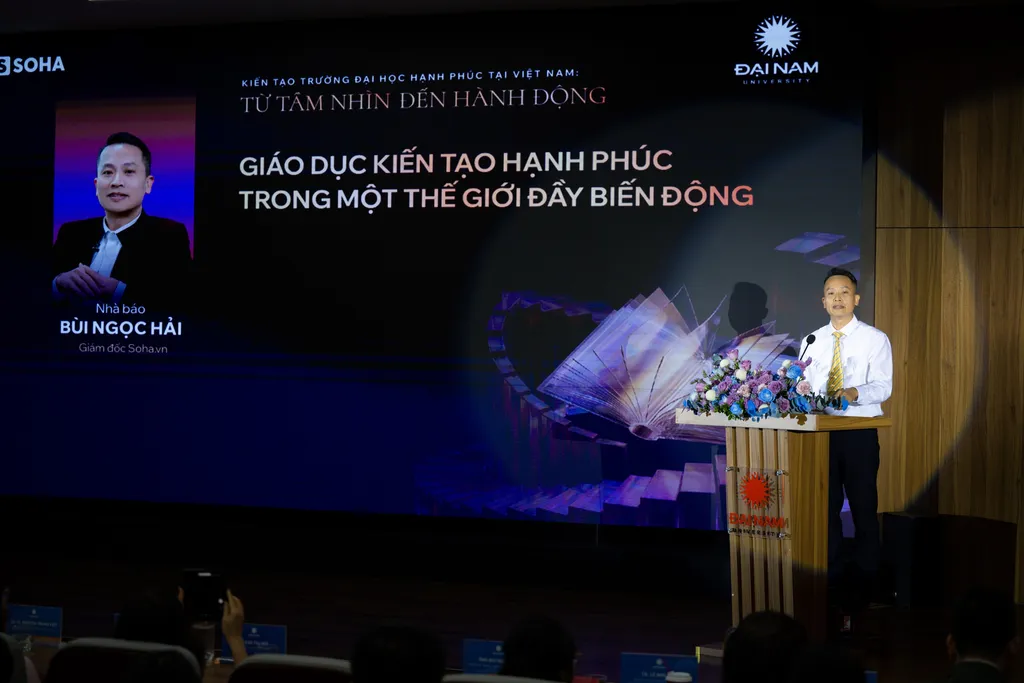 |
| Bùi Ngọc Hải, Director of Soha.vn, speaks at the seminar. — Photo courtesy of the organiser |
A recent survey conducted by Soha.vn revealed that more than 33 per cent of the 9,200 students surveyed at 10 universities said they were hesitant or wanted to change majors if given the choice again.
Nearly 20 per cent of students were not really proud of the school they were attending, while 15 per cent of students lacked confidence in their career opportunities after graduation.
At the event, education experts and administrators shared the view that a happy university is not a place that tries to 'please' students at all costs, nor is it an environment that eliminates pressure. Instead, happiness should be built on a foundation of genuine competence and the ability to adapt to life.
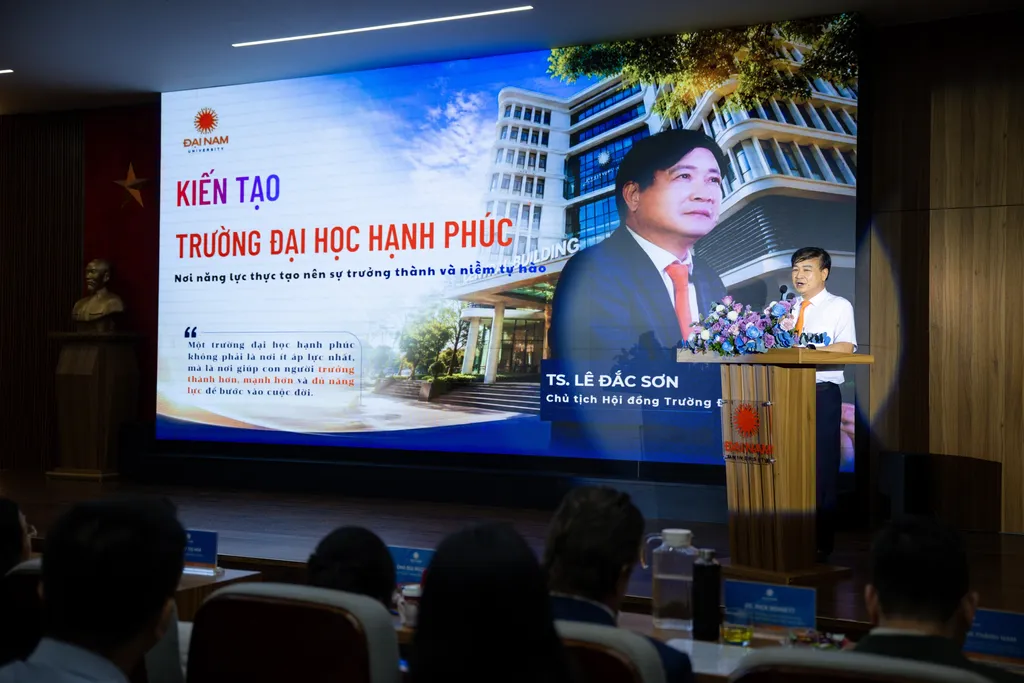 |
| Dr Lê Đắc Sơn, Chairman of the Board of Directors of Đại Nam University, speaks at the seminar. — Photo courtesy of the organiser |
Dr Lê Đắc Sơn, Chairman of the Board of Directors of Đại Nam University, said that pressure is not always negative. The important thing is whether students receive the support to overcome pressure and grow.
"Happiness is not about comfort. Happiness is about strong growth. A weak student cannot have a happy life," Dr. Sơn said.
Based on the practical implementation of the output-based education model, the application of AI, and the philosophy of 'supportive discipline' at Đại Nam University, Dr. Sơn believed that higher education needs to help students develop practical skills instead of just chasing after superficial achievements.
From the perspective of changes in the labour market in the age of AI, many experts believe that higher education needs a radical shift in both its training philosophy and its assessment of student capabilities.
Professor Rick Bennett, Vice-Chancellor and Vice-President of the British University Vietnam, said that higher education needs to move from a quantity-focused mindset to building "substantive quality and international trust."
What matters is not just rankings or accreditation, but whether the university truly helps students develop the skills, adaptability and confidence to enter a rapidly changing world, according to Professor Bennett.
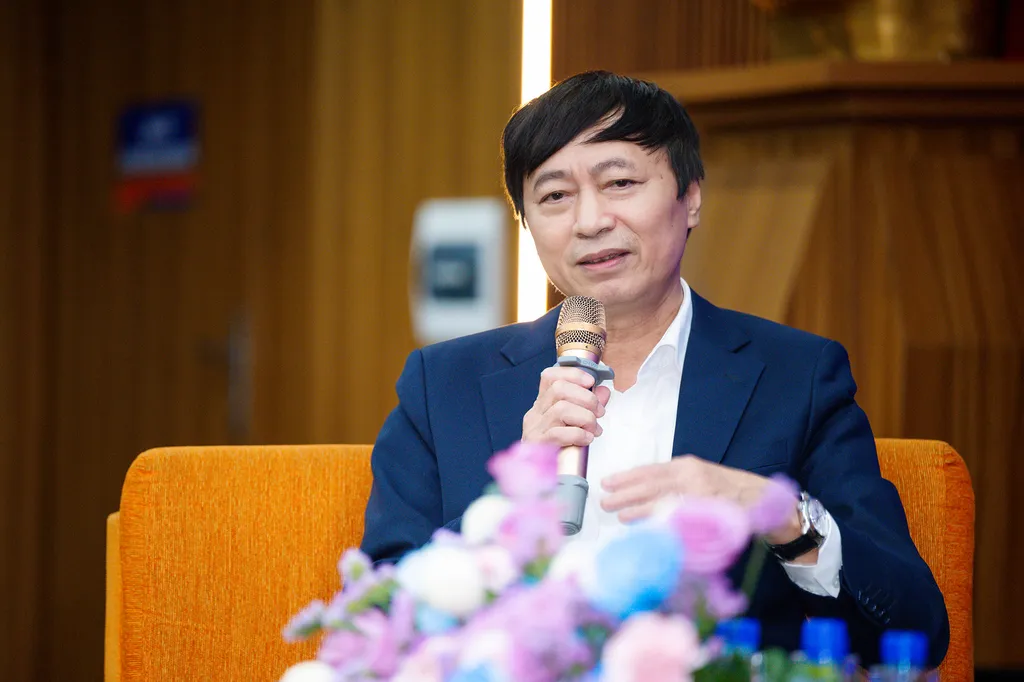 |
| Professor Nguyễn Văn Nội, Chairman of the Vietnam Association of Laboratories, speaks at the seminar. — Photo courtesy of the organiser |
Professor Nguyễn Văn Nội, Chairman of the Vietnam Association of Laboratories and former head of the Faculty of Science, Vietnam National University, Hà Nội, said that students need to be equipped with a solid foundation of critical thinking skills to enable them to learn independently and adapt to diverse environments, while also applying academic thinking to solve practical problems. Therefore, successful universities must play a connecting role between academia and the practical needs of the labour market.
Associate Professor Trần Thành Nam, Vice Rector of the University of Education, Vietnam National University, Hà Nội, also emphasised the role of personal resilience, mental health and adaptability in the age of AI.
“Higher education cannot simply focus on imparting knowledge. It needs to help learners develop self-learning abilities, psychological resilience and lifelong learning capacity,” Nam said.
Meanwhile, Professor Nguyễn Hữu Ninh, Chairman of the Management Board of the Centre for Environmental Research, Education and Development, said that in the 21st century, the greatest value of education no longer lies in memorising knowledge but in the ability to learn new things, work with AI and adapt to change.
“A good university not only produces people capable of adapting to the future but also preserves their character, creativity and happiness,” Ninh said. — VNS
Society
 Society
 Society
 Society
 Society
 Society
 Society
 Society
 Society
 Society
 Society
 Society
 Society
 Society
 Society