 Society

HCM City tops national Chinese chess championship in Bắc Ninh
1.
|
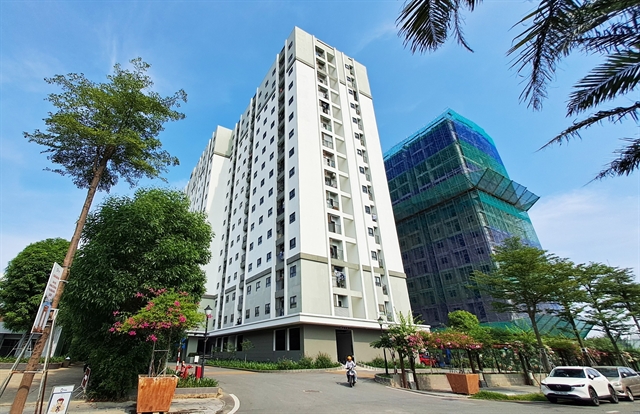
| A social housing complex under development at Eco Garden Urban Area in the central city of Huế. — VNA/VNS Photo Nguyên Lý |
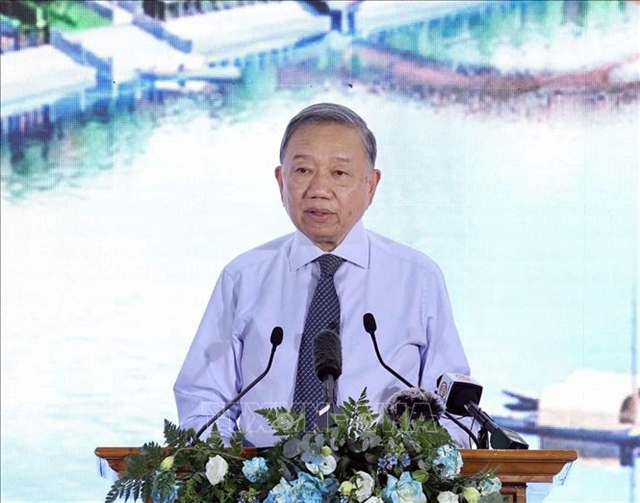
HÀ NỘI — Party General Secretary and State President Tô Lâm has stressed that the right to legal housing is a fundamental right of citizens, describing access to safe and affordable housing as a measure of social progress and a foundation for stable, sustainable development and stronger public trust.
The statement is part of an official conclusion from the office of the Party Central Committee, following a working session between the top leader, the Government Party Committee and relevant departments on the implementation of Directive 34-CT/TW on social housing development.
At the meeting, Lâm noted that in line with the directive, the National Assembly (NA), Government, ministries, sectors and localities had made efforts to improve institutions and policies, simplify investment and construction procedures, expand beneficiaries and ensure progress on the plan to build at least one million social housing units.
Authorities had also largely established a housing supply system that operates on market mechanisms and at the same time removed obstacles to housing development, helping reshape urban areas, improve living standards and support related sectors.
However, shortcomings remained in both social and general housing development. Affordable housing for middle- and low-income groups had not received adequate attention, while the supply of social housing remained insufficient and unevenly distributed.
Many projects lacked connections to essential social infrastructure, and land planning for social housing had not been well aligned with areas that have large concentrations of workers. Housing developers often lacked incentives to invest in social or affordable housing for low-income earners, while the market remained heavily skewed toward homeownership, despite strong demand among workers for reasonably priced rental housing.
The conclusion issued after the meeting outlined key orientations for housing development in the next few years, the first being upholding the principle that access to legal housing is a basic right, and that affordable, safe housing reflects social progress.
Housing development should form an important part of urban and rural planning strategies, contributing to social welfare, urban and rural security, labour productivity and a healthy real estate market. The State will maintain housing policies aimed at ensuring housing for all of the population.
The second orientation emphasised that housing should continue to develop under market mechanisms with effective State orientation and management. While the State will not provide total subsidy, it will act as an enabler through institutions, policies and planning to ensure transparent market development, reasonable profits for developers and stable, affordable housing access for residents.
Alongside homes for sale, greater priority should be given to rental housing, particularly in major urban centres, industrial parks and economic zones, the conclusion also stressed. Housing development should be integrated with urban and land-use planning, industrial development, public transport, labour markets and population management.
The Government Party Committee was tasked with developing land, credit and other policies to accelerate the affordable rental housing market and attract private sector participation. Localities were instructed to review land funds, align housing plans with technical and social infrastructure, and prepare cleared land for rental housing development.
Lâm also called for stricter, more transparent oversight of housing support beneficiaries to prevent policy abuse, while encouraging wider use of digital technologies and data in housing and real estate management.
In addition, the Government Party Committee was assigned to review the implementation of Directive 34 and develop new housing policies aligned with the Constitution, Party guidelines and public demand, including proposed amendments to the Law on Housing and Law on Real Estate Business for submission to the NA later this year.
New direction
Commenting on the new direction, Dr Nguyễn Đức Kiên, former head of the Prime Minister’s economic advisory group, said the most important goal over the next decade would be to ensure stable housing for citizens.
This shift in thinking would significantly reshape legal frameworks to support the development of affordable urban areas with integrated public infrastructure. In responding to genuine residential demand, the State would play a leading role by allocating cleared land to developers to reduce construction costs, while also taking greater responsibility for surrounding infrastructure such as schools, health stations and recreational facilities.
“With the goal of achieving double-digit growth, the State budget should be able to meet social housing demands. Public debt currently stands at around 34 per cent of GDP, meaning there is still room to increase borrowing to support real estate development and ensure stable housing for citizens,” Kiên said.
According to the Ministry of Construction, more than 158,700 social housing units must be completed in 2026 alone. In the first four months of the year, construction began on 40 new projects totalling 36,590 units. More than 5,400 units were completed, equivalent to about 3 per cent of the annual target.
On financing, real estate credit currently accounts for around 25 per cent of total outstanding loans in the commercial banking system, but lending for social housing remains indistinct from financing for commercial housing, according to Kiên's observation.
In addition to land availability, access to capital and interest rates are key to unlocking the market. However, a major bottleneck lies in the perception that housing loan interest rates must remain fixed at 6.5 per cent.
The Government’s direction should keep housing loan interest rates at 2-3 percentage points lower than market rates, Kiên said. For example, rates should remain at around 9 per cent instead of a typical 12 per cent annual rate.
“Commercial banks should have the autonomy to determine lending rates based on profitability, cost reductions through digital transformation and borrowers’ credit scores,” he explained.
As for rental housing, vice chairman of the Việt Nam National Real Estate Association Nguyễn Văn Đính said that unlike homes built for sale, rental housing would require long-term capital recovery. This means a comprehensive policy framework and clear responsibilities for local authorities and developers would be essential.
In addition to the State’s guiding role, more attractive credit mechanisms, such as long-term loans and stable interest rates, would be needed to encourage private investment in rental housing.
With labour mobility between cities increasing, proximity to workplaces had made renting a more practical option.
The average price for a new apartment in both Hà Nội and HCM City had surpassed VNĐ100 million (US$3,800) per square metre, far beyond the reach of many residents.
In this context, developing rental housing and expanding the supply of quality housing could become a key strategy to improve housing access and help stabilise real estate prices. — VNS
Society
 Society
 Society
 Society
 Society
 Society
 Society
 Society
 Society
 Society
 Society
 Society
 Society
 Society
 Society