 Society
European higher education week opens new opportunities
1.
|
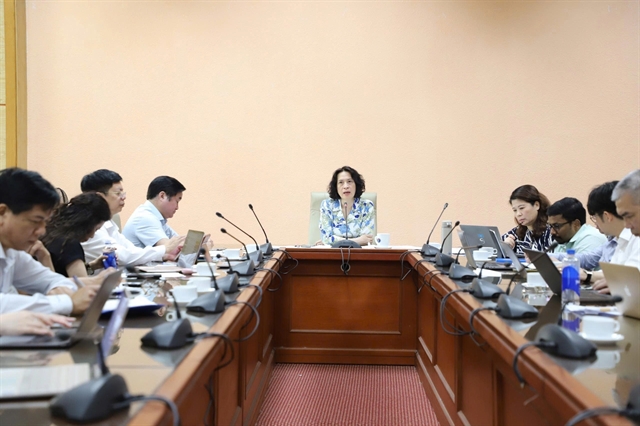
| Ministry of Health holds an online meeting on Ebola surveillance and prevention amid escalating outbreaks in the Democratic Republic of the Congo and Uganda. — VNA/VNS Photo |
HÀ NỘI — Ministry of Health has issued an urgent directive to hospitals and local health departments to step up Ebola prevention and control amid fears the virus could enter the country.
Facilities are told to screen arrivals from countries with outbreaks within the last 21 days, tighten infection control, and swiftly triage and isolate all suspected or confirmed cases.
The ministry urges continuous monitoring of the global situation and clear public communication to prevent panic and promote protective measures.
Health facilities must detect suspected cases early, isolate them, and coordinate with preventive units for testing, diagnosis and treatment under ministry guidelines.
Hospitals are asked to review stocks of protective gear, ensure isolation capacity, and bolster diagnostic and treatment readiness.
Ebola is a severe acute infectious disease, often with hemorrhagic symptoms and multi-organ failure. Fatality can reach 90 per cent.
Transmission occurs via direct contact with tissues, blood or bodily fluids of infected animals or humans, and through contaminated items such as clothing, bedding or used needles.
As of May 21, there were 85 confirmed cases in the Democratic Republic of Congo and Uganda, including two in Uganda and 10 confirmed deaths, said Angela Pratt, WHO’s representative in Việt Nam.
The DRC also reported 746 suspected cases and 176 suspected deaths, including health workers. The true scale may be larger due to delayed detection, she said.
WHO rates the outbreak risk as very high at national level in the DRC and Uganda, high across Africa, and low globally, including for Việt Nam.
WHO and partners are focusing on faster surveillance and case detection, contact tracing and infection prevention, expanded isolation and treatment capacity, stronger community engagement and cross-border coordination. — VNS
Society
 Society
 Society
 Society
 Society
 Society
 Society
 Society
 Society
 Society
 Society
 Society
 Society
 Society
 Society