 Opinion

Vietnamese Prime Minister meets Cambodian National Assembly President
1.
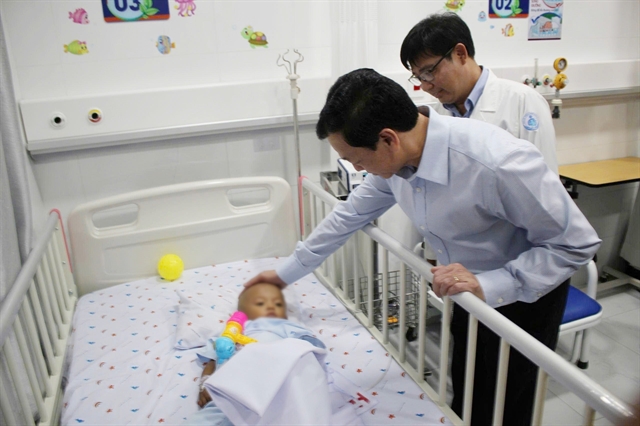 |
| Deputy Minister Nguyễn Tri Thức visits a two-year-old patient who was brutally abused at Children's Hospital 1 in HCM City. — VNA/VNS Photo |
By Nguyễn Hằng
The grief is overwhelming, and so too is the anger.
That is exactly how I felt after reading reports of two horrific cases of child abuse over the past few days.
Many others have shared the same sense of outrage and heartbreak.
Child abuse is not a new issue. Yet with every new case, the grief feels painfully fresh.
As I read the reports, countless questions ran through my mind. Why must such small and vulnerable children, who should be growing up surrounded by love and protection, endure such cruelty at the hands of their own family members? And what concrete actions must all of us take to prevent similar tragedies from happening again?
The first case occurred in HCM City on May 2, when a two-year-old boy was brutally abused by his mother and her partner in Hòa Hiệp Commune. The child’s heart-rending cries prompted neighbours to alert the police immediately, allowing officers to intervene and rush him to hospital.
According to doctors at Children’s Hospital 1, the boy was admitted in critical condition, suffering respiratory failure, shock and multiple traumatic injuries. He remained in intensive care for nearly 24 hours before being transferred to the General Surgery Department for further treatment and close monitoring.
Doctors found severe injuries, including Grade 2 liver trauma, Grade 2 spleen trauma, Grade 3 pancreatic trauma, Grade 1 kidney trauma, bilateral lung contusions, fractures to his right upper and lower arm, along with numerous signs suggesting prolonged abuse.
The second case occurred in Phú Diễn Ward in Hà Nội on May 3, when a four-year-old girl was beaten to death by her mother and her mother’s partner.
According to investigators, the girl’s mother, Bàn Thị Tâm, and her partner, Nguyễn Minh Hiệp, returned home and saw the child preparing to eat some sweets. Believing she had been sneaking food, Tâm repeatedly struck the girl in the head and face with a slipper.
After the beating, Tâm forced the child to stand in the corner of the house. When the child urinated right there, Tâm slapped her again before ordering her to take a shower.
While the child was in the bathroom, Hiệp reportedly became angry after seeing her playing around. He allegedly pinned the girl’s cheeks tightly between his feet and continuously sprayed water from a shower hose into her mouth and nose. Tâm reportedly witnessed the abuse but walked away without intervening.
When the child stopped screaming and struggling, Hiệp left the bathroom. The girl was later rushed to Hospital E, where she died. Police said both suspects admitted to frequently abusing and beating the child, and at times depriving her of food for several days.
Lack of education for parents
In my view, one of the root causes lies in the fact that many parents simply do not know how to be parents.
They may not fully understand children’s rights, nor the conditions necessary for healthy child development.
Only when parents truly understand these issues can they raise children properly and respond appropriately to the challenges and situations that arise during parenting.
Parents need to understand how children think and feel. Only then can we genuinely address the issue of saying no to violence for children, both physical and emotional.
In reality, efforts in this direction already exist.
Since April 2023, the United Nations Children’s Fund (UNICEF) in Việt Nam, in collaboration with the Ministry of Labour, Invalids and Social Affairs and other partners, launched an online parenting course aimed at promoting holistic early childhood development through improved parenting knowledge, skills and positive caregiving practices.
Developed by leading Vietnamese experts in child development, the free course includes a wide range of lessons on caring for children aged 0-8, using creative visual materials and practical scenarios that reflect the everyday challenges faced by parents. Parents wishing to participate can access the programme via https://hoctructuyen.tongdai111.vn/ .
However, encouragement alone is not enough.
There should be clearer and more specific regulations requiring parents to undertake parenting education when raising children, particularly for divorced couples.
In the US, family law places strong emphasis on protecting children during divorce proceedings through strict regulations governing custody, parental responsibilities and mandatory parenting courses.
Many US states require parents to complete 'Parent Education and Family Stabilisation' courses to help ensure children continue to receive proper care and emotional support after their parents separate.
Shortage of child protection personnel
Việt Nam has relatively comprehensive child protection laws, including the 2016 Law on Children and the 2022 Law on Domestic Violence Prevention and Control, which provide special protection for children under 16 against abuse and neglect.
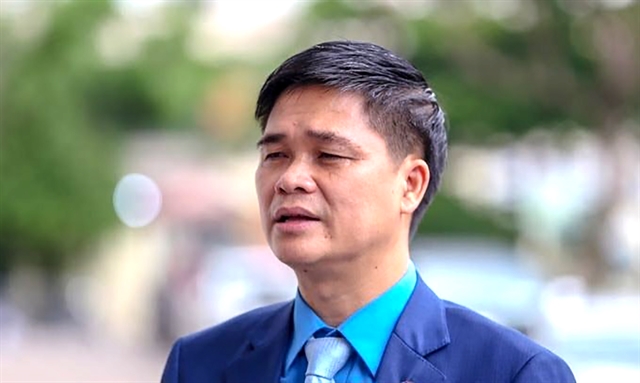
Đặng Hoa Nam, former head of the Department of Children Affairs, said the biggest weakness lies not in the legal framework itself, but in early detection and personnel shortages at the local level.
Under the law, each commune is required to appoint a child protection officer responsible for monitoring high-risk families and intervening when necessary. In practice, however, these duties are often assigned to labour and social affairs officials already burdened with multiple responsibilities.
Nam said child protection requires specialised training, time and close community engagement, particularly to detect early signs of abuse and coordinate with police, health care providers and social organisations.
Yet many officials assigned to the role lack formal social work training and face overwhelming workloads, meaning abuse cases are often discovered only after children have suffered severe injuries or even died.
By then, although offenders may face strict punishment, the harm done to the child cannot be reversed.
What needs to be done
Deputy Minister of Health Nguyễn Tri Thức said child abuse remains a major social issue in Việt Nam despite a range of child protection policies, including the 2016 Law on Children and the Politburo’s Directive 28 on child welfare from 2023.
“Some cases of child abuse are extremely difficult to detect. This is not only a problem in Việt Nam, but a global issue,” he said.
“In the long term, the most essential solutions are those focused on prevention and addressing abuse at its root before it occurs.”
Thức highlighted international risk classification models, under which children in high-risk situations are closely monitored by authorities and social organisations.
Referring to the recent case of the abused two-year-old boy, he noted that many countries would classify such family circumstances as extremely high risk.
Thức also called for stronger coordination among health care agencies, local authorities and child protection organisations to build a more effective child protection network.
Meanwhile, Nam said local authorities must appoint qualified child protection officers with sufficient time and professional expertise to monitor at-risk families and coordinate support services.
Nam also urged broader research and expanded assessments of unstable households to help authorities identify and support vulnerable children before abuse occurs.
Community responsibility
Thức also highlighted the importance of National Child Protection Hotline 111, operated by the Department of Mothers and Children under the Ministry of Health.
He stressed the need for stronger public awareness campaigns so that residents, especially those in high-risk communities, know to call the hotline immediately when they suspect child abuse.
If neighbours suspect child abuse, they should immediately think of 111. Once the hotline is activated, multiple agencies can respond together under a kind of ‘red alert’ mechanism to protect the child.
In the first case, the two-year-old boy survived because neighbours alerted the police. The four-year-old girl in Hà Nội was not as fortunate.
The HCM City case demonstrates the crucial role played by local communities. If neighbours had failed to notice the abuse or report it, the child could have continued to suffer prolonged violence, possibly until death.
In many abuse cases, children are unable to report the violence themselves. The younger the child, the less able they are to protect themselves.
That means the responsibility for protecting children belongs to all adults around them, including neighbours, residential groups, schools, local health care workers and authorities.
Protecting children takes more than laws; it takes an entire community.
Anyone who discovers or even suspects child abuse must speak out and act immediately.
In child protection work, the difference between timely intervention and irreversible tragedy can sometimes be as small as a knock on a door, or a single phone call to the authorities when abuse is suspected.
The true measure of a civilised society does not lie in how deeply we grieve or how fiercely we express outrage after children are abused or killed. It lies in our collective ability to speak up, take action and prevent such tragedies from happening in the first place.
Children are meant to be loved. — VNS
Opinion
 Opinion
 Opinion
 Opinion
 Opinion
 Opinion
 Opinion
 Opinion
 Opinion
 Opinion
 Opinion
 Opinion
 Opinion
 Opinion
 Opinion