 Opinion
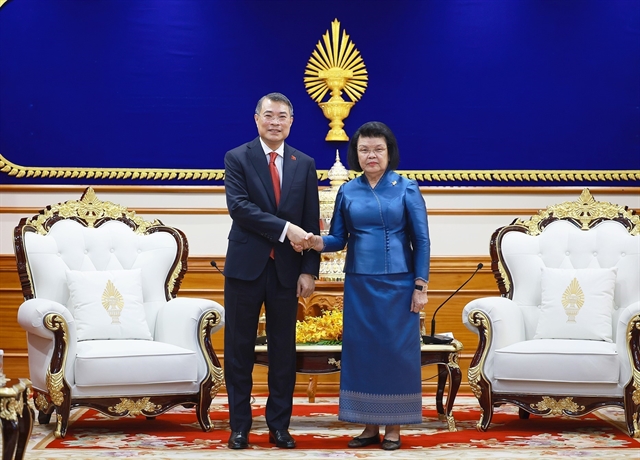
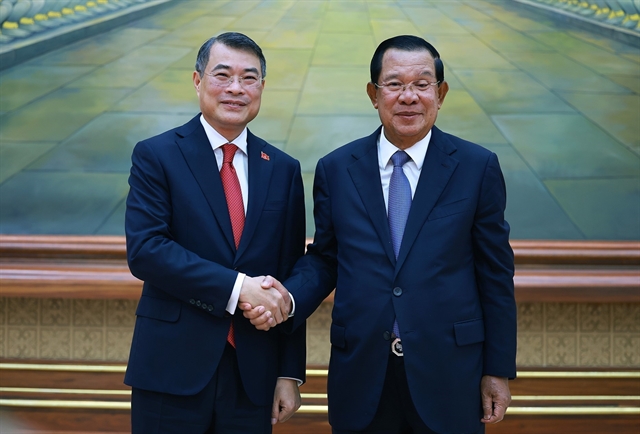
Vietnamese Prime Minister meets Cambodian National Assembly President
1.
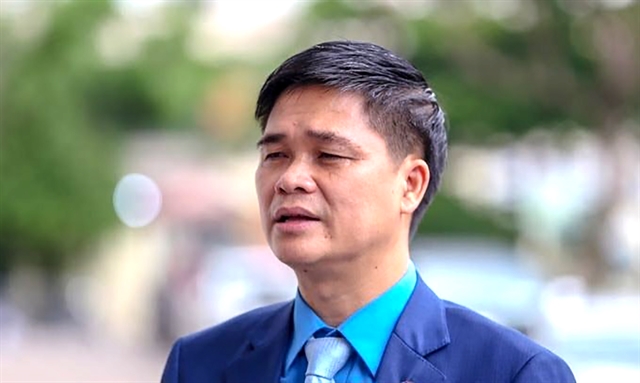 |
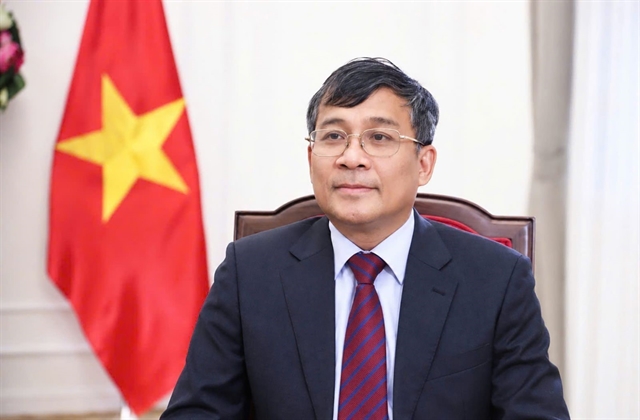
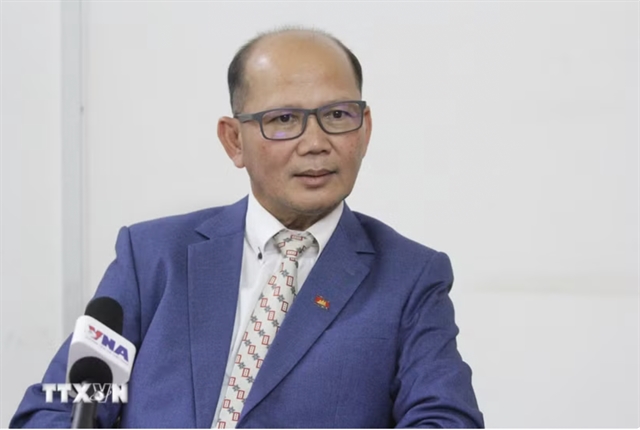
| Ngọ Duy Hiểu, deputy president of the Việt Nam General Confederation of Labour. — VNA/VNS Photo |
Ngọ Duy Hiểu, deputy president of the Việt Nam General Confederation of Labour, speaks to the Vietnam News Agency about coordinated measures to develop human resources, protect jobs and ignite creativity among workers.
What will trade union organisations do to enhance the quality of human resources to achieve the goal of double-digit growth?
In response to the requirement to specify and realise the Resolution of the 14th Party Congress, trade union organisations at all levels have clearly recognised and translated the spirit of the resolution into concrete content, as reflected in the draft resolution of the 14th Việt Nam Trade Unions Congress.
Accordingly, we are focusing on motivating members and workers to study, improve their qualifications and hone their skills; to renew their work style, particularly by updating knowledge on digital transformation and foreign languages to meet the demands of enhancing human resource quality to serve national development.
Alongside this, trade unions are promoting emulation campaigns to boost labour productivity, spark initiative and creativity and apply science, technology and digital transformation. This is not only a solution to achieve double-digit growth targets but also contributes to realising the aspiration for a prosperous and happy nation.
A very important factor is that trade unions must effectively fulfil their representative role, caring for and protecting workers' rights so they can work with peace of mind, thereby generating higher productivity.
In the context of automation and digital transformation, potentially leading to a labour surplus, how will trade unions protect workers?
The Fourth Industrial Revolution, with trends in automation and digital transformation, will impact the jobs of a portion of workers.
The primary solution is to motivate workers to study and improve their qualifications so they can switch occupations and adapt to the new demands of the labour market.
In addition, through dialogue and negotiation, trade unions will actively work with employers to build suitable labour organisation models that both meet businesses' technology application needs and ensure jobs for workers, including job position transitions.
More importantly, each worker must recognise lifelong learning and proactively update new knowledge and skills as an essential task to adapt to the rapid development of science and technology.
How is the role of workers in improving productivity and enterprise development viewed?
Workers are the centre of the enterprise and the decisive factor in labour productivity.
There are two aspects here. First, each worker must continuously strive to improve their qualifications, skills and work discipline. Second, trade unions must participate in creating a stable working environment, protecting jobs and the legitimate rights of workers.
Trade unions will intensify negotiations to ensure workers receive deserving benefits and increasingly higher incomes, thereby fostering long-term attachment to the enterprise.
In your view, how will worker welfare and care activities be implemented in the coming time?
In the draft resolution of the 14th Việt Nam Trade Unions Congress, we have identified the development of long-term, stable welfare programmes with a forward-looking vision.
Resources for welfare will not only come from trade union finances but will also be mobilised from employers and society at large, particularly from the results of increased labour productivity.
When labour productivity improves, societal resources will become more abundant, thereby enabling better care for workers. This is a two-way, causal and mutually supportive relationship.
How will trade unions promote the role of dialogue and collective bargaining in the coming time?
In the current context, dialogue and collective bargaining have become the core operational methods of trade union organisations, especially as the private sector and enterprises with foreign investment increasingly dominate.
Through dialogue and negotiation, the parties not only achieve harmonious benefits but also jointly find solutions for enterprise development, human resource development and building stable labour relations.
In the time ahead, trade unions will continue to improve the quality and expand the scope of dialogue and negotiation, striving to increase the coverage rate of collective labour agreements, aiming for 100 per cent coverage.
What are the key objectives of this year's Workers' Month?
This year's Workers' Month holds special significance as it coincides with the 140th anniversary of International Workers' Day, leading up to the 14th Việt Nam Trade Unions Congress and contributing to bringing the Resolution of the 14th Party Congress to life.
The spirit of innovation and creativity, promoting unity, igniting initiatives among workers, public servants and employees and participating in giving opinions on important documents of the trade union organisation are the key tasks.
Throughout Workers' Month, we aim to affirm the determination of the nation's workforce in realising development goals, contributing to the country's strong advancement in the new period. — VNS
Opinion
 Opinion
 Opinion
 Opinion
 Opinion
 Opinion
 Opinion
 Opinion
 Opinion
 Opinion
 Opinion
 Opinion
 Opinion
 Opinion
 Opinion