 Opinion
Việt Nam has five Halal certification bodies recognised by Malaysia
1.
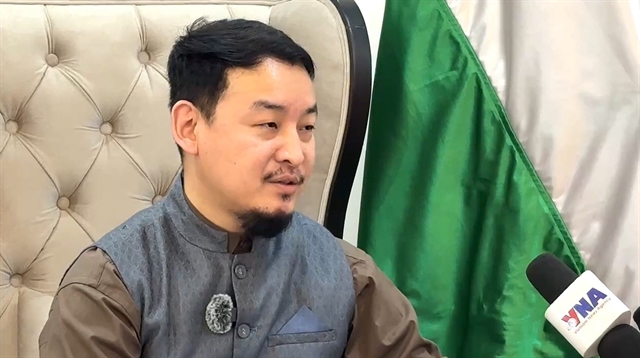 |
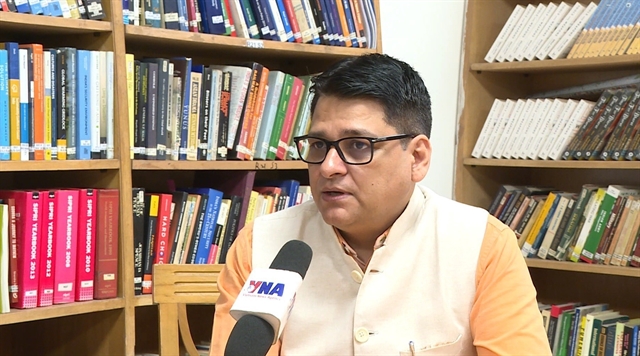
| Prof. Anmol Mukhia from South Asian University. — VNA/VNS Photo |
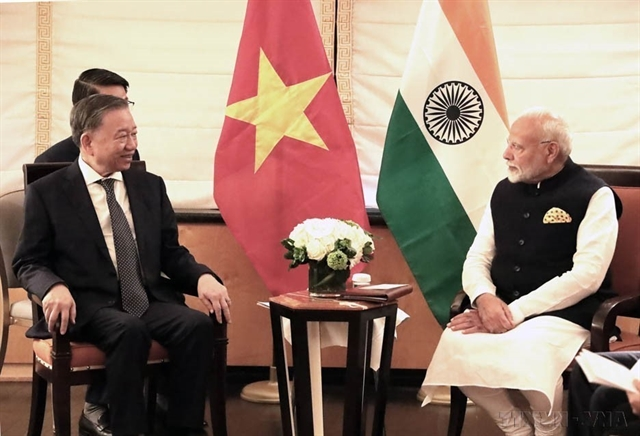
NEW DELHI — The May 5-7 state visit to India by General Secretary of the Communist Party of Việt Nam (CPV) Central Committee and State President Tô Lâm carries significance as the two nations mark the 10th anniversary of their Comprehensive Strategic Partnership, said Prof. Anmol Mukhia from South Asian University.
Talking to the Vietnam News Agency’s reporters based in New Delhi, Mukhia said Việt Nam–India relations have evolved over the past decade from traditional friendship into an increasingly extensive strategic cohesion, with bilateral ties now extending into multilateral frameworks and reflecting a shared approach centred on openness and inclusivity in foreign policy.
Since their Comprehensive Strategic Partnership began in 2016, cooperation has broadened well beyond its initial focus on information technology and cybersecurity to encompass national defence, nuclear safety, and critically, infrastructure connectivity and communications, with a 2020 virtual summit anchoring cooperation on three pillars of peace, prosperity and humans.
Regarding peace, both countries have worked to reinforce regional security and stability, including through United Nations peacekeeping missions.
On prosperity, Việt Nam and India are pursuing long-term development goals — Việt Nam targeting 2045 and India 2047 — with an emphasis on digital transformation and economic expansion. The “humans” pillar is reflected in policies aimed at sustainable social development aligned with the UN Sustainable Development Goals.
More recently, bilateral cooperation has moved into maritime and maritime security domains, including search and rescue and an increased presence in strategic waters, a shift Mukhia called “noteworthy and proactive".
Against an increasingly complex Indo-Pacific backdrop, he stressed that Việt Nam–India ties are vital to maintaining regional balance and stability, with both nations sharing a vision of an open and inclusive region and Asia’s centrality. The region accounts for roughly 40 per cent of the world’s population and serves as a critical maritime trade artery.
India has advanced initiatives such as SAGAR (Security and Growth for All in the Region), later widened into a broader strategic framework. Simultaneously, India’s Act East policy identifies Việt Nam as a key partner in Southeast Asia.
Mukhia cautioned that the lack of direct infrastructure connectivity, particularly road and rail links, remains a limitation. Regional connectivity projects like the East–West Economic Corridor and routes through Myanmar, if completed, could mark a “strategic turning point” that boosts regional trade and integration.
On challenges, he noted that while ties are moving in a positive direction, bilateral trade turnover, now at about US$16.5 billion, still falls short of potential. Both sides should target $25-30 billion by deepening cooperation in technology, pharmaceuticals, electronics and environment.
Geopolitical headwinds are also slowing regional connectivity projects. Strengthening dialogue and coordination with regional partners will be key to tackling these bottlenecks, he said.
Mukhia underscored that high-level exchanges are critically important, describing the strong political trust between the two countries as a solid foundation, with such visits serving as the “backbone” to advance relations, enhance policy dialogue, consolidate cooperation and accelerate the realisation of agreements.
The upcoming visit by the top Vietnamese Party and State leader carries substantial practical significance. It is expected to reinforce political trust, enable both sides to review and deepen strategic cooperation, and promote top-level policy dialogue, thereby fast-tracking existing agreements and opening new avenues in technology, infrastructure connectivity, digital economy and maritime security, he said.
Notably, he stressed the need to broaden cooperation at the local level and increase people-to-people exchanges, which would boost cultural ties, foster community connections, and unlock untapped potential in less-explored regions such as northeast India, an important gateway under India’s Act East policy, creating substantive and long-term shifts in bilateral ties.
At this stage, with Việt Nam–India ties resting on a solid foundation, the upcoming high-level visit will play a pivotal role in shaping the next phase of relations toward deeper, more substantive and long-term strategic cooperation, he concluded. — VNA/VNS
Opinion
 Opinion
 Opinion
 Opinion
 Opinion
 Opinion
 Opinion
 Opinion
 Opinion
 Opinion
 Opinion
 Opinion
 Opinion
 Opinion
 Opinion