 Opinion
Việt Nam has five Halal certification bodies recognised by Malaysia
1.
|
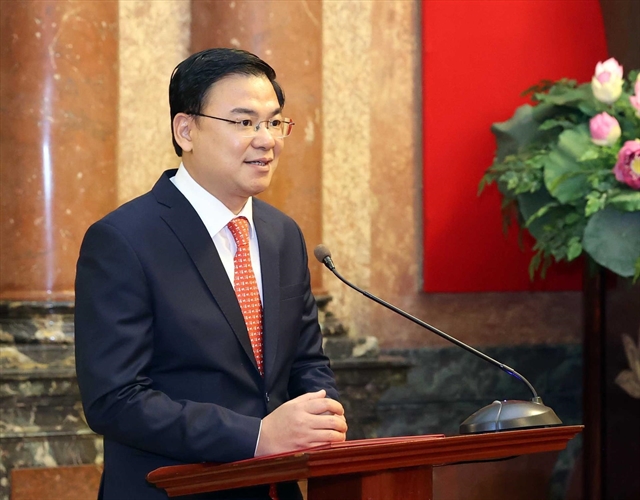
| Ambassador of Việt Nam to Japan Phạm Quang Hiệu. — VNA/VNS Photo |
TOKYO — Japanese Prime Minister Takaichi Sanae’s decision to select Việt Nam as her first destination in the region – less than three months after consolidating her leadership – highlights the country’s growing strategic importance in Japan’s regional policy, affirmed Vietnamese Ambassador to Japan Phạm Quang Hiệu.
Granting an interview to Vietnam News Agency correspondents in Tokyo ahead of the visit from May 1 to 3, the diplomat stressed that it carries great significance, vividly reflecting Japan’s high regard for the Comprehensive Strategic Partnership as both countries enter a new phase of development.
The trip is expected to further consolidate political trust, enhance high-level strategic exchanges, and create fresh momentum to deepen bilateral cooperation in a more substantive and effective manner.
Against the backdrop of increasingly complex regional and global developments, it also reaffirms the two countries’ shared determination to work together for peace, stability and development, especially when Việt Nam has successfully held its 14th National Congress of the Communist Party of Việt Nam and Japan’s ruling Liberal Democratic Party has secured a significant electoral victory in February, with both sides advancing major policy decisions shaping their long-term development trajectories.
In terms of priorities, Hiệu shared that the visit will focus on areas aligned with the strengths and development needs of both countries, particularly in economy, science and technology, innovation, and the security of energy and food supply chains.
Other key areas include semiconductor manufacturing, artificial intelligence, green transition, high-quality human resources development, tourism, local-level cooperation, cultural exchange and people-to-people ties, as well as closer coordination on regional and international issues of mutual concern.
He noted that, as with previous high-level exchanges, the visit will help deepen existing pillars of cooperation while identifying new, strategic areas, thereby opening up fresh opportunities that deliver tangible benefits to both nations.
Alongside science and technology, cooperation in energy, smart agriculture, high-tech industries, infrastructure development and resilient supply chains are also expected to feature prominently.
Assessing Việt Nam’s role in Japan’s regional policy, the ambassador emphasised that the regular exchange of high-level delegations demonstrates a high degree of political trust and increasingly close ties.
These engagements not only strengthen mutual understanding and reinforce the bilateral foundation, but also provide opportunities for both sides to align on strategic directions and practical measures to address emerging challenges in a rapidly evolving global environment.
With its increasingly prominent role in regional economic architecture, supply chains, and efforts to promote stability, cooperation and sustainable development in the Asia-Pacific, Việt Nam is seen as a reliable partner with strong potential and growing strategic relevance to Japan.
Bilateral relations not only serve the interests of both peoples but also contribute to regional and global peace, stability and prosperity, Hiệu affirmed.
He observed that Việt Nam–Japan relations have continued to develop strongly, comprehensively and in greater depth, particularly since the elevation of ties to a Comprehensive Strategic Partnership for Peace and Prosperity in Asia and the world in November 2023.
Political trust has been steadily strengthened through frequent high-level exchanges and dialogue mechanisms across key sectors.
Economic cooperation remains a central pillar, with stable trade turnover and sustained high levels of Japanese investment in Việt Nam, especially in manufacturing, infrastructure and energy.
Japan also remains a leading provider of official development assistance (ODA), making significant contributions to Việt Nam’s strategic infrastructure and high-quality human resources.
At the same time, science and technology cooperation has emerged as a new pillar, encompassing digital transformation, green transition, innovation, AI and workforce training.
Meanwhile, people-to-people exchanges continue to flourish, with a Vietnamese community of over half a million in Japan serving as an important bridge between the two countries. Local-level cooperation has also become a distinctive and increasingly effective feature of bilateral ties.
The diplomat stressed that complementarities between the two economies – Japan’s strengths in advanced technology, modern governance, semiconductors, AI, clean energy and green finance, and Việt Nam’s dynamic economy, young and increasingly skilled workforce, and strong spirit of innovation – provide a solid foundation for expanded cooperation.
In the coming period, the two countries can further promote technology transfer and innovation, enhance high-quality human resources development, expand joint research projects, and deepen collaboration in green energy, digital infrastructure and sustainable finance.
Energy security, in particular, remains a shared priority amid global geopolitical uncertainties. Việt Nam welcomes Japan’s Asia Zero-Emission Community (AZEC) Plus initiative, which supports Asian countries, including Việt Nam, with substantial resources to ensure energy security.
More broadly, enhanced coordination between Việt Nam and Japan will contribute positively to regional and global peace and stability.
With strong political trust, aligned strategic interests and a shared commitment to multilateralism and international law, Ambassador Hiệu expressed confidence that the two countries can become a model of cooperation in emerging fields such as semiconductors, AI, energy security, digital transformation and innovation, for the benefit of both nations and the wider international community. — VNA/VNS
Opinion
 Opinion
 Opinion
 Opinion
 Opinion
 Opinion
 Opinion
 Opinion
 Opinion
 Opinion
 Opinion
 Opinion
 Opinion
 Opinion
 Opinion