 Opinion
Việt Nam, Switzerland to turn education, sci-tech, innovation into cooperation focus
1.
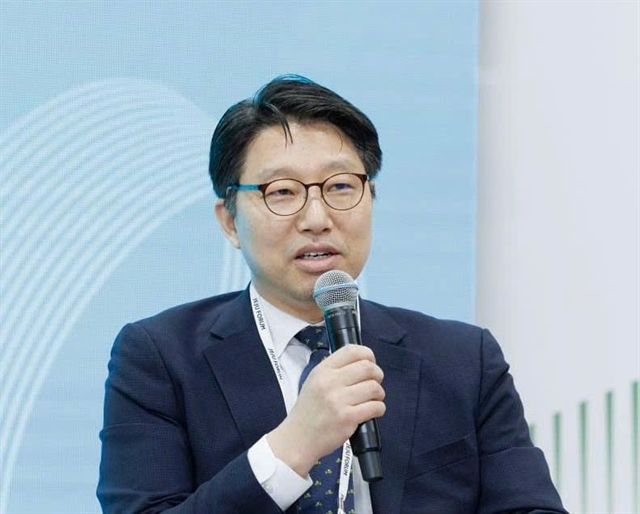 |
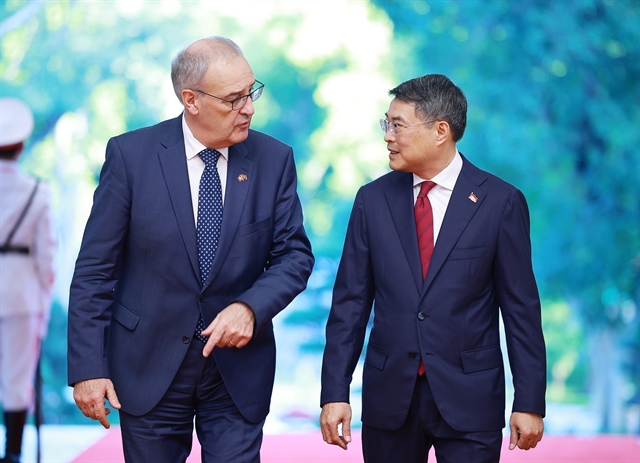
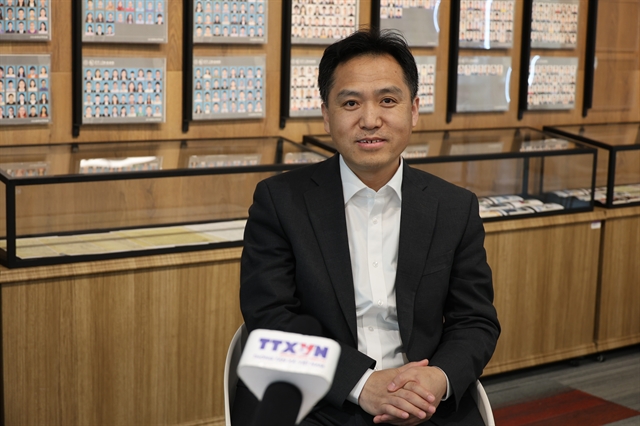
| Wondeuk Cho, director of the Center for ASEAN-Indian Studies, Korea National Diplomatic Academy, Republic of Korea. — Photo courtesy of Wondeuk Cho |
Wondeuk Cho*
The world is in a dangerous state. It is not merely uncertain. The war in the Middle East is blocking key maritime transport routes, disrupting global energy supply chains and driving up prices across the globe. The war between Russia and Ukraine has shaken the foundations of Europe's security order, while the strategic rivalry between the United States and China is accelerating the fragmentation of the global economy, deploying the instruments of tariffs and technology controls as weapons of strategic competition. Consequently, the conditions of stability and prosperity that we have long taken for granted are being undermined one by one.
The reality of international politics is harsh. Uncertainty is no longer an exceptional circumstance but a structural reality. In such an environment, no country can stand alone. For South Korea, the search for trustworthy partners is a matter of survival. Where can we find a trustworthy neighbour? Who is our steadfast partner?
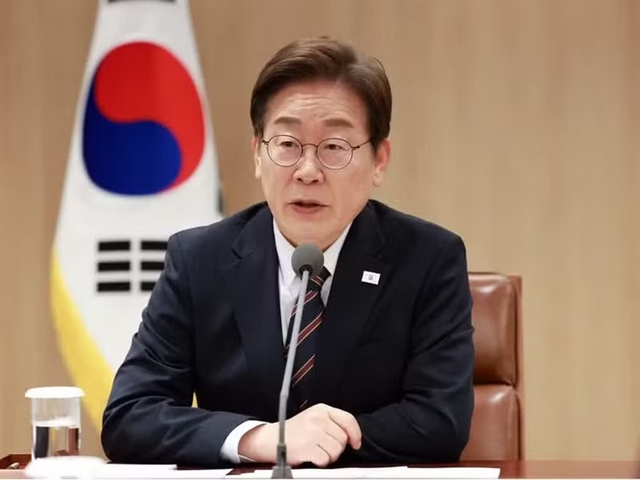
In this context, President Lee Jae Myung’s state visit to Việt Nam cannot be viewed merely as a diplomatic engagement. This visit serves as a milestone that offers insight into the direction Seoul’s pragmatic diplomacy should take amid an unstable global order. It also arrives as the natural reciprocal gesture to General Secretary To Lâm's own landmark visit to Seoul last August – a trip that made the Vietnamese leader the first foreign leader to call on the Lee administration, and that signalled, from the outset, how much both capitals prize this relationship. The return visit to Hà Nội, in turn, marks the first by President Lee since the formation of Việt Nam’s new leadership under General Secretary and State President Tô Lâm, and comes at a time when bilateral relations have reached their peak following the elevation of ties to a Comprehensive Strategic Partnership in December 2022, the highest level of diplomatic engagement, and further consolidated in August 2025.
That two such high-level exchanges have taken place within less than a year speaks for itself. This is not the choreography of routine diplomacy. Both nations regard this relationship as strategically vital, and that strategic assessment, moreover, carries a personal dimension in President Lee’s own biography: as mayor of Seongnam, he forged a sister-city partnership with Việt Nam’s Thanh Hóa Province and actively championed official development assistance programmes, building ties with Vietnamese communities long before the demands of statecraft required him to.
What does Việt Nam mean to Korea? The significance of this relationship, built upon more than 30 years of diplomatic ties, is clearly evident from the figures alone. Việt Nam is South Korea’s third-largest trading partner. Last year, bilateral trade reached US$94.5 billion, and some 10,000 South Korean companies have established a presence in Việt Nam. As of 2024, people-to-people exchanges between the two countries exceeded five million annually; as of 2025, there are 340,000 Vietnamese living in South Korea and 190,000 South Koreans living in Việt Nam. Multicultural families with roots in both countries already number 100,000. This is not the language of intergovernmental diplomacy. It is a relationship that is already alive and breathing in the daily lives of countless people.
The task now is to match the depth of this human connection with an equally bold economic vision. Both governments have set themselves a shared target: $150 billion in bilateral trade by 2030, a figure that would represent a transformative leap from today’s already substantial volumes. Reaching it will require moving decisively beyond the trade-and-investment model that has defined the relationship thus far, into genuinely strategic cooperation across cutting-edge technology, innovation and economic security.
President Lee’s visit to Hà Nội accordingly carries both political and architectural significance: it is an opportunity for the two countries to coordinate their development strategies and shift from broad-based cooperation to in-depth collaboration in fields that will define the coming decade. What unites these ambitions is a shared recognition that the relationship must now deepen in substance, not merely in rhetoric. The direction of ROK-Việt Nam relations can be redefined around three pillars of a reimagined ‘CSP’ vision: ‘Contributor’, ‘Springboard’ and ‘Partner for Peace’.
As a contributor, South Korea can participate as a trusted partner in Việt Nam’s major nation-building projects, the construction of new nuclear power plants, the North–South high-speed railway, the development of smart cities, by leveraging its technological expertise and accumulated experience. Institutions such as the Việt Nam–Korea Institute of Science and Technology (VKIST) offer a model for how this partnership can extend beyond infrastructure contracts into genuine knowledge transfer and human capital development. That, in turn, supports Việt Nam’s broader development ambitions: reaching upper-middle-income status by 2030 and joining the ranks of high-income economies by 2045. In doing so, South Korea builds mutual trust that goes well beyond the transactional.
As a springboard, Việt Nam can function as an innovation platform generating strategic benefits for both nations. By combining Việt Nam’s comparative strengths with Korea’s technological capabilities in fields such as artificial intelligence, renewable energy, critical minerals and advanced manufacturing, Việt Nam can help diversify supply chains away from single-country dependence and align with the broader international trend towards economic resilience. This is not simply a matter of bilateral advantage: it is a contribution to the stability of regional production networks at a moment when their fragility has been laid bare.
As a partner for peace, Việt Nam occupies a distinctive role that goes beyond economics and technology. A key ASEAN nation and a credible diplomatic voice, Việt Nam is uniquely positioned to support Korea’s Korean Peninsula peace initiative and the resumption of inter-Korean dialogue on the multilateral stage. Moreover, as the respective hosts of the APEC summit in 2025 and 2027, Korea and Việt Nam have a natural platform for translating their bilateral understanding into broader regional leadership.
The people-to-people dimension of this partnership deserves equal attention. K-content, Korean film, television, music and digital culture, has already proven its appeal in the Vietnamese market and beyond. Cultural cooperation between the two countries is not merely an exercise in soft power; it is an economic opportunity in its own right, one that benefits both nations and deepens the bonds of mutual familiarity on which durable partnerships ultimately rest. Ensuring that the hundreds of thousands of Vietnamese residents in South Korea can integrate fully and with dignity into Korean society is both a humanitarian obligation and a long-term investment in the vitality of this relationship.
The world is currently in turmoil as it moves towards a new order. Amidst this turbulent tide, having a trustworthy neighbour is not a choice for Korea but a condition for survival. Right on Korea’s doorstep stands its most steadfast partner. The more turbulent the times, the more precious such a neighbour becomes. And right now, Việt Nam is precisely that.
* Wondeuk Cho is the Director of the Center for ASEAN-Indian Studies, Korea National Diplomatic Academy, Republic of Korea. The views expressed in this article are solely those of the author and do not necessarily reflect the official policy of Korea National Diplomatic Academy.
Opinion
 Opinion
 Opinion
.jpeg) Opinion
Opinion
 Opinion
 Opinion
 Opinion
 Opinion
 Opinion
 Opinion
 Opinion
 Opinion
 Opinion
 Opinion
 Opinion