 Opinion
PM Hưng meets with Cambodian People's Party, Senate leader Hun Sen
1.
 |
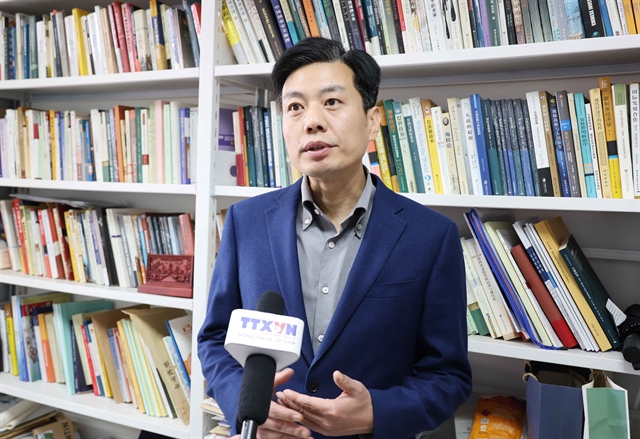
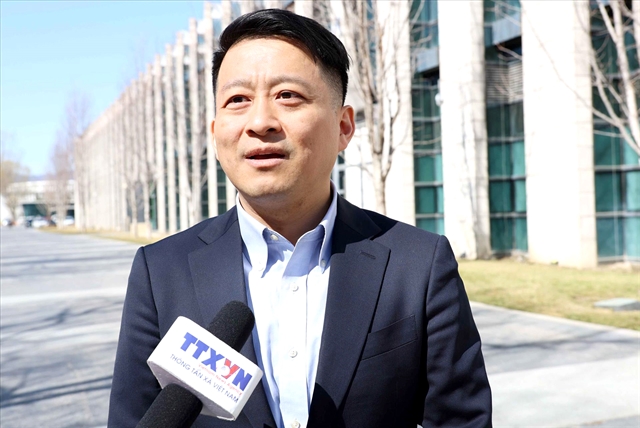
| Nguyễn Quốc Hoàn, director general of the Department for Legal Normative Document Development under the Ministry of Justice, which leads the Capital Law revision project. — Photo courtesy of the ministry |
Nguyễn Quốc Hoàn, director general of the Department for Legal Normative Document Development under the Ministry of Justice, spoke to Tin tức & Dân tộc (News and Ethnic Affairs) newspaper about an amendment that will be discussed at the 16th National Assembly (NA)’s first session.
What is the context and reasons behind the upcoming revision of the Capital Law?
In recent years, Hà Nội has achieved comprehensive progress, further consolidating its role as the country’s political and administrative centre and as a key driver of national growth. However, the capital still faces several major bottlenecks, including overloaded technical infrastructure, pressing environmental pollution and shortcomings in planning and resource management. These factors have prevented the city’s development from matching its full potential and special status.
Amid growing international volatility and the need to strengthen national competitiveness, Hà Nội requires major institutional breakthroughs. Creating a sufficiently broad legal framework is a prerequisite for the capital to achieve double-digit growth and fully play its role as a driving force for growth across the region and the country as a whole.
The Politburo’s resolutions 02-NQ/TW and 66-NQ/TW have identified the revision of the Capital Law as an objective necessity, aimed at shifting thinking from merely implementing to designing policy. This is a strategic step toward establishing a more exceptional legal framework and promoting thorough decentralisation and delegation of powers under the principle of allowing localities to decide, act and take responsibility.
This revision is expected to create a solid foundation for the capital to be equipped with sufficient authority and tools to take the initiative and make breakthroughs, with a long-term vision of becoming a global city in the new era.
As the agency that drafted the revision, how has the Ministry of Justice renewed its thinking and approach to meet practical demands?
In terms of structure, the 2026 draft amendment to the Capital Law consists of nine chapters and 36 articles, 18 fewer than the 2024 version. Instead of detailed provisions, the draft focuses on broad and comprehensive decentralisation and delegation of powers to the Hà Nội administration, with the aim of increasing proactiveness, autonomy and accountability, while still ensuring central oversight and the capital’s accountability.
The draft is built around four new key approaches. First, it redefines the role of the capital, shifting from that of a policy implementer to a policy designer. This is a breakthrough approach intended to position Hà Nội as a core growth pole, allowing the city to create a legal framework to allow major breakthroughs, rather than passively waiting for regulations from the central level.
Under the draft law, the capital is given the authority to issue legal normative documents, allowing different regulations or additional specific measures on issues not yet guided by the Government. This aims to remove bottlenecks in transport, the environment and administrative procedures. This policy design role is clearly reflected in Article 8 of the revision on the drafting and issuance of legal normative documents by the capital’s administration, and Article 9 on pilot mechanisms and policies.
Hà Nội would be allowed to pilot new, unprecedented or customised policies and mechanisms in key areas, including institutional organisation, the digital economy, urban governance and mobilisation of development resources. In particular, the establishment of a controlled testing mechanism would create the broadest possible space for innovative governance and economic models.
This sandbox mechanism would also allow the capital to continue applying the most favourable policies available, even where later-issued central documents contain different provisions, thus helping preserve the law’s exceptional sustainability. The implementation of 192 special delegated powers would go hand in hand with accountability and close supervision by the NA and the Government, ensuring that the capital develops to an international standard and drives growth across the wider region.
Another drafting approach is to regulate only framework issues and matters of principle. In line with the Politburo’s Resolution 66, the draft has undergone a significant shift from detailed provisions to setting out broad principles and a basic legal framework. This is intended to create room for city authorities to adjust policies flexibly in response to constantly changing realities, giving the law lasting stability without the need for frequent amendment. However, to ensure transparency and constitutional compliance, the law still retains specific provisions in a number of key areas, like taxation, land and human rights matters.
For example, with regard to organisational structure and staffing, the draft does not rigidly prescribe the number of agencies or personnel quotas, but only establishes a framework of authority enabling the municipal People’s Council to make flexible decisions according to actual needs.
As for legal documents and administrative procedures, the draft strengthens power delegation to the city administration. The amendment does not specify procedural details, but instead allows Hà Nội to design those procedures itself, while also enabling the city to simplify documentation requirements and promote digital transformation.
In terms of legal enforcement, the city may choose the most favourable preferential policies from subsequent legal documents, helping the Capital Law maintain long-term stability without requiring frequent revision.
 |
| An aerial view of Hà Nội's Linh Đàm area. — VNA/VNS Photo Hoàng Hiếu |
The draft also stipulates comprehensive and thorough delegation of powers to the city administration, coupled with accountability. Institutionalising the principle of 'stronger empowerment, broader power decentralisation and delegation, clearer accountability' has been a consistent requirement while drafting the revisions.
Under the draft, the Hà Nội administration is allotted the maximum delegation of powers to enhance its initiative, creativity and autonomy. The draft law submitted to the NA assigns 192 powers to the city administration, including 124 to the city People’s Council, 56 to the city People’s Committee and 12 to the city People’s Committee chairperson.
One of the most notable powers delegated to the city is an increased autonomy in organisational structure and public service management under Article 7, giving the municipal People’s Council authority to decide on staff quotas, expanding recruitment, assignment, evaluation and compensation, as well as the power to appoint or hire heads of public service units and State-owned enterprises for better governance quality and administrative streamlining.
At the same time, the eighth chapter of the draft sets out stronger mechanisms for supervision, inspection and accountability, ensuring that policies are implemented within proper authority, effectively preventing abuse of power while providing a solid legal basis for Hà Nội to act on its development issues within the scope of its role.
The draft also establishes breakthrough and innovative legal spaces. It creates room for digital governance and high technology through stronger data-based governance, artificial intelligence and the development of high-tech urban models supported by exceptional infrastructure incentives. At the same time, Hà Nội would be empowered to establish controlled sandbox mechanisms, as well as economic zones and free trade zones, to pilot new economic models.
Finally, the draft law expands development space for the capital through better planning and use of underground spaces, low- and high-altitude areas, ensuring infrastructure connectivity for economic and science and tech purposes. It also allows room for public officials who think and act for the common good through a mechanism that exempts them from legal liability in cases where no personal gain is involved.
To ensure that these new spaces operate effectively, the law provides funding mechanisms through finance and budget regulations, mobilisation of private resources, sponsorship and other revenue sources. These provisions are intended to serve as leverage for the capital to create new growth drivers in the era of national development.
With a focus on generating growth and delegation of powers, how should the draft revised Capital Law be further improved?
The draft revised Capital Law has been built in line with resolutions 66 and 02, adopting a new approach that goes beyond merely amending the 2024 Capital Law. Instead, it seeks to establish a breakthrough legal framework, shifting from an administrative management mindset to one of generating growth.
Designed to provide comprehensive decentralisation and delegation of powers to Hà Nội in key areas, the draft law also attempts to balance granting stronger powers while still ensuring compliance with the Constitution, consistency with international treaties and no adverse impact on national defence, security, religion and foreign affairs or national sovereignty.
The expansion of powers also requires corresponding implementation capacity, accountability and effective control mechanisms to prevent abuse of power or ineffective enforcement. Unprecedented pilot mechanisms must likewise be introduced cautiously and under proper control, especially amid deep international integration and rapidly changing global developments.
Through conferences and workshops held to gather feedback on the draft law, relevant agencies have said that further clarification is needed on power decentralisation and delegation along with control. Provisions on supervision, inspection and accountability also must be clarified.
At the same time, agencies recommended that strict criteria and conditions for special mechanisms and pilot models be established, ensuring proper mechanisms for evaluation, review and timely adjustment.
City authorities will also need to strengthen their governance capacity, accelerate digital transformation, ensure transparency in decision-making and enhance coordination between the central and local levels as well as within the capital region.
The draft revision of the Capital Law is expected to create new momentum for rapid and sustainable growth, while promoting cultural and social development with living standards placed at the centre.
With a 100-year vision, the law is intended to provide a stable institutional foundation, reinforcing Hà Nội’s role as a leading growth engine, unlocking development resources and helping elevate the city to the level of advanced capitals in the region and the world. — VNS
Opinion
 Opinion
 Opinion
 Opinion
 Opinion
 Opinion
 Opinion
 Opinion
 Opinion
 Opinion
 Opinion
 Opinion
 Opinion
 Opinion
 Opinion