 Opinion

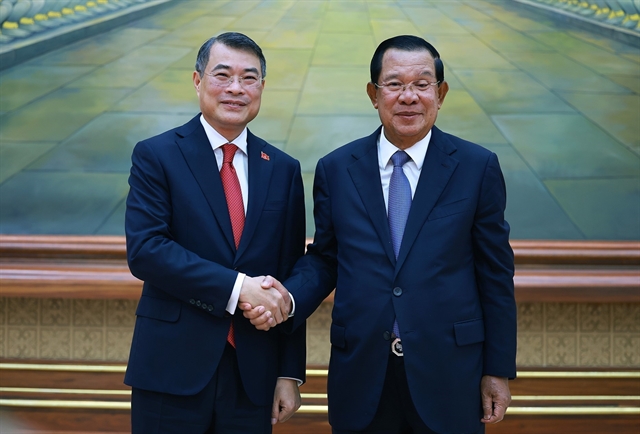
Vietnamese Prime Minister meets Cambodian National Assembly President
1.
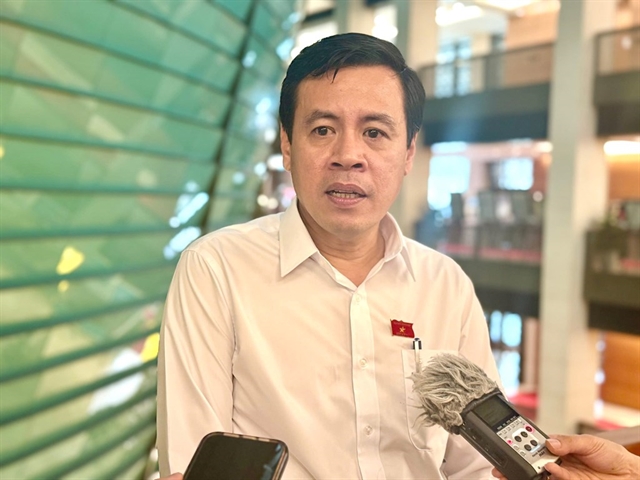 |
| National Assembly Deputy Trần Anh Tuấn from HCM City delegation. — VNA/VNS Photo |
National Assembly Deputy Trần Anh Tuấn from the HCM City delegation speaks to Vietnam News Agency on growth targets, macro-economic stability and public investment in the coming period.
How do you assess the goal of achieving double-digit growth in the first year of the term and in subsequent years?
This is a highly challenging target that requires strong determination and coordinated efforts from the central government to local authorities, as well as active participation from domestic and foreign enterprises.
We are facing a difficult global context, including geopolitical tensions in the Middle East, rising trade protectionism, tariff policies from major economies such as the United States and persistently high interest rates in advanced economies including the US, Germany and across Europe. These factors are affecting global growth prospects, investment flows and overall demand.
In addition, the conflict in the Middle East has increased input costs and disrupted business operations, thereby impacting production efficiency and competitiveness.
All of these elements will inevitably affect Việt Nam’s goal of achieving double-digit growth in the coming years, as part of its broader development strategy towards becoming an upper-middle-income country by 2030 and a developed nation by 2045.
In a volatile global environment, what is the key pillar for ensuring Việt Nam’s economic self-reliance?
The most important factor is strengthening internal economic capacity. This includes reinforcing both supply and demand while ensuring macro-economic policies maintain stability and avoid shocks that could disrupt production and investment activities.
Internal strength must be regarded as a core pillar for maintaining stable domestic production. At the same time, fiscal and monetary policies need to be coordinated in a flexible and synchronised manner.
We must also mobilise domestic resources more effectively for production and business activities while ensuring macro-economic stability so that people and businesses have confidence in consumption and investment. A stronger domestic foundation will improve the economy’s resilience to external shocks.
What needs to be done to better support the business community in the coming period?
First, institutional reforms should aim to minimise external risks by strengthening policy support for businesses, especially improving access to credit so they have sufficient resources for production.
Second, we must continue to improve the investment and business environment, promote digital transformation and technology application and simplify administrative procedures to reduce processing time for citizens, investors and enterprises. This will help bring investment resources into the economy more quickly.
Third, it is necessary to accelerate public investment disbursement, particularly for major national projects, and promptly remove bottlenecks to unlock resources and create spillover effects that attract private sector participation.
The total public investment for the 2026–31 period is projected to exceed VNĐ8 quadrillion. How feasible is this in the current budget context?
This is a very large allocation covering projects at both national and local levels, with a relatively clear structure between central and local responsibilities.
The key issue is not only the scale of resources but also ensuring timely implementation once projects are approved, particularly those with breakthrough or strategic significance.
For large-scale infrastructure projects, we need concentrated resources and special mechanisms to speed up implementation and avoid delays.
Public investment should also act as seed capital to attract additional private investment and encourage greater participation from the private sector in infrastructure development.
Finally, ensuring a timely supply of construction materials for key national projects is essential. If these bottlenecks are resolved, public investment will have a much stronger spillover effect in the 2026–31 period. — VNS
Opinion
 Opinion
 Opinion
 Opinion
 Opinion
 Opinion
 Opinion
 Opinion
 Opinion
 Opinion
 Opinion
 Opinion
 Opinion
 Opinion
 Opinion