 Opinion
Vietnamese Prime Minister meets Cambodian National Assembly President
1.
|
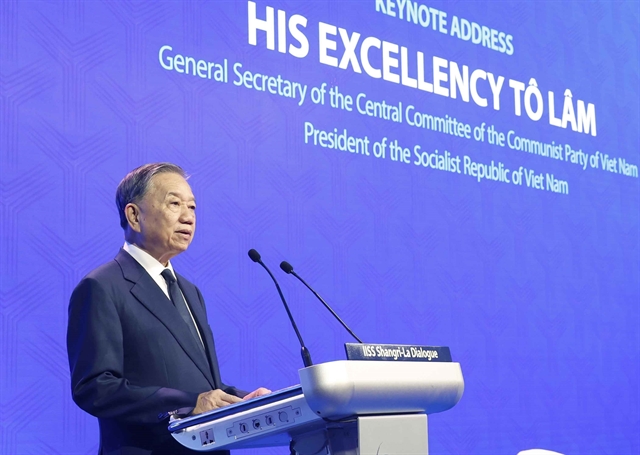
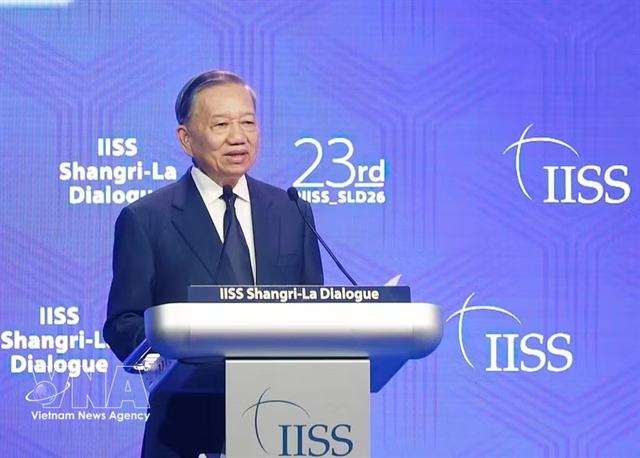
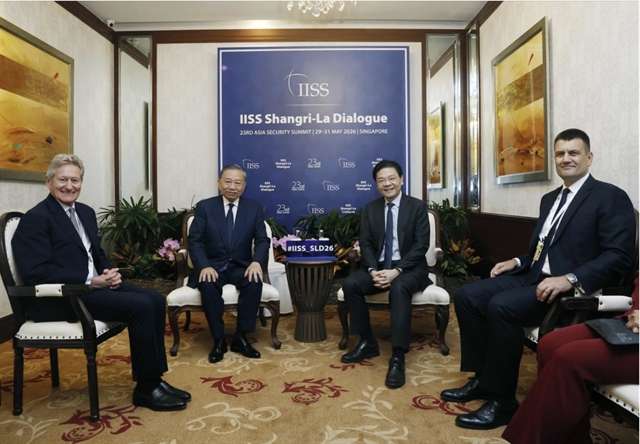
| General Secretary of the Communist Party of Việt Nam Central Committee and President of Việt Nam Tô Lâm delivers a keynote address the 23rd Shangri-La Dialogue on May 29. VNA/VNS Photo |
BEIJING — The keynote address delivered by General Secretary of the Communist Party of Việt Nam Central Committee and President of Việt Nam Tô Lâm at the 23rd Shangri-La Dialogue reflects Việt Nam’s consistent foreign policy of promoting peace, cooperation, dialogue and consultation, according to a Chinese scholar.
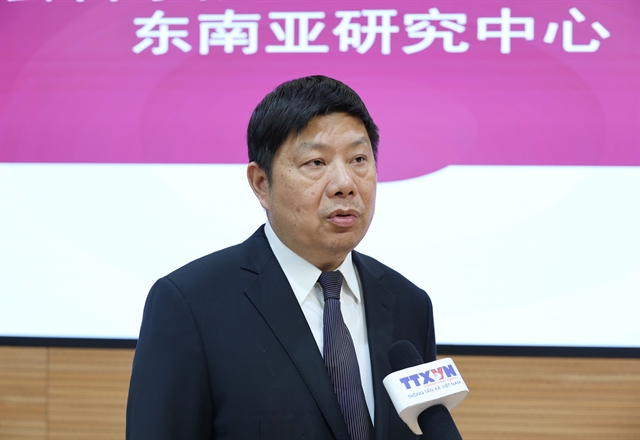
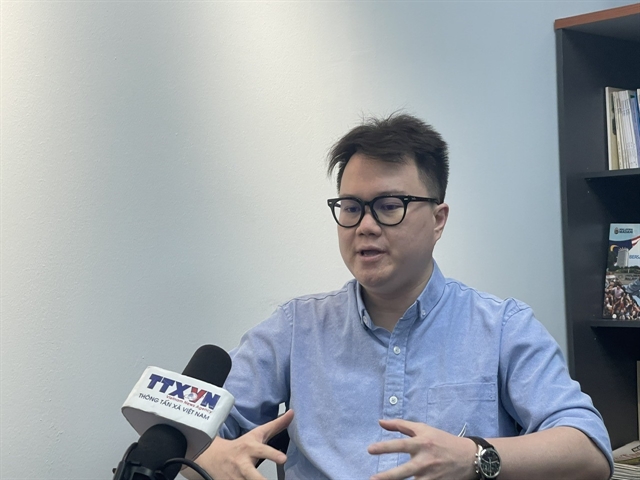
Speaking to the Vietnam News Agency (VNA)'s correspondent in Beijing, Prof. Huang Rihan of Huaqiao University in China’s Fujian province said the Vietnamese leader’s address highlighted three major crises currently facing the world - the crisis of the international order, the crisis of development models, and the crisis of strategic trust.
According to Huang, the Vietnamese leader stressed the need for countries in the region to pursue a more inclusive development model, placing people’s well-being and social resilience at the centre of policymaking. This, he said, demonstrates Việt Nam’s rational, pragmatic and responsible approach to regional security issues.
The scholar noted that the Vietnamese leader emphasised resolving differences through multilateral mechanisms, international law, dialogue and consultation, while opposing bloc confrontation and the escalation of conflicts. Such views, he said, are aligned with the shared security concerns and development aspirations of countries in the region, contributing to peace, stability and common development in Southeast Asia and beyond.
Huang observed that the keynote address, grounded in the common interests of ASEAN, reflected the vision of sustainable security pursued by regional countries and underscored respect for the sovereignty and territorial integrity of all nations while rejecting unilateralism and power politics.
Amid profound global changes and growing regional security challenges, Việt Nam’s commitment to pursuing a policy of non-alignment, non-confrontation and not targeting any third party will provides stability and a constructive voice for the region, he said.
The scholar added that this approach contributes to building a balanced, effective and sustainable regional security architecture while supporting global stability and prosperity.
Assessing Việt Nam’s efforts to promote strategic trust and minimise conflict risks, Huang said the country has consistently pursued a foreign policy of independence, self-reliance, peace, friendship and balanced multilateralisation.
Việt Nam has long advocated strengthening mutual strategic trust and minimising conflict risks through equal dialogue, confidence-building measures and the effective management of differences, he noted.
The scholar also highlighted Việt Nam’s active participation in ASEAN-led dialogue and security cooperation mechanisms, helping foster an open, inclusive and non-confrontational regional security architecture. At the same time, the country advocates managing interstate relations based on international law and the United Nations Charter.
Faced with complex and sensitive issues, Việt Nam has maintained a restrained, rational and pragmatic approach, promoting their settlement through bilateral consultations and multilateral channels to prevent escalation, Huang said.
This approach has effectively reduced the risks of miscalculation and conflict, laid an important foundation for long-term regional peace and stability, and demonstrated Việt Nam’s sense of responsibility and commitment to regional governance, he added. — VNA/VNS
Opinion
 Opinion
 Opinion
 Opinion
 Opinion
 Opinion
 Opinion
 Opinion
 Opinion
 Opinion
 Opinion
 Opinion
 Opinion
 Opinion
 Opinion