 Opinion
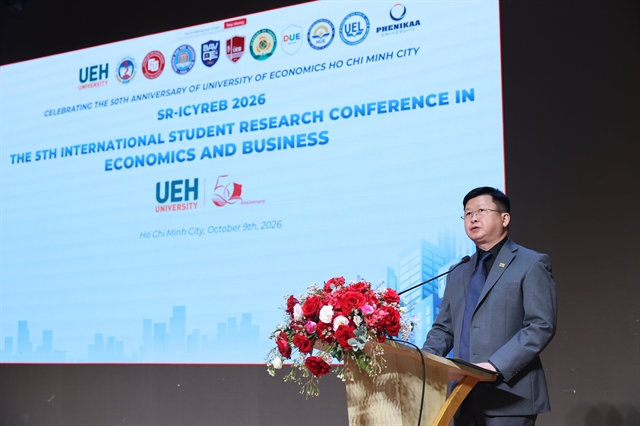
University of Economics HCM City hosts international student research conference
1.

|
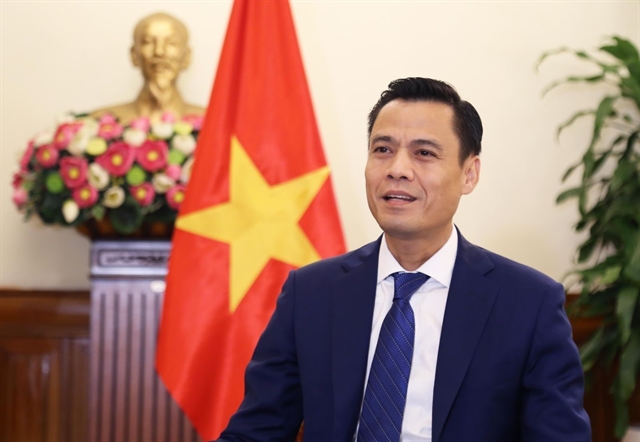
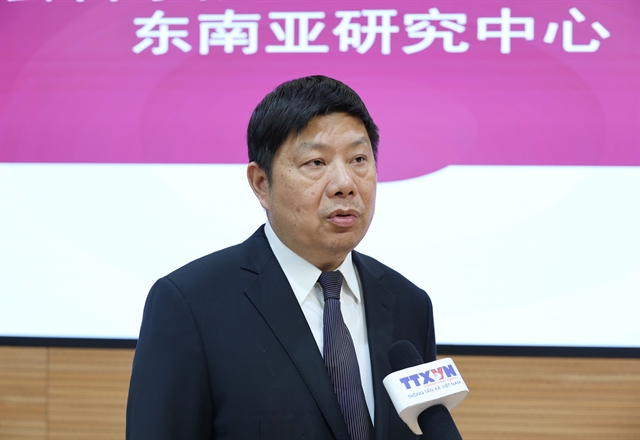
| Đinh Văn Trung, director of the Institute of Physics under the Việt Nam Academy of Science and Technology (VAST). Photo courtesy of VAST |
As Việt Nam develops and finalises its national strategy for quantum technology in the coming years, Đinh Văn Trung, director of the Institute of Physics under the Việt Nam Academy of Science and Technology, spoke with the Communist Party of Việt Nam’s online portal about the importance of choosing the right strategy and steadily building long-term national capacity to master quantum technologies.
The development of quantum technology requires advanced research infrastructure and highly qualified human resources. Is this currently Việt Nam’s biggest bottleneck?
In my view, research infrastructure and human resources are indeed major challenges but they are not yet Việt Nam’s core bottleneck.
The more important issue is the need for a unified strategic vision and a long-term mechanism for building national capabilities. Quantum technology is an advanced and highly complex field that simultaneously involves physics, mathematics, information technology, advanced materials science, photonics, artificial intelligence (AI), precision measurement and many other strategic technologies.
If development is pursued in a fragmented, short-term or trend-driven manner, it will be very difficult to create comprehensive national capabilities.
We are very encouraged that Party General Secretary and State President Tô Lâm has stressed that quantum technology must be viewed as a matter of national strategy rather than merely a scientific research issue.
In my opinion, this is an extremely important orientation because once quantum technology is identified as a national strategic priority, Việt Nam will have better conditions to mobilise resources to develop shared research infrastructure, long-term human resource training and stronger connections among research institutes, universities, defence enterprises and security agencies.
Although Việt Nam entered the field later than many countries, we have the advantage of learning from international experience to choose more suitable, focused research and technological pathways while avoiding scattered investment. With the right strategy, effective coordination mechanisms and sustained long-term support, I believe Việt Nam can gradually build its own quantum technological capabilities.
In your opinion, which areas hold the greatest potential for Việt Nam to move beyond basic research and participate more deeply in quantum technology development?
I believe Việt Nam should choose directions that align with the country’s conditions and can generate practical value for national needs rather than attempting to participate comprehensively across every area of quantum technology.
At this stage, Việt Nam has strong potential to engage more deeply in several important areas, including information security, post-quantum technologies, scientific simulation, the integration of quantum technologies with AI and high-performance computing, as well as quantum sensing, precision measurement and photonics.
In particular, quantum sensing holds major significance for Việt Nam because it can be directly applied to critical national sectors such as the marine economy, natural resource monitoring, environmental observation and national defence and security.
In addition, photonics and precision measurement systems are also promising areas where Việt Nam can gradually deepen its participation, given their close connection with high-tech industries and future digital infrastructure.
What key research directions is the Institute of Physics pursuing to gradually master strategic quantum technologies?
In line with its functions and responsibilities as well as the broader orientation of the Việt Nam Academy of Science and Technology, the Institute of Physics is currently focusing on several areas of fundamental research directly linked to quantum technologies and related strategic technologies.
Its priority areas include quantum physics, quantum optics and photonics, lasers, quantum materials, quantum sensing, precision measurement and the simulation of quantum systems. Alongside fundamental research, the institute is also paying special attention to research and technological development with strong application potential, such as high-sensitivity sensors for atmospheric environmental monitoring and advanced measurement equipment.
One particularly important direction today is strengthening interdisciplinary connections between physics and fields such as mathematics, AI, space technology and materials science. The institute is also promoting and leveraging international cooperation through the UNESCO-recognised and sponsored International Centre for Physics to enhance research capabilities.
The institute is also working towards building interdisciplinary and inter-institutional research platforms with shared infrastructure, thereby gradually accumulating long-term national capacity for Việt Nam.
In your view, what foundations does Việt Nam need to prepare to participate in and avoid missing the global wave of quantum technology?
In my opinion, the most important thing right now is for Việt Nam to simultaneously prepare scientific, technological and human resource foundations while also developing a national strategy accompanied by effective coordination mechanisms.
First and foremost, long-term investment in fundamental science is essential, especially in fields such as physics, mathematics, photonics, materials science, information technology and artificial intelligence. Quantum technology has an extremely long development cycle, so without a sufficiently strong foundation in basic science, it will be very difficult to develop genuine technological capabilities.
At the same time, Việt Nam needs to build advanced shared research infrastructure, including high-performance computing systems, scientific simulation platforms, scientific data systems and precision measurement facilities.
In addition, effective mechanisms are needed to connect research institutes, universities, defence and security enterprises and national strategic technology programmes. In my view, this is not merely a matter for the physics sector or any single technological field. It is a long-term process of building national scientific and technological capacity.
If Việt Nam can identify the right strategic directions, focus on areas of high strategic value and steadily build national capabilities over many years, the country will have every opportunity to take part more deeply in the emerging global quantum technology wave. — VNS
Opinion
 Opinion
 Opinion
 Opinion
 Opinion
 Opinion
 Opinion
 Opinion
 Opinion
 Opinion
 Opinion
 Opinion
 Opinion
 Opinion
 Opinion