.jpg) Opinion
Opinion
NA debates sweeping reforms to land, housing and real estate laws
1.
|
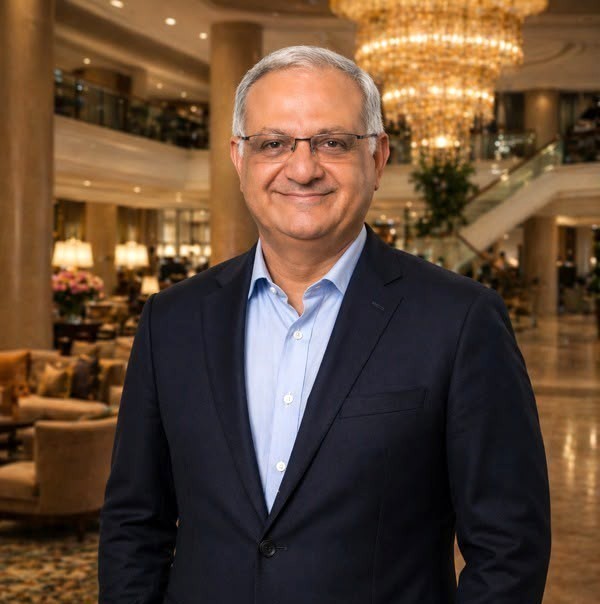
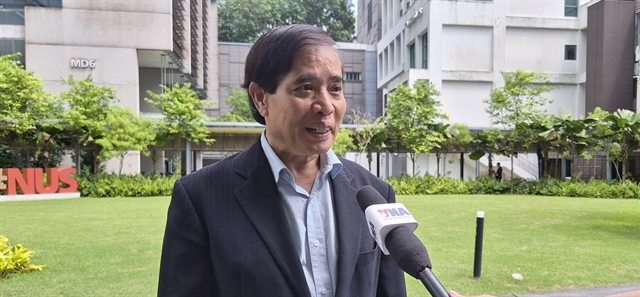
KUALA LUMPUR — Malaysia, Indonesia, Thailand, the Philippines and Việt Nam – collectively referred to as MITPV – are the “Fabulous Five” economies with the potential to shape the macroeconomic and investment trajectory of the Association of Southeast Asian Nations (ASEAN) over the next 10 to 20 years, according to Shan Saeed, chief economist at the Malaysian branch of property technology group IQI Global.
Saeed said the MITPV economies are emerging as one of the world’s most attractive strategic destinations for global capital targeting emerging markets, with each country contributing distinct competitive advantages.
Indonesia offers scale, commodities and abundant natural resources. Malaysia serves as a key pillar in the semiconductor industry, liquefied natural gas (LNG) production and sophisticated financial services. Thailand contributes industrial capabilities and leadership in the automotive sector, while the Philippines benefits from demographic momentum and a growing services economy. Việt Nam, meanwhile, is emerging as Asia’s leading manufacturing platform.
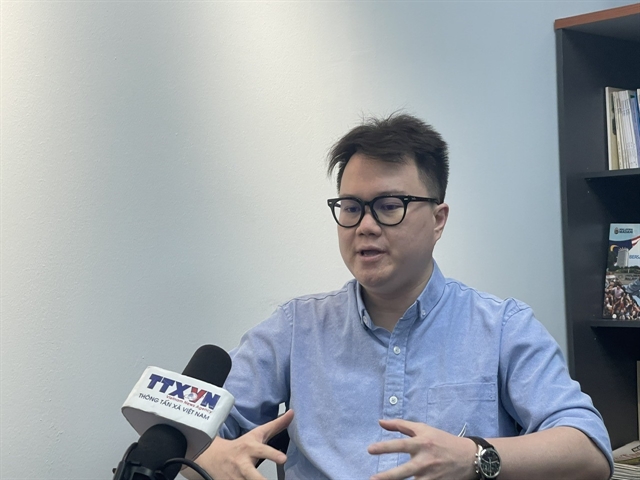
Speaking to Vietnam News Agency correspondents in Malaysia, Saeed noted that as global supply chains continue to evolve, Việt Nam is increasingly well positioned to become one of the world’s most important manufacturing and export hubs.
According to the economist, Việt Nam's appeal is no longer defined solely by cost competitiveness. It is increasingly reinforced by industrial scale, execution capabilities, export strength and deep integration into global production networks.
He highlighted Việt Nam's strong macroeconomic fundamentals, noting that the country’s GDP grew by around 8 per cent in 2025. With a trade-to-GDP ratio approaching 170 per cent, Việt Nam ranks among the most open economies in the world. Annual exports now exceed US$400 billion, manufacturing accounts for roughly 25 per cent of national output, and foreign direct investment continues to accelerate as multinational corporations diversify supply chains.
Saeed stressed that Việt Nam is steadily moving beyond its traditional role as a low-cost assembly base. The country is making significant progress up the industrial value chain in electronics, semiconductors, machinery, advanced manufacturing, logistics and digital infrastructure.
Samsung’s plan to establish a 1.5-billion-USD semiconductor chip testing facility further strengthens the country’s position as a strategic semiconductor manufacturing hub, alongside major industry players such as Intel, Amkor and Hana Micron, he added.
For global investors, Việt Nam offers five enduring structural advantages: a competitive and increasingly skilled workforce; geographical proximity to China; expanding industrial infrastructure; strong export connectivity; and flexible policies facilitating multinational supply-chain relocation.
Taken together, these factors have positioned Việt Nam as one of the most reliable beneficiaries of global manufacturing diversification and industrial restructuring within ASEAN.
According to the expert, Việt Nam has already secured a leading position in the initial phase of this transformation. The next challenge will be converting manufacturing relocation into sustained gains in productivity, technological sophistication, innovation capacity and broader industrial competitiveness.
He concluded that among the “fabulous five”, Việt Nam's role is becoming increasingly prominent as an export powerhouse, a manufacturing catalyst and one of ASEAN’s most compelling success stories.
As global supply chains continue to diversify and geopolitical fragmentation reshapes production networks, Việt Nam is uniquely positioned to become one of the most important manufacturing and export platforms in the emerging world. The country is no longer merely competing to be a manufacturing hub; it is competing to become a strategic node in the global production architecture. — VNA/VNS
Opinion
 Opinion
 Opinion
.jpg) Opinion
Opinion
 Opinion
 Opinion
 Opinion
 Opinion
 Opinion
 Opinion
 Opinion
 Opinion
 Opinion
 Opinion
 Opinion