 Opinion
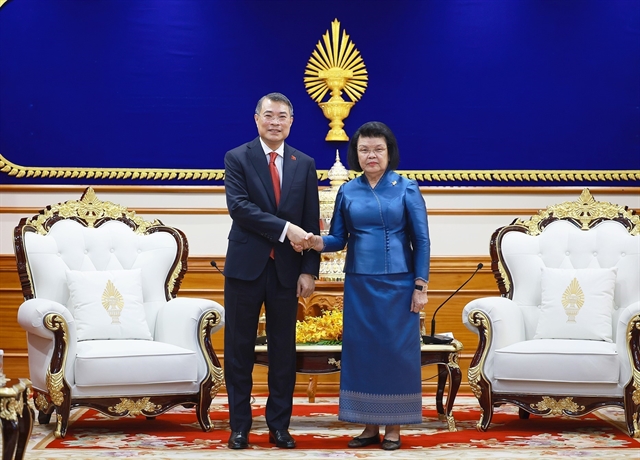
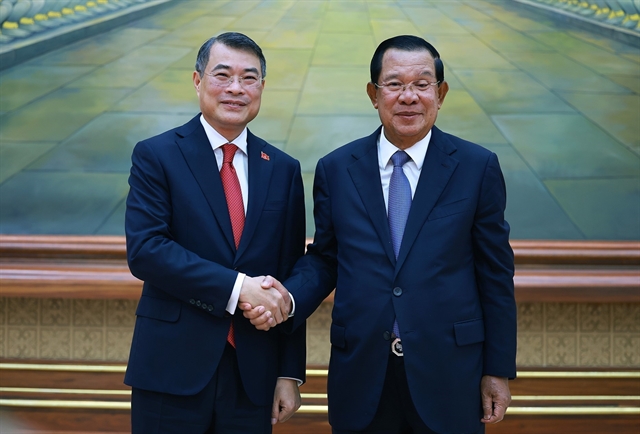
Vietnamese Prime Minister meets Cambodian National Assembly President
1.
 |
| a |
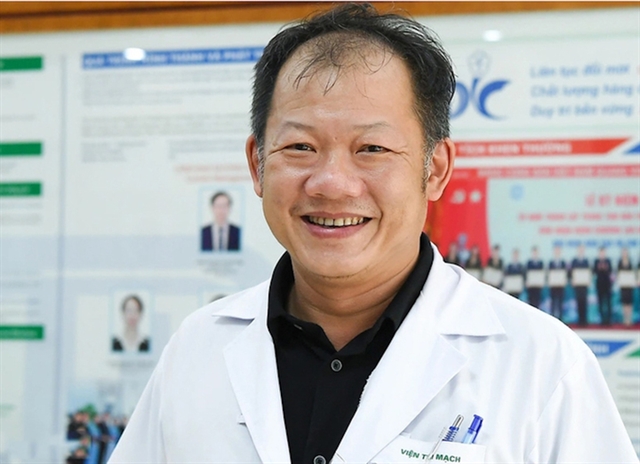 |
| Dr Dương Đức Hùng, Director of Việt Đức University Hospital. |
From the first kidney transplant that moved doctors to tears to groundbreaking multi-organ procedures that now match international standards, Việt Nam’s organ transplant sector has undergone a remarkable transformation over the past three decades.
In this interview with Việt Nam News, Dr Dương Đức Hùng, Director of Việt Đức University Hospital, reflects on the emotional moments behind the operating theatre doors, the rapid advances in transplant medicine, and the biggest barriers still facing the field today.
Could you share your memories of the first organ transplant operation you took part in and how you felt at the time?
There were many emotions. Anything done for the first time leaves a very deep impression.
In organ transplantation, kidney transplants are usually the starting point because technically they are relatively simpler. I still remember those early transplant cases vividly. After all the blood vessels had been connected, we released the clamps so blood could flow into the transplanted kidney. Then, when the kidney began functioning again, urine started to come out. That was the sign the transplanted organ was alive and working again.
At that moment, everyone burst into joy. Some people even cried because we had spent such a long time preparing for the surgery. So when the results turned out well, it was overwhelming. We used to joke that as the first drops of urine appeared, tears of joy filled the operating room as well.
That was the emotion of those very first cases. Later, things gradually became more routine, but every transplant still carries that same moment of anticipation. With kidney transplants, we wait for the urine to appear. With liver transplants, we wait for bile flow. Those moments always bring great joy to surgeons and anaesthetists alike. And if those signs appear a little late, everyone becomes anxious.
From those first transplant cases until now, Việt Nam has made major progress in transplantation. What are some of the biggest advances?
Organ transplantation did not originate in Việt Nam. It came from Western medicine and was introduced here later than in many countries. Việt Nam only carried out its first kidney transplant in 1992.
But the aspiration had existed much earlier. Back in the 1960s, during wartime, Professor Tôn Thất Tùng and other pioneers were already conducting experimental transplant research. The dream was there long ago, but only later, after the lifting of the embargo and improvements in economic and social conditions, did Việt Nam have enough resources to implement such advanced techniques.
The early years were very difficult, but today transplantation has become routine. Across the country, nearly 100 medical centres are involved in transplant activities at different levels.
Although we started late, development has been very rapid. Việt Nam has mastered many highly complex procedures such as multi-organ transplants, heart-lung transplants and domino transplants, with very good outcomes. That shows we are increasingly approaching international standards.
In fact, the technical side of transplantation itself is not the hardest part. Fundamentally, transplantation is vascular surgery. Once an organ is transferred into another body, the key is restoring good blood circulation so it can survive and function. That is why Việt Đức University Hospital has had particular strengths in transplantation. The hospital has long been a pioneer in cardiovascular and vascular surgery, with a large and experienced surgical team.
The more difficult aspects are actually pre-transplant evaluation, immunology, laboratory testing, coagulation and intensive care. What Việt Đức Hospital has implemented and refined in transplantation techniques has demonstrated that we are now fully mastering these procedures.
You mentioned Việt Đức University Hospital has improved some techniques and shortened surgery times significantly. Could you explain further?
At first, we imported the entire transplant process from abroad. Vietnamese doctors trained overseas and applied the same protocols and procedures upon returning home. The outcomes were already very satisfactory.
But later we moved to the next stage, where we could adapt techniques while still preserving the same principles and results. Việt Đức Hospital has successfully done this.
For example, with classical liver transplant techniques, surgeries in some countries can still take 12 to 14 hours. At Việt Đức, we have modified certain technical steps to make them more suitable and efficient, reducing operation times to around five or six hours, and potentially even shorter in the future.
Importantly, the results are even be better because shorter surgeries allow patients to recover much faster. A 12-hour operation naturally requires a much longer recovery period.
I remember a recent working trip to Taiwan where we unexpectedly met some liver transplant specialists who had supported Việt Đức Hospital during our very first liver transplant cases years ago. When we told them how much we had shortened surgery times and how our techniques had evolved, they were extremely surprised and even suggested visiting Việt Nam to observe these procedures themselves. It was a meaningful moment for us. It showed that Việt Nam now has its own experiences and expertise to share with international colleagues, rather than only being learners.
Despite these achievements, what are still the biggest barriers facing organ transplantation in Việt Nam?
The biggest challenge, not only in Việt Nam but worldwide, is the imbalance between the number of patients waiting for transplants and the number of available organs.
To perform transplants, there must first be organs to transplant. A major source comes from brain-dead donors whose organs remain healthy enough to save others. But obtaining those organs depends on consent from families.
In many Asian societies, including Việt Nam, cultural beliefs about death and the body remain very strong. As a result, although many people could potentially donate organs, the number who actually do remains very small.
It is an enormous waste of a precious resource. One donor can save five to seven lives. But when organs are buried instead, those patients waiting for transplants may also lose their lives.
Another barrier is legal regulations. Laws always lag behind reality and can quickly become outdated as society develops. When that happens, they can become obstacles rather than sources of support.
Việt Nam’s law on organ and tissue donation was introduced many years ago and has not been updated sufficiently. For example, it completely overlooks paediatric donors and recipients.
Children needing transplants cannot receive adult hearts because the size difference is incompatible. Yet under current regulations, children cannot donate organs. This means many children with severe heart disease have no chance of survival, even though there are cases where families of brain-dead children are willing to donate organs to save others.
We live in a society governed by law, so hospitals must follow legal regulations. But some of these outdated regulations have become barriers to medical progress.
Recently, Việt Đức University Hospital carried out a transplant involving an organ donated by a foreign national. What impact did that case have on you personally?
As someone directly involved in that transplant, I was deeply moved. Of course, we were happy because we had organs that could save patients. But as an ordinary citizen, I also had many personal reflections.
This was someone from a completely different background, culture, religion and nationality, yet when the parents realised their daughter could not survive, they immediately wished to donate her organs to save others.
Meanwhile, our staff work tirelessly every day trying to persuade families to agree to donation. Hundreds of people in our donor coordination network quietly devote themselves to this work. But the success rate remains very low. In 2024, for example, we approached 741 potential brain-dead donor cases. Each family was contacted and counselled three to five times, with some conversations lasting for hours. Yet only 26 families agreed, and among those, only 20 donors ultimately had organs suitable for transplantation.
That case made me think deeply. Honestly, even as someone who fully understands the value of organ donation, I am not sure I could act the same way if I were in that father’s position. I truly admire him.
Since that case, I have reflected a great deal about how to improve organ donation in Việt Nam. The key is changing public awareness so that donation becomes more natural and voluntary. That change will take time, but without it, progress cannot happen.
Besides doctors encouraging families, what can society do to help change awareness about organ donation?
Every campaign promoting compassion and sharing contributes, even if only a little, to shaping public awareness.
But the most important thing is that people should stop thinking of organ donation as the mere act of helping someone else. Organ failure can happen to anyone, in any family. If nobody donates, then nobody can receive organs either. When you donate, you are not simply doing charity for another person. You are helping build a system that may one day save yourself or your loved ones as well.
Only when society truly understands this will organ transplantation continue to develop. VNS
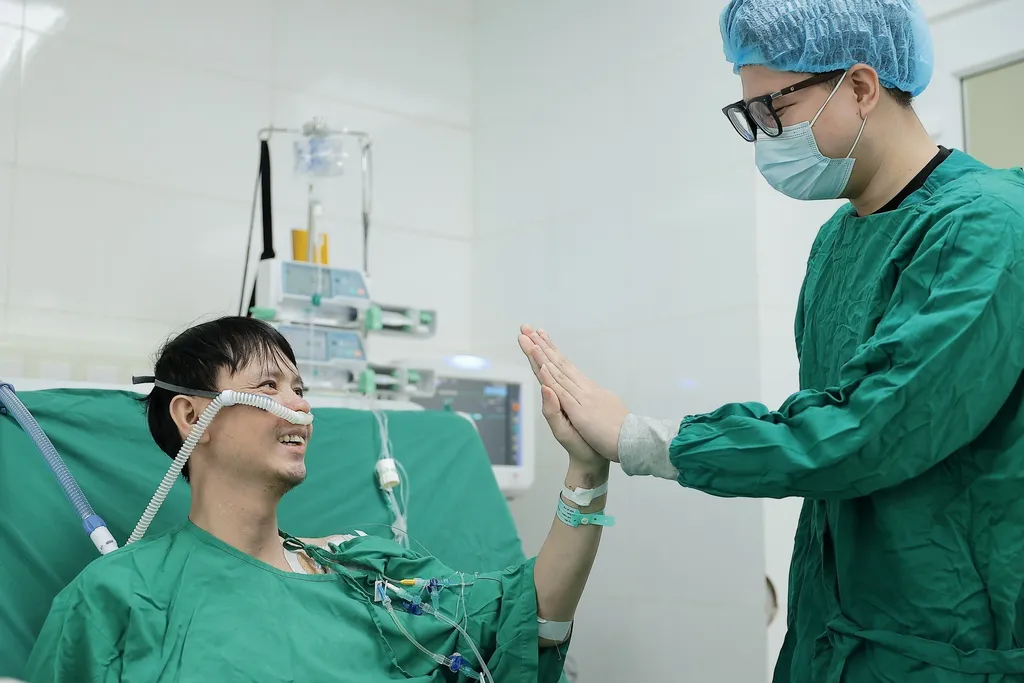
In just four days, from May 18 to 23, 2026, surgical teams at Việt Đức University Hospital successfully performed 21 organ transplants, marking one of the largest multi-organ transplant campaigns ever carried out in Việt Nam.
Of these, 19 transplants used organs donated by three brain-dead donors, following deeply humane decisions made by their families. The procedures included five liver transplants, including two for paediatric patients, two heart transplants, one lung transplant, 10 kidney transplants and one tracheal transplant. During the same period, the hospital also conducted three kidney transplants from living donors.
The campaign featured several highly complex procedures performed simultaneously, spanning heart, lung, liver and tracheal transplantation. In lung transplantation in particular, doctors refined surgical and anaesthesia-resuscitation protocols to shorten operating time, reduce costs and improve patients’ chances of recovery.
For the first time in Việt Nam, laryngeal mask airway anaesthesia was applied in a lung transplant procedure. The technique helps minimise airway invasion, reduce the risk of post-operative respiratory complications and support faster recovery. It is regarded as a significant advance in anaesthesia and intensive care for specialised organ transplantation.
Of these, 19 transplants used organs donated by three brain-dead donors, following deeply humane decisions made by their families. The procedures included five liver transplants, including two for paediatric patients, two heart transplants, one lung transplant, 10 kidney transplants and one tracheal transplant. During the same period, the hospital also conducted three kidney transplants from living donors.
The campaign featured several highly complex procedures performed simultaneously, spanning heart, lung, liver and tracheal transplantation. In lung transplantation in particular, doctors refined surgical and anaesthesia-resuscitation protocols to shorten operating time, reduce costs and improve patients’ chances of recovery.
For the first time in Việt Nam, laryngeal mask airway anaesthesia was applied in a lung transplant procedure. The technique helps minimise airway invasion, reduce the risk of post-operative respiratory complications and support faster recovery. It is regarded as a significant advance in anaesthesia and intensive care for specialised organ transplantation.
Of these, 19 transplants used organs donated by three brain-dead donors, following deeply humane decisions made by their families. The procedures included five liver transplants, including two for paediatric patients, two heart transplants, one lung transplant, 10 kidney transplants and one tracheal transplant. During the same period, the hospital also conducted three kidney transplants from living donors.
The campaign featured several highly complex procedures performed simultaneously, spanning heart, lung, liver and tracheal transplantation. In lung transplantation in particular, doctors refined surgical and anaesthesia-resuscitation protocols to shorten operating time, reduce costs and improve patients’ chances of recovery.
For the first time in Việt Nam, laryngeal mask airway anaesthesia was applied in a lung transplant procedure. The technique helps minimise airway invasion, reduce the risk of post-operative respiratory complications and support faster recovery. It is regarded as a significant advance in anaesthesia and intensive care for specialised organ transplantation.
Of these, 19 transplants used organs donated by three brain-dead donors, following deeply humane decisions made by their families. The procedures included five liver transplants, including two for paediatric patients, two heart transplants, one lung transplant, 10 kidney transplants and one tracheal transplant. During the same period, the hospital also conducted three kidney transplants from living donors.
The campaign featured several highly complex procedures performed simultaneously, spanning heart, lung, liver and tracheal transplantation. In lung transplantation in particular, doctors refined surgical and anaesthesia-resuscitation protocols to shorten operating time, reduce costs and improve patients’ chances of recovery.
For the first time in Việt Nam, laryngeal mask airway anaesthesia was applied in a lung transplant procedure. The technique helps minimise airway invasion, reduce the risk of post-operative respiratory complications and support faster recovery. It is regarded as a significant advance in anaesthesia and intensive care for specialised organ transplantation.
Of these, 19 transplants used organs donated by three brain-dead donors, following deeply humane decisions made by their families. The procedures included five liver transplants, including two for paediatric patients, two heart transplants, one lung transplant, 10 kidney transplants and one tracheal transplant. During the same period, the hospital also conducted three kidney transplants from living donors.
The campaign featured several highly complex procedures performed simultaneously, spanning heart, lung, liver and tracheal transplantation. In lung transplantation in particular, doctors refined surgical and anaesthesia-resuscitation protocols to shorten operating time, reduce costs and improve patients’ chances of recovery.
For the first time in Việt Nam, laryngeal mask airway anaesthesia was applied in a lung transplant procedure. The technique helps minimise airway invasion, reduce the risk of post-operative respiratory complications and support faster recovery. It is regarded as a significant advance in anaesthesia and intensive care for specialised organ transplantation.
Opinion
 Opinion
 Opinion
 Opinion
 Opinion
 Opinion
 Opinion
 Opinion
 Opinion
 Opinion
 Opinion
 Opinion
 Opinion
 Opinion
.jpg) Opinion
Opinion