 Opinion
Vietnamese Prime Minister meets Cambodian National Assembly President
1.
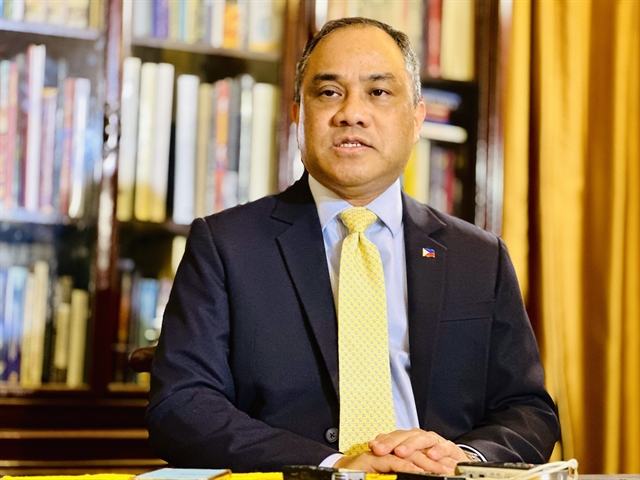 |
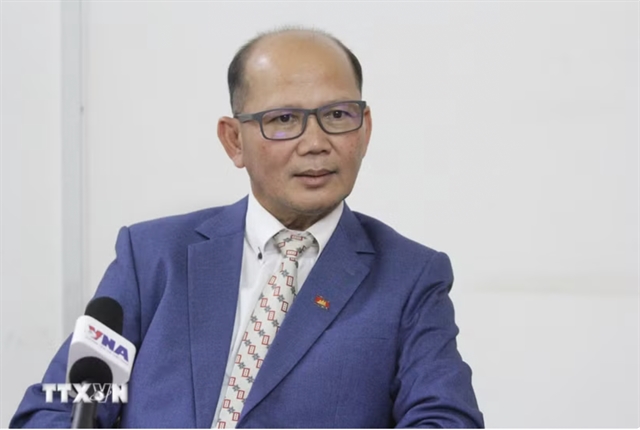
| Ambassador of the Philippines to Việt Nam Francisco Noel Fernandez III. — VNA/VNS Photo Việt Đức |
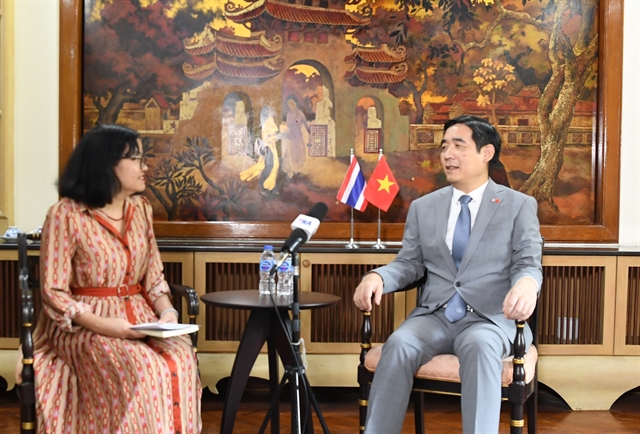
HÀ NỘI — Party General Secretary and State President Tô Lâm’s upcoming visit to the Philippines offers an opportunity for the two countries to reflect on five decades of bilateral relations and jointly shape a future vision for cooperation, Philippine Ambassador to Việt Nam Francisco Noel Fernandez III told the press ahead of the trip.
The visit, taking place from May 31 to June 1, marks the first official visit of a General Secretary of the Communist Party of Việt Nam to the Philippines.
Multiple areas of cooperation are on the trip’s agenda, including trade, culture and security, as well as coordination within ASEAN and at multilateral forums.
Fernandez expressed strong confidence in bilateral trade relations. He noted that major Philippine corporations are investing in food, renewable energy, infrastructure and clean water supply in Việt Nam.
Việt Nam is also interested in the extensive experience of Philippine companies in operating international seaports. Several Philippine firms are being invited by the Vietnamese side to cooperate through joint ventures to develop international port systems in Việt Nam, said the diplomat.
A bilateral business forum is scheduled during the visit, co-organised by the Philippine Department of Trade and Industry and its Vietnamese counterpart. The event is expected to create opportunities for businesses from both countries to meet, exchange views and explore new areas of cooperation.
The ambassador noted that the potential for economic cooperation between Việt Nam and the Philippines remains enormous, particularly in sectors involving large businesses.
“Investment between major corporations provides a more sustainable and long-term foundation for cooperation than short-term trade activities, which are more vulnerable to shifts in consumer preferences,” he said.
Leaders of both countries are expected to agree on increasing bilateral trade turnover from the current US$8.3 billion to over $10 billion. Beyond traditional sectors, such as rice and semiconductor components, cooperation is expected to expand into the blue economy, including the scientific management and sustainable use of marine resources.
A notable example of growing trade cooperation is the rapid expansion of the Philippine fast food chain Jollibee Foods Corporation. Meanwhile, Vietnamese conglomerate Vingroup is entering the Philippine electric vehicle market.
Many Philippine businesses are also contributing to infrastructure and water treatment projects in Việt Nam.
One of the highlights of relations between the Philippines and Việt Nam has been intensifying people-to-people exchanges, with around 430,000 Filipino visitors travelling to Việt Nam and 33,500 Vietnamese tourists visiting the Philippines in the past year.
In education, a growing number of Filipino students are studying undergraduate and postgraduate programmes in Việt Nam, while more Vietnamese students are coming to the Philippines for internships and academic exchanges.
“Investing in younger generations is the most important foundation for ensuring that relations between the two countries continue to develop sustainably in the future,” Fernandez said.
The two sides are working to expand cooperation not only in education, but also in military sports. Việt Nam will soon host a sporting competition among ASEAN armed forces, helping strengthen exchanges among military personnel across the region.
Meanwhile, the exchange visit between the Philippine Coast Guard and the Việt Nam Coast Guard last year demonstrated both governments’ intentions to expand bilateral security cooperation.
This year, officers from Việt Nam’s Ministry of National Defence are expected to attend English-language training programmes in the Philippines, while Việt Nam will organise Vietnamese-language courses for Philippine military personnel.
Speaking about the significance of the Philippines–Việt Nam within ASEAN in the current regional context, Fernandez noted that both countries are playing active roles within the bloc, with complementary interests and strengths rather than competing ones.
Việt Nam is currently among ASEAN’s fastest-growing economies, while the Philippines possesses strength in maritime affairs, said the ambassador, adding that both countries place particular emphasis on promoting and sustaining the development of the blue economy.
“Greater attention to the seas connecting ASEAN countries will help the region make better use of shared resources,” said the Philippine diplomat.
At the recent ASEAN Summit in Cebu, Vietnamese Prime Minister Lê Minh Hưng shared Việt Nam’s experience in economic growth. Meanwhile, the Philippines proposed the establishment of an ASEAN maritime centre, an initiative that received consensus from regional leaders.
“The Philippines’ interests as a maritime nation and Việt Nam’s orientation towards a marine-based economy have much in common, creating substantial room for cooperation. The two sides can deepen collaboration, share experiences and support one another in maritime, marine economic and sustainable development issues within ASEAN,” the ambassador said. — VNS
Opinion
 Opinion
 Opinion
 Opinion
 Opinion
 Opinion
.jpg) Opinion
Opinion
 Opinion
.jpg) Opinion
Opinion
.JPG) Opinion
Opinion
 Opinion
 Opinion
 Opinion
 Opinion
 Opinion