 Opinion
University of Economics HCM City hosts international student research conference
1.
|
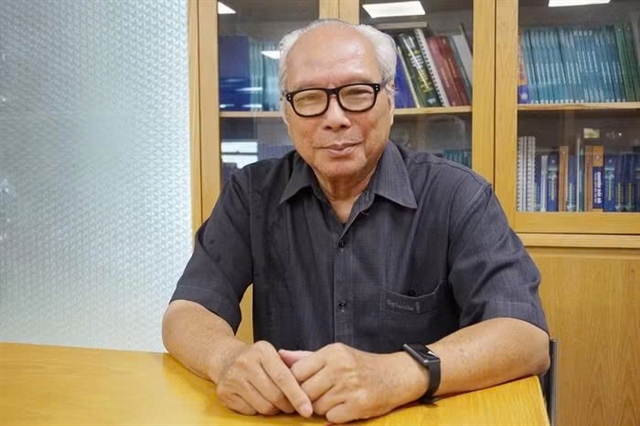
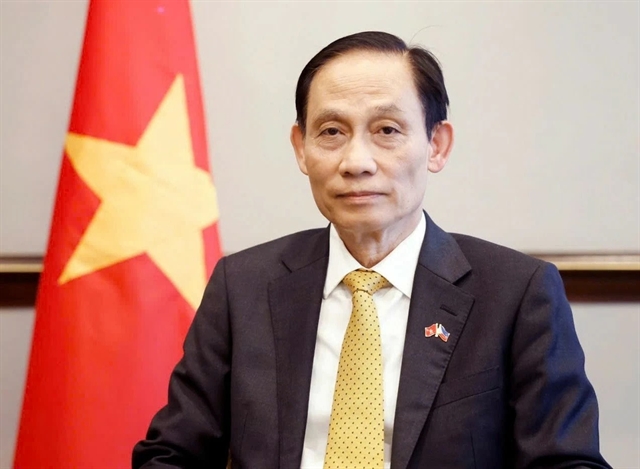
| Dr Lê Viết Khuyến, Vice President of the Vietnam Association of Universities and Colleges. — Photo courtesy of Dr Lê Viết Khuyến |
In an interview with the Voice of Vietnam about the future of higher education, Lê Viết Khuyến said Party General Secretary and State President Tô Lâm’s directives signal that Vietnam National University, Hà Nội, should shift from a traditional research university towards an innovation-driven hub capable of transforming knowledge into technology, products and national value.
What do you see as the most significant message in the tasks that Party General Secretary and State President Tô Lâm assigned to Vietnam National University, Hà Nội (VNU)?
The most significant message, in my view, is that the directions given to VNU were, in fact, aimed at the wider higher education system in Việt Nam.
What the leader outlined was a highly strategic vision for the future of universities. For years, Việt Nam has focused on building research universities, where quality is measured through scientific output, international publications and the strength of doctoral faculty. In that model, research and teaching go hand in hand, with research often taking priority.
However, globally, leading universities are moving beyond the traditional research university model. Many are evolving into entrepreneurial and innovation-driven institutions. In the knowledge economy, universities are expected not only to generate knowledge but also to transform it rapidly into technology, products, economic value and national competitiveness.
I believe the General Secretary and State President is signalling that VNU should develop in that direction, becoming a centre for elite knowledge, talent development and national innovation leadership rather than simply teaching or applying knowledge.
Do you think VNU now needs to evolve beyond the conventional research university model?
Yes. I think that is precisely the direction being suggested. An innovation-driven university is not simply about teaching start-ups or adopting a fashionable concept. It requires a fundamental transformation in how universities define their mission, operate and engage with industry.
The aim is to generate socio-economic value through innovation by linking education and research with the commercialisation of knowledge. In other words, universities are expected not only to create knowledge but also to turn it into technology, products and national competitive capacity.
This approach is often described as the triple helix model, in which the State sets strategic priorities and policy frameworks, businesses identify demand and provide investment and universities conduct research, train talent and commercialise innovation.
Many leading universities around the world already follow this model. They are closely connected with technology parks, spin-off companies, venture capital funds and broader innovation ecosystems. This forms the foundation behind major innovation hubs such as Silicon Valley and Israel’s technology sector.
Today, universities are increasingly expected to serve not only as centres of teaching and academic research but also as drivers of innovation and economic growth.
Why has this become an inevitable global trend in higher education?
Because the global economy has changed dramatically. Countries need faster innovation to remain competitive in a high-technology world. Businesses no longer expect universities simply to train graduates. They also expect them to create new technologies and transfer them rapidly into practice.
Governments, meanwhile, are redefining the role of universities in national development by strengthening links between the State, academia and industry. Students themselves are also increasingly interested in entrepreneurship, technology start-ups and flexible career opportunities.
That is why the innovation-driven university model has become inevitable.
I was particularly struck when Party General Secretary and President Tô Lâm said university knowledge should not remain confined to lecture halls, laboratories or academic papers, but should instead be transformed into better policies, stronger businesses, more developed localities and improved living standards.
To me, that reflects a very modern understanding of the role of universities. It also shows that higher education is now being viewed as part of a long-term national strategy directly linked to science, technology, innovation and competitiveness.
What impact do you think this message could have on higher education in Việt Nam?
I think the pressure for reform will become much stronger. Once such a strategic direction is established, universities, especially leading institutions, will have to rethink their missions and development models.
This is no longer simply about climbing rankings or expanding enrolment. Universities will increasingly be judged on whether they can generate new knowledge, develop technologies and contribute directly to national development.
Clearly, VNU is being positioned as a national and potentially regional hub for talent training, research and innovation. It is an ambitious target, but one that is fully aligned with global higher education trends. — VNS
Opinion
 Opinion
 Opinion
 Opinion
 Opinion
 Opinion
 Opinion
 Opinion
 Opinion
 Opinion
 Opinion
 Opinion
 Opinion
 Opinion
 Opinion