 Opinion
Planning strategy gives Hà Nội room to raise stature
1.
|
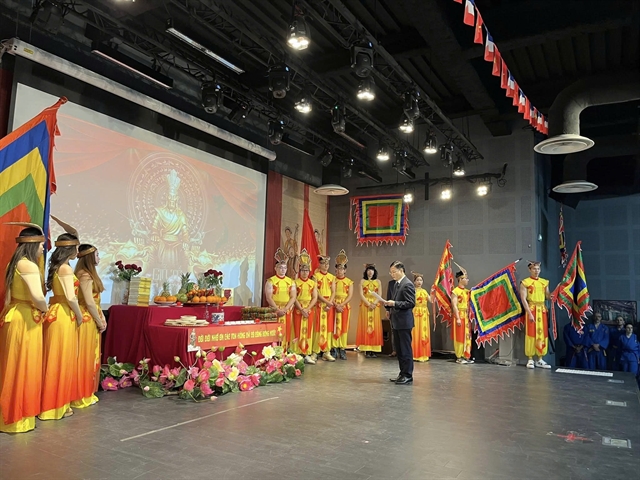
| The 2025 Hùng Kings’ Commemoration Day is organised by the Vietnam Cultural Center in Paris, France. Photos courtesy of Trần Lê Hưng |
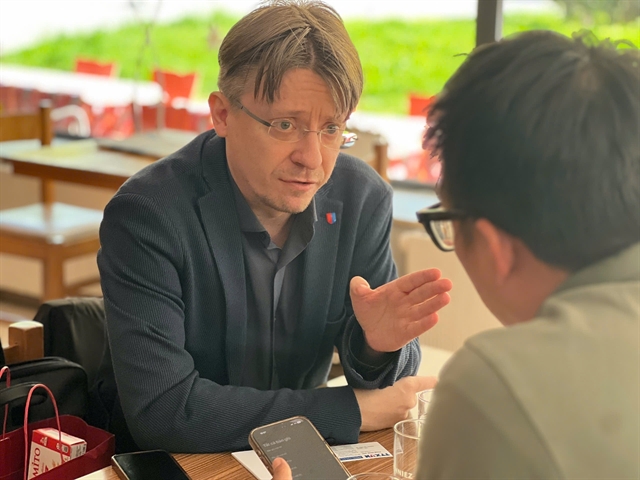
On the occasion of Hùng Kings’ Commemoration Day, observed on the 10th day of the third lunar month (falling on April 26 this year), Assoc. Prof. Dr. Trần Lê Hưng shared his reflections with Việt Nam News reporter Nguyễn Khánh Chi. Dr. Hưng, a high-speed rail specialist at the Engineering School of Paris, Gustave Eiffel University, spoke about the emotions of attending the 2025 celebration in France.
You got the chance to attend the Hùng Kings’ Commemoration Day organised by the Vietnam Cultural Center in Paris, France in 2025, could you share your emotions?
This is an annual event with a long-standing tradition that receives immense support and interest from the Vietnamese community across France. As a cultural event centered on our national roots, it embodies the beautiful Vietnamese tradition of "When drinking water, remember its source."
It serves as a bridge connecting Vietnamese people from all corners of the globe, reminding each individual of their ancestry and heritage. It is also a time for us to reflect on ourselves, heighten our national consciousness, and together spread the vibrant culture of Việt Nam to our international friends.
It can be said that this unique cultural event is an indispensable "spiritual staple" for overseas Vietnamese. Each attendee likely carries their own personal reflections, but we all share a common sense of national pride and profound gratitude toward the ancestors who founded our nation. It is a powerful reminder of each individual’s responsibility in the ongoing mission of national preservation.
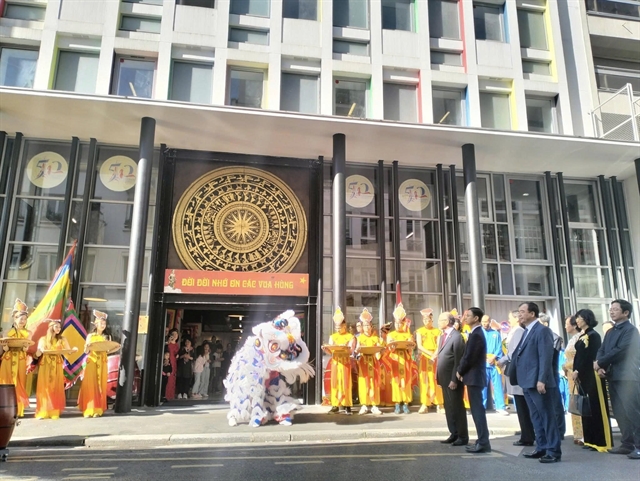
Having been invited to the programme, I am deeply grateful for such a meaningfully structured event. It opened with the vibrant energy of festival drums and lion dances, followed by a formal ceremony to report our achievements, traditional art performances, and finally, the sacred incense offering.
The programme was professionally organised on a grand scale, yet it felt formal and warm. This reflects the deep sense of responsibility and care shown by the leaders of Vietnamese representative agencies in France in connecting the community. Their efforts help build a strong, sustainable community that is rich in national identity and always oriented toward the Fatherland.
The participation of various Vietnamese associations and student groups further demonstrates our people's unity. Above all, it shows that the younger generation is ready to inherit and promote the beautiful values of Việt Nam, ensuring they continue to shine on the international stage.
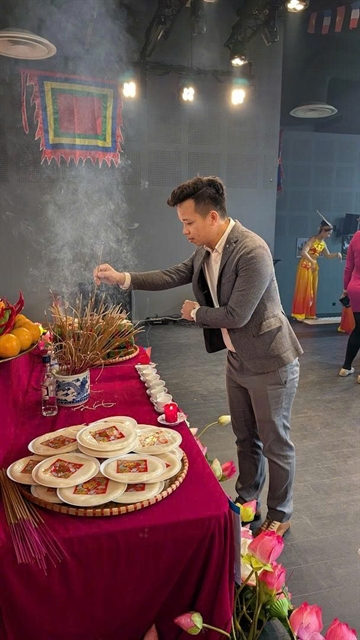
The moment I offered incense to the Hùng Kings was deeply moving for me, as it has been a long time since I had the opportunity to visit the original Hùng Kings Temple in Phú Thọ Province.
As I offered that humble tribute, I was reminded of the heartfelt words of our beloved President Hồ Chí Minh "The Hùng Kings had the merit of founding the country; you and I must together defend it."
In your view, to what extend the annual commemoration of the Hùng Kings abroad is of overriding significance in reminding overseas Vietnamese generations of their ancestral roots?
This event should be held annually because it is a spiritual cultural activity steeped in national identity. It helps us honour the contributions of past generations while fostering a sense of personal responsibility.
At home in Việt Nam, we naturally gain a deeper understanding through the surrounding cultural environment and visits to historical sites during our upbringing. However, for those living abroad, faced with geographical distance and dispersed communities, preserving cultural heritage becomes even more critical for the younger generation.
Such programmes offer youth a chance to understand their origins, lessons they might otherwise only hear through their parents' stories, and provide a clearer vision of the Vietnamese tradition of 'uống nước nhớ nguồn' (when drinking water, remember its source).
Furthermore, it nurtures the spiritual lives of the diaspora and promotes Việt Nam’s image to the world. We must also emphasise that cultural diplomacy is a top priority for the Party and State, as 'culture lights the way for the nation.' This principle has been formalised in the Politburo’s Resolution No 80-NQ/TW regarding the future development of Vietnamese culture.
|
| Trần Lê Hưng offers incense to the Hùng Kings at the 2025 Hùng Kings’ Commemoration Day in France. |
How do you see the event helps honour and spread Vietnamese traditions while connecting with local citizens and international friends?
Every nation and every region possesses its own unique culture. Việt Nam, with its long geography, is home to a diverse cultural landscape. Yet, throughout our S-shaped land, there is a common thread: the tradition of ancestor worship and a profound sense of gratitude toward those who came before us.
We recognise that every individual today 'stands on the shoulders of giants.' I believe this is a beautiful cultural value, not just for Vietnamese people, but for all of humanity. Progressive people around the world, particularly here in France, share this perspective and are deeply aware of their own responsibilities in life.
Therefore, bringing the Hùng Kings’ Commemoration and other Vietnamese festivals to the international stage is essential in today’s open society. It allows us to be more proactive in global integration, drawing international friends closer to our country while projecting our national image abroad.
I have the honour of knowing a French painter who has long supported the development of Vietnamese culture; he is deeply moved by our folk melodies and the unique cultural traits of our various ethnic groups. This proves that our culture offers a sense of freshness in thought and creativity, serving as a vast source of inspiration for the spiritual development of mankind.
|
| The 2025 Hùng Kings’ Commemoration Day in France opens with the vibrant energy of festival drums and lion dances. |
As a young overseas Vietnamese, what are your aspirations for contributing to the development of your homeland? What policies do you expect the Party and State will implement to create even better conditions for the diaspora to help build a strong and prosperous Việt Nam?
During his lifetime, late President Hồ Chí Minh organised the First National Cultural Conference in 1946 at the Hanoi Opera House. This demonstrated his foresight regarding the vital importance of culture as the soul of the nation. However, due to various objective and subjective factors, it was not until 2021 that the Second National Cultural Conference was held. Speaking at this conference, the late Party General Secretary Nguyễn Phú Trọng further reaffirmed the role of culture as "lighting the way for the nation." Concurrently, various presentations offered strategic "recommendations" to orient the development of Vietnamese culture and people in the new era, thereby creating a profound shift in the awareness and consciousness of the modern Vietnamese person.
Subsequently, the Politburo issued Resolution No 80-NQ/TW on the development of Vietnamese culture in the new period early this year. This illustrates that our Party and State consistently place a high priority on cultural development or in other words, on nurturing the spiritual life of the Vietnamese people. These policies have received widespread support from Vietnamese citizens both at home and abroad, as "spiritual health" is an indispensable element for every individual. Overseas Vietnamese have also consistently received attention from the Party and State through action programmes such as "Homeland Spring," the Hùng Kings Commemoration anniversary held domestically, and visits to the Trường Sa (Spratly) Archipelago. These events always resonate deeply and create a sense of eager excitement among the overseas Vietnamese community.
Nevertheless, due to the discrepancies between the lunar and solar calendars, the number of overseas Vietnamese able to attend these programmes remains somewhat limited, which occasionally hinders broader outreach. Therefore, we should establish more specific programmes to facilitate deeper involvement of overseas Vietnamese in advisory work, policy-making, and providing constructive feedback on major national projects. They represent an endogenous resource of the Vietnamese nation, ready to dedicate their full intellect and strength to the cause of building and defending the Fatherland, fueled by their steadfast confidence in the absolute leadership of the Party and the management of the State. VNS
Opinion
 Opinion
 Opinion
 Opinion
 Opinion
 Opinion
 Opinion
 Opinion
 Opinion
 Opinion
 Opinion
 Opinion
 Opinion
 Opinion
 Opinion