
SBV to curb property price inflation, enforce lending rate rules
1.
Việt Nam is right to focus on technology and innovation for its next development breakthrough. A parallel set of investments can help make this vision a reality.
 |
| Party General Secretary and State President Tô Lâm receives the report “Forging Viet Nam’s Semiconductor Future: Talent and Innovation Leading the Way” from Mariam J. Sherman, World Bank Division Director for Vietnam, Cambodia, and Lao PDR, at the Việt Nam International Innovation Expo 2025. — VNA/VNS Photo Thống Nhất |
Mariam J. Sherman*
Resolution 57 is Việt Nam’s most ambitious commitment to date on science, technology, innovation, and digital transformation. This is backed by real resources – at least 3 per cent of its state budget, or US$25 billion over 2026 to 2030. The political determination is clear. The real challenge is how to deliver it, and make sure that resources reach the firms, workers, and infrastructure that can convert ambition into sustained growth and better jobs.
Việt Nam presents a striking paradox. The country is one of Asia's most dynamic technology-manufacturing hubs. Samsung's operations alone generate revenue equal to 13 per cent of national GDP, and foreign-invested firms account for more than 70 per cent of exports. Yet average value-added from exports remains modest. A Vietnamese worker produces about $6.70 worth of value per hour, less than half the value of a Chinese workers and one quarter of a Malaysian worker. The gap is real, and one reason is technology. According to a recent World Bank report, fewer than 20 per cent of domestic firms supply global value chains or have adopted foreign-licensed technology.
The technology is already in Việt Nam. It just hasn't taken root.
Technology absorption by domestic firms is still limited. Foreign firms import nearly 90 per cent of their electronic components from abroad, rather than relying on local suppliers. Nearly 98 per cent of Vietnamese businesses are small firms or household enterprises, which are the least equipped to absorb new technology and access credit, and most at risk of being left behind by the productivity boost technology brings.
Resolution 57 is a major opportunity to unlock productivity gains to sustain growth. Three priorities stand out to ensure implementation follows ambition.
Spend Better, Not Just More
Việt Nam has made ambitious R&D commitments before. A previous 2 per cent budget target for science and technology (S&T) yielded an actual outlay closer to 1 per cent. State-owned enterprises were required to set aside up to 10 per cent of pretax profits for S&T funds. Much of it sat unspent, because the rules governing how the money could be used were written too narrowly.
Gains from spending better could be substantial. If the 100 largest State enterprises deployed their existing S&T contributions in full, Việt Nam's ratio of research spending to GDP would roughly double, without any additional budget outlay. The obstacle is administrative first, not financial.
Decree 265, recently issued, is a start. Broadening permitted uses in S&T funds to cover technology licensing, university partnerships and outside expertise would unlock capital that is already committed but sitting idle. Two further changes would help: replacing administrative allocations with competitive, peer-reviewed grants, and rewriting the country's 200 per cent R&D tax deduction so that smaller firms can claim it.
Concentrate Support, Demand Results
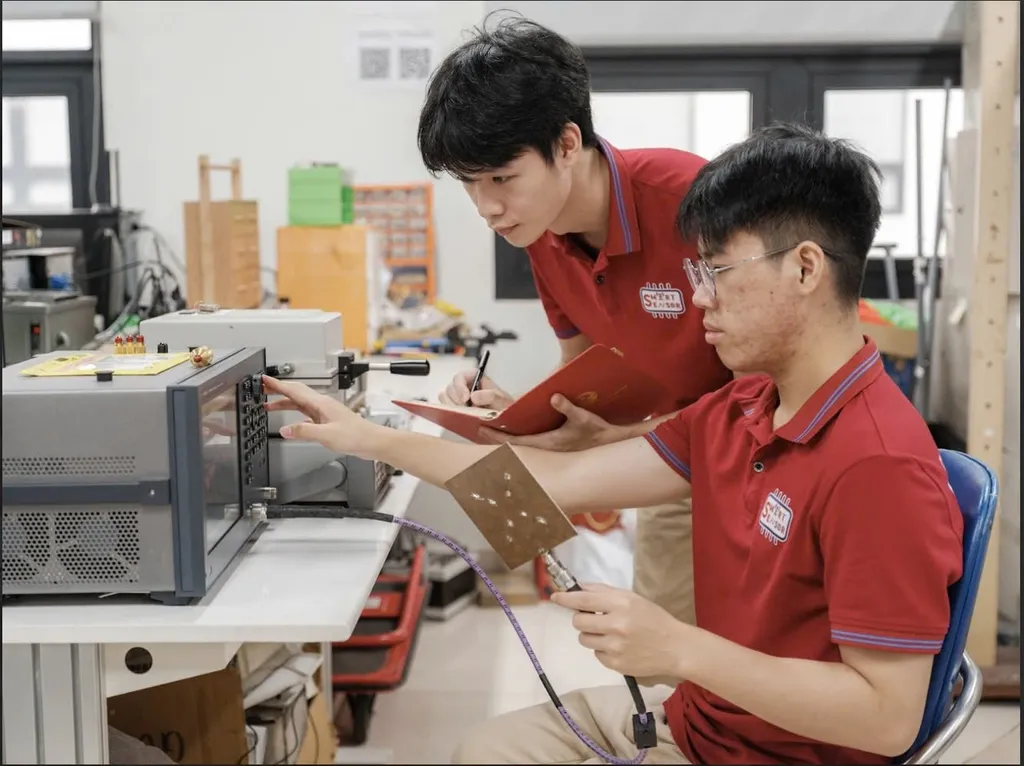 |
| Students work in a lab on integrated circuit design at Hanoi University of Science and Technology, one of the universities supported by the World Bank to help build high-tech skills. — Photo courtesy of the World Bank |
Resolution 57's ambition to make Việt Nam a top-three ASEAN innovation hub by 2030 will not be achieved by thinly spreading resources to all firms, rather by targeting firms most likely to unlock good jobs and growth.
The clearest evidence of what works already exists within Việt Nam's own borders. In 2015, Việt Nam’s Ministry of Industry and Trade partnered with Samsung to place engineers inside Vietnamese factories, transferring quality standards, production methods and institutional knowledge. By 2023, the number of Vietnamese suppliers in Samsung's supply chain had grown from 25 to more than 300. Participating firms reported productivity gains of 30 to 50 per cent.
That model – focused, hands-on, and tied to measurable outcomes – is replicable. The Government plans to support 500,000 small- and mid-size businesses through digital transformation by 2030, with 200 sector-leading “lighthouse” firms to emulate others. Success will depend on whether the programme is disciplined in targeting participants and disburses against verifiable milestones.
Talent is equally critical. An estimated 65 per cent of Việt Nam's most accomplished technology professionals currently work abroad, without strong links to scientists in Việt Nam. Concentrating university funding on fewer, autonomous institutions and creating substantive roles for diaspora experts would begin to change that calculation.
Invest In Foundations That Endure
Some of the most consequential reforms to achieve tech success are about building enduring infrastructure foundations. These investments would help make Việt Nam more competitive and support firms and workers regardless of the technology used.
Digital infrastructure is the clearest example. Current data-localisation rules push Vietnamese firms toward slower, costlier domestic servers and restrict access to global cloud platforms where advanced AI tools are concentrated. A careful review – consistent with data security requirements – would lower the cost of digital adoption for businesses that most need it.
On logistics, investments could address current competitiveness constraints and yield real payoffs. Logistics costs remain higher than regional peers, with container import dwell time three times longer than in Singapore. An expanded and modernised National Single Window system with automated risk profiling for trusted traders would cut transaction costs in a measurable way. Efficiency gains could also come from upgrading multi-modal connectivity, especially around ports and making better use of rail and inland waterways for freight transportation.
Energy investments are also crucial for attracting tech investment, as advanced technology buyers, including semiconductor manufacturers, increasingly require clean energy from their suppliers. Việt Nam’s Power Development Plan 8's targets of 73 gigawatts of solar and 38 gigawatts of wind by 2030 serve industrial strategy as much as climate goals in this regard.
Resolution 57 sets the right course. Turning it into results will depend on whether the less visible work – sound financing mechanisms, targeted support for firms and workers, and foundational investments – keeps pace with the headline ambitions. Việt Nam has shown time and again that it can translate political determination into concrete results. That capacity is exactly what this moment requires.
* Mariam J. Sherman is the World Bank Division Director for Vietnam, Cambodia and Lao PDR
 Opinion
 Opinion
 Opinion
.jpg) Opinion
Opinion
 Opinion
 Opinion
 Opinion
 Opinion
 Opinion
 Opinion
 Opinion
 Opinion
 Opinion
 Opinion