 Opinion

MoIT to build system to flag unusual fuel price movements
1.

|
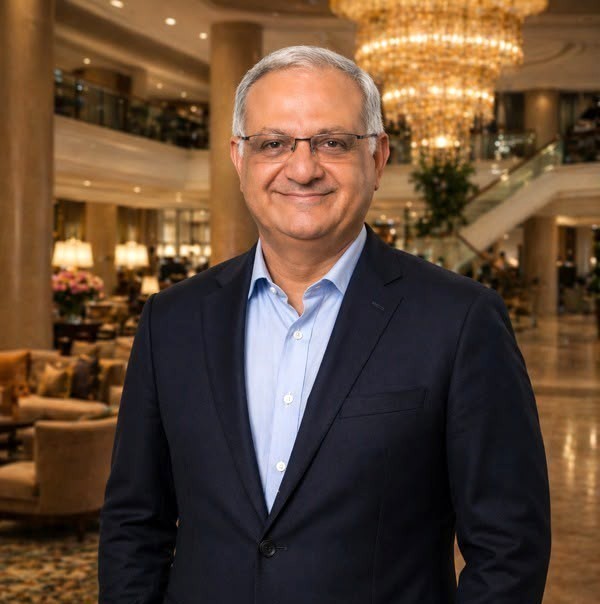
| Former senior Israeli technology expert Mel Shalev. Photo courtesy of Mel Shalev |
TEL AVIV — Việt Nam’s greatest asset lies not in capital or natural resources, but in its people, particularly its young generation and the deeply rooted cultural tradition that places a high value on education and learning, a former senior Israeli technology expert has said.
In an interview granted to a Vietnam News Agency (VNA) correspondent in Israel, Mel Shalev, a former senior Israeli technology expert with more than 40 years of experience in tech industry, including 37 years at IBM, said one of the things that impressed him most during his first visit to Hà Nội more than 25 years ago was the Vietnamese people's deep respect for scholars and learning, as well as their strong commitment to education.
He described this as a unique competitive advantage that few countries possess. Therefore, Việt Nam should continue investing in education, ensuring a steady supply of high-quality young human resources while continuously improving the quality of education and training.
Shalev, who have spent decades working, conducting research and collaborating with partners in Việt Nam, noted that the rapid advancement of artificial intelligence (AI) is bringing profound changes to education worldwide, suggesting Việt Nam capitalise on this trend to enhance teaching and learning effectiveness.
In the future, teachers are likely to shift from being knowledge transmitters to facilitators, mentors and advisors, while much of the learning process will be supported by digital education platforms and AI-powered tools, he said.
According to Shalev, if Việt Nam were to prioritise strategic sectors over the next five years, it should focus on five key areas, including educational technology (EdTech), especially those leveraging AI technologies for children; software industry; green energy; biotechnology and AgroTech; and consumer electronic and semiconductors industry.
In education, he said if Việt Nam can develop effective digital education products for its domestic market, it could eventually scale up and export these solutions to other countries.
Regarding software, he said Việt Nam’s software services industry is already globally competitive and moving up the value chain. However, he cautioned against direct competition with big tech in core platforms like operating systems and ERP systems. Instead, he highlighted stronger opportunities in niche, industry-specific AI applications based on large language models (LLMs), especially in tourism, healthcare, commerce, education, smart homes and investment services.
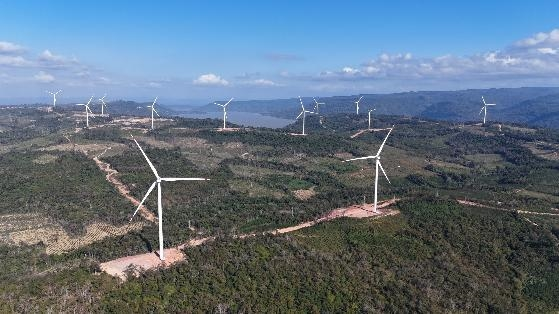
On green energy, the expert said Việt Nam has strong potential as a major net importer of oil and gas. He noted that expanding renewables will improve energy security and create new industrial opportunities. He also recommended partnering with global firms on large-scale projects while gradually building domestic expertise and manufacturing capacity for export-oriented components.
In biotech and agri-tech, he said Việt Nam already has a base in generic drugs, vaccines and antibiotics, and should expand cooperation or joint ventures with leading global pharma firms to boost R&D, production and exports. In agriculture, he highlighted AI, robotics and automation as key tools to improve quality and raise the value of exports like coffee through precision farming and harvesting.
For consumer electronics and semiconductors, he suggested that smart small electric mobility, such as personal electric vehicles and e-scooters, represents a highly promising segment for Việt Nam. He also stressed the importance of developing capabilities in printed circuit board (PCB) design and manufacturing, as well as chip design and testing services.
For semiconductor production, the expert noted that Việt Nam should only enter large-scale chip manufacturing when it can attract leading global technology firms willing to invest directly and bear most of the construction costs, similar to the approach taken by countries such as China, India, Israel, Ireland and Malaysia.
Regarding the development of strategic technology products, Shalev said that self-reliance is necessary but should not be interpreted as isolation or self-sufficiency. He emphasised that sustainable development requires integration into global cooperation networks.
He said that the foundation of innovation begins with education. He proposed that Việt Nam should consider integrating courses on creative thinking, innovation and invention into technical and science curricula at universities to nurture a new generation of engineers and researchers with stronger innovation capabilities.
For high-risk research and development (R&D), he said Việt Nam does not necessarily need to rely on direct state budget subsidies. Instead, the country could adopt tax incentives for companies investing in R&D, similar to policies used in many advanced technology economies.
He also recommended actively attracting foreign investment in research through partnerships with international universities and companies with strong R&D capabilities. However, he emphasised that Việt Nam should proactively seek and build these partnerships rather than waiting for external partners to initiate cooperation. — VNA/VNS
Opinion
 Opinion
 Opinion
 Opinion
 Opinion
 Opinion
 Opinion
 Opinion
 Opinion
 Opinion
 Opinion
 Opinion
 Opinion
 Opinion
 Opinion