 Opinion
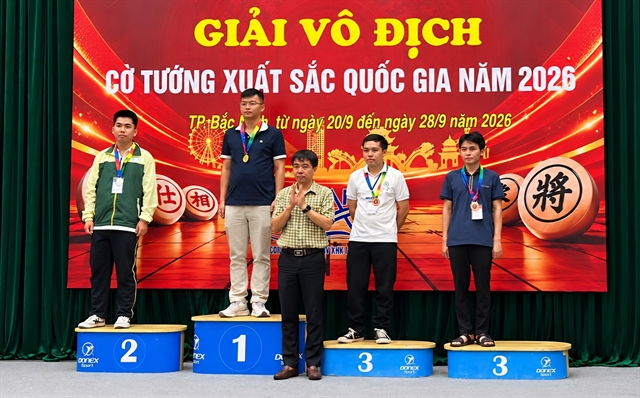
HCM City tops national Chinese chess championship in Bắc Ninh
1.
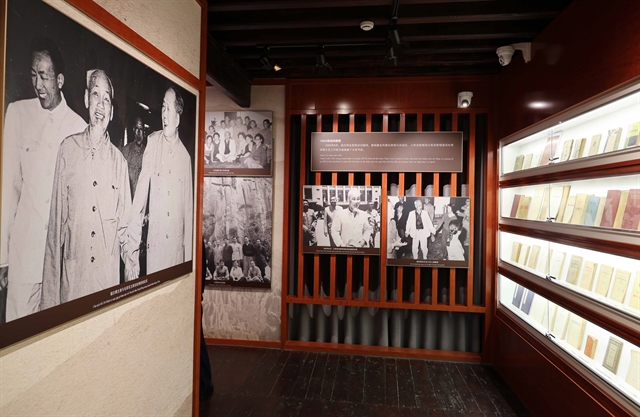 |
| Images of President Hồ Chí Minh preserved at the Hồ Chí Minh Historical Relic Site in Kunming, Yunnan Province. — VNA/VNS Photo |
BEIJING — President Hồ Chí Minh’s years of revolutionary activities in China were decisive in shaping both his political ideology and strategy for liberating Việt Nam, Chinese cultural and historical scholar Xie Chaode told Vietnam News Agency reporters in Beijing.
Xie said President Hồ Chí Minh spent a long time conducting revolutionary activities in China, especially in Guangxi, Guangzhou and Yunnan, where he not only advanced revolutionary work but also focused on personnel training and laying the groundwork for Việt Nam’s national liberation movement.
At a time when Việt Nam’s revolutionary movement was still in its infancy, young patriot Nguyễn Ái Quốc, later known as Hồ Chí Minh, lived and operated under extremely hardships, constantly relocating to evade persecution while secretly mobilising and rallying revolutionary forces.
Guangxi then served as a gathering place for overseas Vietnamese and various Chinese revolutionary groups. There, he forged ties with patriotic organisations, absorbed revolutionary theory, and studied Chinese revolutionary experience before adapting those lessons to Việt Nam’s struggle for independence.
During this period, the leader contributed newspaper articles, compiled propaganda materials, promoted the ideology of national liberation, and trained personnel for Việt Nam’s revolutionary movement. He also paid special attention to building solidarity within the overseas Vietnamese community, instructing compatriots on how to conduct revolutionary activities safely while adhering to the principles that “the revolution must rely on the people” and that “everything is for national independence".
Li Jie, a tour guide at Nanyang Hotel Memorial House in Liuzhou, Guangxi, said that during President Hồ Chí Minh’s stay there, he produced a body of literary works and poems that reflected resilience, determination, and an unbroken will under hardships, all while operating in secrecy. He later relocated to Guangzhou where he ran political and military training courses and educated core personnel for Việt Nam’s revolutionary cause.
Xie stressed that President Hồ Chí Minh’s activities in China not only delivered critical contributions to Việt Nam’s revolutionary struggle but also embodied the traditional friendship cultivated between the two peoples across multiple historical periods.
The revered Vietnamese leader’s footsteps in China stand as vivid testimony to his perseverance, indomitable will, and strategic vision during his quest for a path to national salvation, while simultaneously contributing to the continued deepening of Việt Nam–China ties, he added. — VNA/VNS
Opinion
 Opinion
 Opinion
 Opinion
 Opinion
 Opinion
 Opinion
 Opinion
 Opinion
 Opinion
 Opinion
 Opinion
 Opinion
 Opinion
 Opinion