 Opinion

European higher education week opens new opportunities
1.
The recent election of the Party and Government leadership for the new term is expected to bring improvements in economic governance to help drive growth in the coming period. Việt Nam News reporters Mai Hương, Xuân Hương, Hoàng Hà talk to a foreign representative and leaders of domestic industry associations about this new momentum.
 |
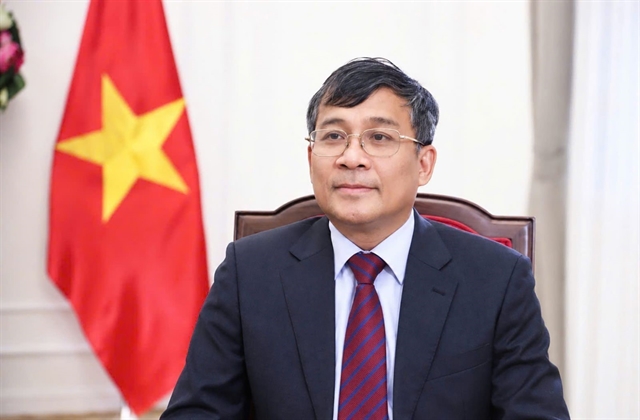
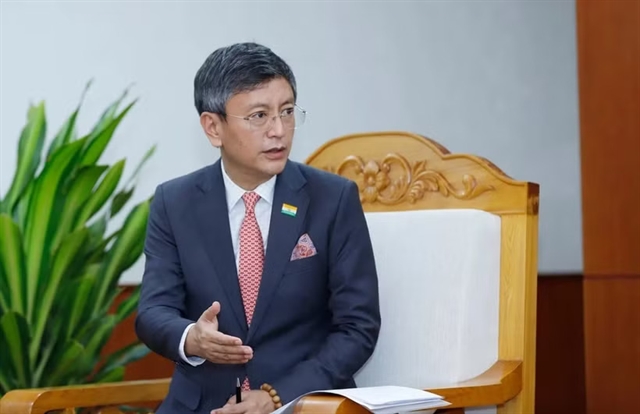
| Kobayashi Yosuke, chief representative of the Japan International Cooperation Agency (JICA) Vietnam Office |
Kobayashi Yosuke, chief representative of the Japan International Cooperation Agency's Vietnam office:
On behalf of the Japan International Cooperation Agency (JICA), I would like to extend my sincere congratulations to Việt Nam on the inauguration of its new leadership structure. This important transition marks a new chapter in the country’s development journey.
I also commend the leadership for its clear commitment to advancing comprehensive reforms aimed at achieving high-income country status by 2045.
Việt Nam has demonstrated remarkable resilience and dynamism over recent decades, and the reform agenda articulated by the new leadership provides a strong foundation for the next phase of inclusive and sustainable growth. JICA is proud to have been a longstanding partner of Việt Nam, and we hold high expectations that these reforms will further unlock the country’s vast potential.
Under the Comprehensive Strategic Partnership between Việt Nam and Japan, JICA remains fully committed to supporting these reform efforts.
We will continue to work closely with a wide range of Japanese stakeholders, including government ministries, the private sector, academia, local governments and NGOs, to ensure that reform outcomes translate into tangible benefits for the Vietnamese people.
From the perspective of Japanese companies operating in or considering investment in Việt Nam, two issues are particularly important.
First, with regard to official development assistance (ODA), the early resolution of outstanding payment issues is essential.
Addressing these matters swiftly and transparently would reinforce confidence among partners and create a solid basis for advancing ODA in the new era, closely aligned with Việt Nam’s future development priorities.
Second, in relation to attracting high-quality foreign direct investment from Japan more broadly, factors such as stakeholder engagement, infrastructure development, regulatory transparency, and administrative efficiency all matter.
However, at the heart of long-term competitiveness is the availability of highly skilled human resources.
In this regard, JICA places particular emphasis on the improvement of higher education.
We have supported future leaders of Việt Nam through academic opportunities in Japan, while also promoting capacity building and joint research with more than 20 universities across the country.
One concrete example is our ongoing support for the development of a new campus for Vietnam–Japan University (VJU), which was established in 2014 as a flagship project between the two governments, and which introduced a new bachelor’s programme in semiconductor technology in 2025.
We are currently supporting a plan to construct a new campus for VJU and promote future investments across approximately 75 hectares in Hòa Lạc, of which 24 hectares are located within Hòa Lạc Hi-Tech Park.
The park, once a land of bare hills, has become home to innovation centres, data hubs and high-tech industries, supported by JICA’s cooperation for basic infrastructure development.
The Vietnam National Space Center in Hòa Lạc has also been established in the park through our cooperation.
Our aim is to create a flagship model of industry, academia and government collaboration between the two countries in Hòa Lạc, with VJU’s new campus at its core, and we are now engaging closely with all relevant stakeholders to turn this vision into reality.
JICA firmly believes that such a model will contribute significantly to the sustainable economic development of both Việt Nam and Japan toward 2045.
 |
| Nguyễn Đình Tùng, vice chairman of the Việt Nam Fruit and Vegetable Association |
Nguyễn Đình Tùng, vice chairman of the Việt Nam Fruit and Vegetable Association, and CEO of Vina T&T Group
The new leadership team has brought renewed momentum and instilled strong confidence in the business community. Importantly, the new administration inherits a solid foundation from the previous term, particularly the shift toward a market-oriented economy, deeper international integration and accession to a number of free trade agreements.
Alongside this, Việt Nam’s infrastructure has seen significant improvements. Early actions by the new Government, such as accelerating investment in transport infrastructure and directing interest rate cuts, demonstrate a spirit of decisive and substantive action. These are encouraging signs that help reinforce business confidence and expectations for a more favourable business environment.
In particular, investment in infrastructure, especially logistics, is of immense significance to the fruit and vegetable industry. When logistics costs are reduced, the competitiveness of export goods will improve markedly.
Currently, this is one of Việt Nam’s bottlenecks compared to other countries in the region. Therefore, the Government is expected to further prioritise infrastructure development and implement more policies to support businesses.
As Việt Nam’s leadership shifts its economic focus towards science, technology and innovation, businesses need to prepare to better seize opportunities from integration and expanded international cooperation. Digital transformation, automation and technology adoption are no longer optional, but essential requirements.
Businesses in the fruit and vegetable industry are investing heavily in technology, from production to management. When the Government provides supportive macro policies, businesses will be even better positioned to leverage this advantage. In particular, building and utilising big data plays a pivotal role, assisting businesses in digital and green transformations, market forecasting and making more effective decisions.
Against this backdrop, technology is expected to be the decisive factor in boosting business competitiveness and contributing to overall economic development. To effectively capitalise on integration opportunities, businesses must first excel in their core production and business activities, while proactively capturing market information and adapting quickly to international market requirements.
For the fruit and vegetable industry, meeting technical requirements is a prerequisite. More importantly, businesses must be conscious of their responsibility to protect the national brand, as every export shipment represents not only the individual business but also the reputation of Vietnamese goods in global markets. Even a minor incident can affect the overall image of the entire industry.
Furthermore, to meet these demands, businesses need to optimise costs through digital transformation and technology, while simultaneously building transparent data systems for product traceability.
This is not just a market demand, but also a factor that enhances the value of and trust in Vietnamese goods.
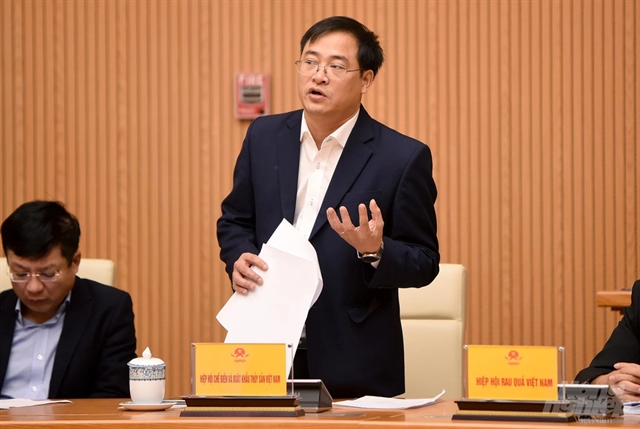 |
| Nguyễn Hoài Nam, VASEP General Secretary |
Nguyễn Hoài Nam, general secretary of the Vietnam Association of Seafood Processing and Exporters
Business associations and enterprises expect to see more concrete, practical actions from the new leadership to support their production and business activities.
Specifically, they are calling for stronger improvements focused on core issues in governance and institutional development, particularly for export-oriented industries facing intense global competition. The goal is to enhance the business environment and strengthen national competitiveness.
First and foremost, businesses need policies that are consistent, coherent, and systematic. When policies change frequently or are implemented inconsistently, both government agencies and businesses face challenges, but companies bear the most direct and severe impact. They must deal with high compliance costs, elevated risks, and ambiguity in how regulations are applied.
Notably, there are differences in interpretation between regulators and businesses. Instead of acknowledging the practical difficulties companies face, some authorities assume that businesses have misunderstood the regulations. This undermines policy implementation, increases costs and risks, and puts companies at a disadvantage both domestically and in international competition.
Second, institutional development should not stop at issuing regulations within a legal framework. More importantly, management approaches and tools must be appropriate, effective, and supportive of growth. Any new regulation should ensure that businesses can comply in a clear, measurable, and predictable manner, while minimising compliance costs and avoiding unnecessary administrative procedures.
When done well, policies can become a driving force for innovation, encouraging new business ideas and sustaining competitiveness. Conversely, unclear or poorly implemented regulations can make products and services less competitive in global markets.
Another key point is the need to closely align lawmaking with real-world practice. Policies developed without sufficient consultation are more likely to be incomplete, inconsistent, and ineffective.
Therefore, legal regulations should undergo thorough impact assessments, incorporate feedback from affected stakeholders and draw on international best practices. Although online consultation channels exist, direct feedback remains limited due to hesitation among stakeholders.
In this context, business associations and social organisations play an important intermediary role in providing feedback and representing the voice of the business community. However, their effectiveness varies significantly depending on their capacity and operational approach. As a result, not all perspectives, initiatives, or practical experiences are fully conveyed to legislative and executive bodies.
Therefore, the business community is calling for institutional reform with stronger and more decisive changes. This includes building consistent policies, while reducing abrupt and fragmented decision-making. It also involves strengthening formal and regular dialogue channels between businesses and regulators, and making it easier for companies and associations to access and contribute feedback.
At the same time, it is important to encourage the implementation apparatus to become more proactive and open in receiving feedback. Only then can institutions truly serve as a foundation for economic development, effectively support businesses, and enhance the country’s competitive standing. — VNS
Opinion
 Opinion
 Opinion
 Opinion
 Opinion
 Opinion
 Opinion
 Opinion
 Opinion
 Opinion
 Opinion
 Opinion
 Opinion
 Opinion
 Opinion