 Environment
Data centre market faces energy challenges
1.
|
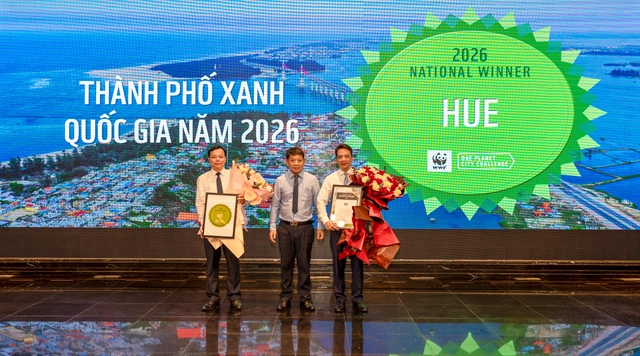
| A presentation ceremony of National winner One Planet City Challenge to Huế City. The heritage city has won the title of National Winner in WWF’s One Planet City Challenge (OPCC) 2026, marking the second of its kind for Huế after the first title given by WWF in 2016. Photo courtesy of WWF-Viet Nam |
HUẾ – The heritage city has been awarded the title of National Winner in the World Wide Fund for Nature's (WWF) One Planet City Challenge (OPCC) 2026, marking the second time Huế has received the honour after first being recognised by WWF in 2016.
WWF-Việt Nam said the recognition not only acknowledges Huế City’s own efforts but also reflects its journey since joining the programme in 2015, reaffirming its long-term commitment to green and sustainable urban development.
It said Huế City became the first urban area in Việt Nam to receive international recognition for its commitment to low-emission development through the OPCC. A decade later, the central city has once again been honoured.
The OPCC is a global initiative launched by WWF to encourage cities to pursue low-carbon development, strengthen climate resilience and promote harmony with nature.
The programme has attracted more than 900 provinces and cities from nearly 70 countries worldwide since 2015. In the 2025-26 cycle alone, more than 380 provinces and cities participated globally.
Against this global backdrop, Huế City’s recognition once again as a National Winner in the OPCC 2026 carries special significance, demonstrating that the city has not only maintained its commitment from a decade ago but has continuously strengthened its climate ambitions and implemented long-term climate action strategies.
|
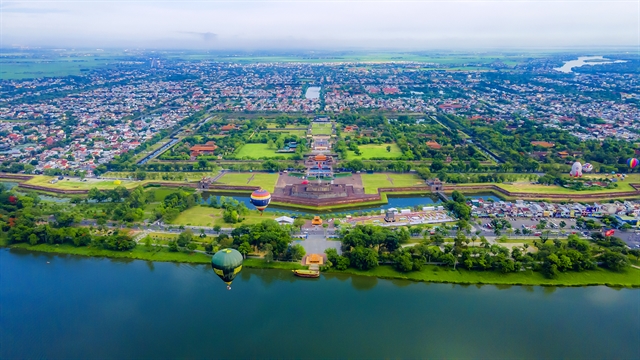
| Green design and architecture are seen in Huế City. The tourism hub has conserved nature-based solutions and adoptions for sustainable development in the future. Photo courtesy of Vỹ Thi |
Huế, which officially became a centrally governed municipality in 2025, has continued pursuing sustainable development by promoting heritage, culture and a green ecology rather than adopting a mega industrial city model for its urban future.
This direction is increasingly prioritised internationally as cities face the dual challenge of achieving economic growth while improving quality of life and adapting to climate change.
Văn Ngọc Thịnh, CEO of WWF-Việt Nam, said: “As climate change becomes increasingly severe, Huế’s story offers a positive source of inspiration: nature-based solutions are no longer experimental approaches, but are gradually becoming a strategic pathway for the future of cities in Việt Nam.”
|
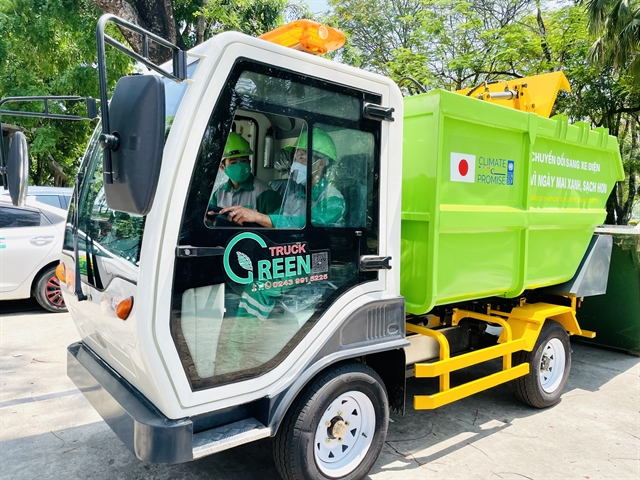
| A battery-powered truck is used to collect garbage in Huế City's downtown area. The heritage urban has been boosting 'green' actions in reducing carbon emissions from daily activities. Photo courtesy of UNDP |
The tourism hub has promoted various nature-based climate adaptation solutions over recent decades, including expanding green spaces, enhancing natural water retention to reduce flooding and conserving and restoring key ecosystems such as the Tam Giang-Cầu Hai Lagoon, wetlands and river ecological corridors.
The city has also drastically implemented greenhouse gas emission reduction measures through waste-to-energy development, green transport, renewable energy use and plastic waste reduction. These efforts have been supported by international partners such as WWF, Luxembourg Development, JICA and KOICA, alongside collaboration among local authorities, businesses and communities.
WWF-Việt Nam said it would continue supporting Huế, as well as other provinces and cities across Việt Nam, in advancing development models that effectively address climate change, conserve nature and improve people’s quality of life.
According to WWF-Việt Nam, the OPCC was designed by WWF to mobilise action and support from cities in global climate efforts, including the goals set out in the Paris Agreement. About 400 cities worldwide have joined the programme since 2011.
Huế was recognised as the ASEAN Clean Tourist City in 2024 by the ASEAN Tourism Forum, while the city’s plastic reduction model was highlighted in publications by Plastic Smart City, WWF and academic institutions. VNS
Environment
 Environment
 Environment
 Environment
 Environment
 Environment
 Environment
 Environment
 Environment
.jfif) Environment
Environment
 Environment
 Environment
 Environment
 Environment
 Environment