 Environment

OPPO Find X10 Pro Max to Debut Globally with MediaTek’s 2nm Flagship Dimensity 9600 Pro
1.
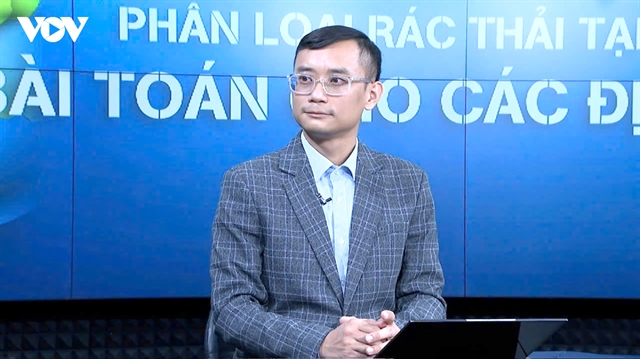 |
| Nguyễn Thi, senior lecturer at Hà Nội University of Natural Resources and Environment. — Photo vov.vn |
Nguyễn Thi, a senior lecturer at Hà Nội University of Natural Resources and Environment, spoke to the Voice of Việt Nam about the major bottlenecks in the management of municipal solid waste in Hà Nội as well as the role of technology in waste monitoring and management.
Hà Nội aims to become a green, smart and sustainable city. However, mounting pressure from increasing volumes of household waste is posing a major challenge to urban management. What are the biggest bottlenecks currently facing the capital’s solid waste management system?
In Hà Nội, more than 7,000 tonnes of waste are currently treated each day through waste-to-energy incineration technology, meaning over 80 per cent of municipal waste is burned to generate electricity. Nearly 3,500 tonnes per day of the remaining waste are disposed of through sanitary landfill methods at landfill cells within the Nam Sơn Waste Treatment Complex and the Xuân Sơn Solid Waste Treatment Facility.
These sites are also home to Hà Nội’s two waste-to-energy plants. As a result, the long-standing bottleneck linked to landfill overloading, foul odours and environmental pollution has largely been eased thanks to waste-to-energy incineration. However, this does not mean Hà Nội’s waste problem has been fully resolved.
Another major bottleneck lies in the city’s current classification system, under which waste is divided into recyclable waste, hazardous waste, bulky waste and a broad other-waste category that also includes food waste.
A further challenge is the absence of facilities capable of recycling food waste, as well as the lack of a market for products derived from food waste recycling. In addition, compliance among residents remains limited when it comes to sorting and disposing of household waste in accordance with regulations issued by the municipal People’s Committee.
Another issue is the lack of dedicated equipment, collection vehicles and separate treatment systems for each waste category. In practice, a single collection vehicle is still used for all four waste types, regardless of whether they have been sorted or not.
Ultimately, the core bottleneck remains the lack of synchronisation in household waste management implementation. This lack of consistency can first be seen in the limited determination among the city’s leaders to enforce the policy, as well as the slow pace of behavioural and awareness change among residents regarding waste sorting and disposal.
There is insufficient coordination between waste sorting, collection, recycling and the development of markets for recycled products, especially those derived from food waste. There is also a lack of consistency in applying the waste management hierarchy. Here, I am referring to the position of waste-to-energy incineration in relation to recycling and the promotion of a circular economy. If waste-to-energy incineration is prioritised above recycling, then efforts to sort, collect and recycle materials, especially plastics, textiles and food waste, will inevitably be undervalued.
Hà Nội is striving to become a smart city through the extensive application of digital technologies in infrastructure and environmental management. What role can technology play in improving the monitoring, collection, transportation and treatment of solid waste?
Việt Nam is currently accelerating digital transformation, including the application of surveillance technologies for traffic management and public spaces. Monitoring through digital technologies, particularly with AI support, can deliver highly effective results.
It not only helps authorities detect violations and take prompt action but also acts as an invisible mechanism for regulating human behaviour. Without effective monitoring and strict enforcement, people often become careless and complacent.
If environmental sanitation monitoring technologies, including surveillance of littering in streets, alleys and public spaces, are integrated effectively, they could encourage residents to sort waste properly, store it in designated bags and dispose of it at the correct time and place and in the correct category. Over time, these practices would become habitual, making household waste management increasingly efficient and contributing to a brighter, greener, cleaner and more beautiful Hà Nội.
Given the current context, which solutions should the city prioritise to both ensure waste treatment capacity and achieve its long-term green and smart development goals? What message would you like to send to the public so that every resident truly becomes a stakeholder in building a green and intelligent city?
I believe Hà Nội should move quickly to address the current situation of deep and narrow alleyways through better urban planning, road expansion, the creation of new public spaces, green parks and modern, clean transport infrastructure. Such improvements would provide an ideal environment for fostering public awareness about maintaining sanitation, beginning with waste sorting and proper disposal practices. This, I would argue, is a crucial foundation for building a green, civilised and sustainable smart city.
Alongside effective planning and implementation, communication campaigns, public engagement, public-area surveillance and strict penalties for littering and improper waste disposal are also essential to improving the effectiveness of household waste management.
More importantly, however, Hà Nội must invest in upgrading infrastructure for waste collection, recycling and treatment, while effectively implementing circular resource and circular economy models.
Economic mechanisms should also be applied to waste management, including extended producer responsibility (EPR) schemes and the early adoption of deposit-refund systems to ensure more thorough, rapid and effective collection of used products and packaging, as well as the recycling of food waste. Such measures would help ease the financial burden on the State budget for household waste collection and treatment.
In the journey towards building a green and smart city, we ourselves are the ones shaping that journey through every step we take. Let every step be a green step and let every day be guided by green thinking. In doing so, we will experience a greener life in harmony with nature and improve our quality of life throughout that journey. — VNS
Environment
 Environment
 Environment
 Environment
 Environment
 Environment
 Environment
 Environment
 Environment
 Environment
 Environment
 Environment
 Environment
 Environment
 Environment