 Environment

LANDMARK Launches ‘Destination CENTRAL’: A District-Wide Invitation to Explore the Dynamism, Luxury, and Soul of Central
1.
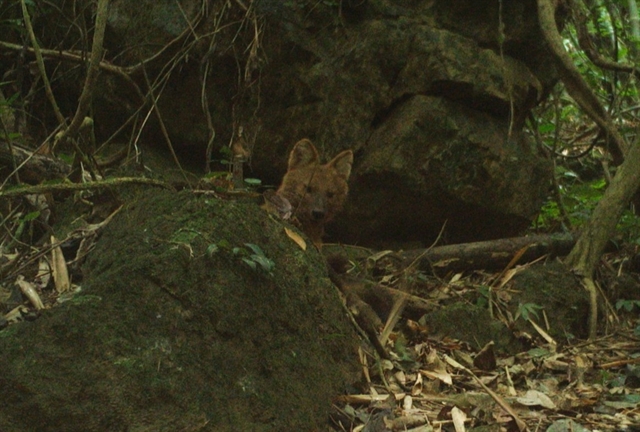 |
| Photo of the dhole from wildlife camera trap set up in Pù Hoạt Nature Reserve. — VNA/VNS Photo |
NGHỆ AN — Scientists have recorded images of the endangered dhole, also known as the Asiatic wild dog, in the wild in Việt Nam for the first time in more than two decades, according to officials at Pù Hoạt Nature Reserve in central Việt Nam.
Reserve director Nguyễn Văn Sinh said on Thursday that the rare predator (scientifically known as Cuon alpinus) was captured by camera traps installed in the protected forest area.
The animal was identified through images collected during a four-month camera-trapping survey conducted by researchers.
The images were verified by the Leibniz Institute for Zoo and Wildlife Research, with the research findings later published on February 26 in a scientific journal affiliated with University of Cambridge.
Researchers said the adult dhole appeared alone at an altitude of 1,590m in humid evergreen forest, around 4.3km from the Laos border.
The research team installed 45 camera trap stations across Pù Hoạt over four months, collecting data equivalent to 6,084 trap nights.
According to Việt Nam’s Red Data Book, the dhole is classified as critically endangered, facing an extremely high risk of extinction in the wild. The species is also listed as endangered on the Red List of the International Union for Conservation of Nature.
Scientists said dholes typically inhabit old-growth forests with minimal human disturbance. However, their range has continued to shrink due to habitat loss, declining prey populations and prolonged hunting pressure.
The species has largely disappeared from field surveys in Việt Nam in recent years.
Earlier records suggested possible distributions in several protected areas, including Mường Nhé in the former Điện Biên Province in northern Việt Nam, and mostly in the central region – Pù Luông, Xuân Liên, Bến En and Pù Hu in Thanh Hóa Province, as well as Phong Nha–Kẻ Bàng National Park and Bắc Hướng Hóa in Quảng Trị Province.
In Nghệ An Province, previous documents had indicated the possible presence of dholes in Pù Hoạt, but this is the first time scientists have obtained photographic evidence of the species in the wild there.
Dholes resemble domestic dogs in appearance, typically weighing between 8kg and 20kg. The species is known for their reddish-brown coats (which also earned it the Vietnamese nickname of fire wolf), long legs and pack-hunting behaviour.
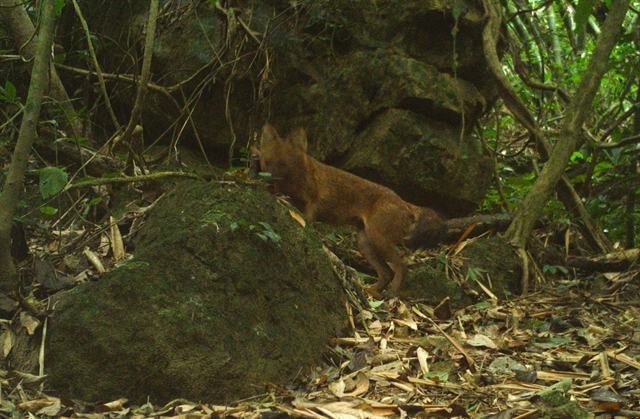 |
| A photo of the dhole from a wildlife camera trap set up in Pù Hoạt Nature Reserve. — VNA/VNS Photo |
Conservation studies indicate the wild global population of dholes has declined by more than 80 per cent over the past three decades, placing the species at very high risk of extinction.
Pù Hoạt Nature Reserve described the discovery as a significant milestone for wildlife conservation in Việt Nam, further underscoring the biodiversity value of the remaining primary forests in western Nghệ An.
Sinh said the reserve would continue cooperating with domestic and international research organisations to expand the use of modern wildlife monitoring technology, strengthen population surveys and implement habitat conservation measures aimed at protecting endangered species amid mounting pressure from forest degradation and climate change. — VNS
Environment
 Environment
 Environment
 Environment
 Environment
 Environment
 Environment
 Environment
 Environment
 Environment
 Environment
 Environment
 Environment
 Environment
 Environment