 Environment

Quy Nhơn Dialogue on Climate and Transition to provide platform for open discussion
1.
|
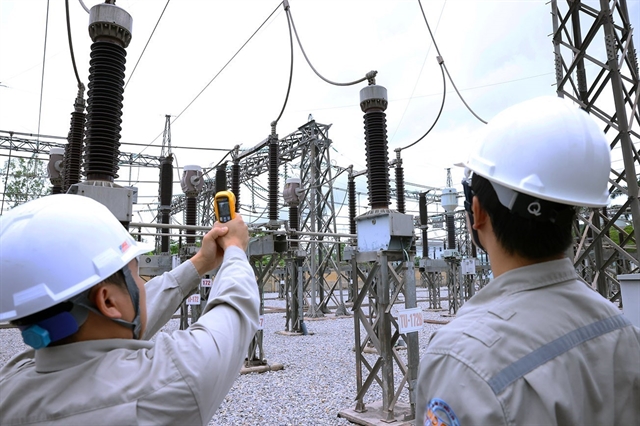
| Workers inspect the 110kV substation at Na Dương thermal power plant in Na Dương Town, Lộc Bình District, Lạng Sơn Province. — VNA/VNS Photo Vũ Sinh |
HÀ NỘI — The Ministry of Agriculture and Environment has ordered thermal power plant operators nationwide to tighten environmental safeguards while preventing any disruption to electricity generation during the dry-season peak.
Deputy Minister Lê Công Thành signed a directive requiring developers and plant operators to boost pollution prevention measures, with a particular focus on flue-gas treatment and continuous automatic monitoring to prevent emissions from exceeding regulatory limits as electricity demand rises.
The ministry urged a comprehensive review of equipment condition and waste treatment performance. Plants must ensure flue-gas collection, and that treatment and monitoring systems operate reliably; inspect, repair or replace consumables; and carry out regular maintenance, especially ahead of or during the dry-season peak.
Operators are required to promptly remedy deterioration uncovered in inspections and to prepare maintenance, repair and replacement plans for equipment, materials and chemicals. This work should be scheduled before the dry season or during low-load periods to avoid disrupting power generation.
Emphasising early, remote prevention, the ministry called for immediate technical and managerial measures to minimise environmental risks. Where maintenance or retrofits could affect capacity, operators must coordinate with the national system dispatcher to schedule work consistent with generation plans and guidance from authorities.
Fuel quality control was highlighted, with plants asked to strengthen checks on coal sulphur, ash and moisture content, forecast emissions of SO2, NOx and total particulate, and adjust fuel blending accordingly. Coal that fails to meet a unit’s design specifications must be refused.
The ministry also recommended optimising combustion through adjustments to coal grinding, air supply and ash handling to stabilise units and reduce load swings, thus lowering sudden emissions fluctuations.
Plants should set internal alarms for key pollutants, including CO, NOx, SO2 and dust, so they can quickly adjust operations or fuel mixes. Routine checks of pollution control equipment should be strengthened to ensure reliable performance.
For large upgrades, such as major filters or scrubbers, the ministry asked operators to phase work to avoid disrupting electricity generation, especially during the dry season.
Circular 45/2024 on industrial emissions took effect July 1, 2025. Existing plants are allowed to follow the old standard until December 31, 2031, but from January 1, 2032 all must meet the new rules.
The ministry urges faster technology and waste treatment improvements as well as better environmental management.
Authorities have recently prosecuted cases involving tampering with environmental monitoring data, including remote software interference and direct device manipulation.
The ministry has asked provincial and municipal authorities to intensify inspection and supervision of automatic monitoring systems for air and wastewater to ensure data transparency and accuracy. — VNS
Environment
 Environment
 Environment
 Environment
 Environment
 Environment
 Environment
 Environment
 Environment
 Environment
 Environment
 Environment
 Environment
 Environment
 Environment