 Environment

Quy Nhơn Dialogue on Climate and Transition to provide platform for open discussion
1.
|
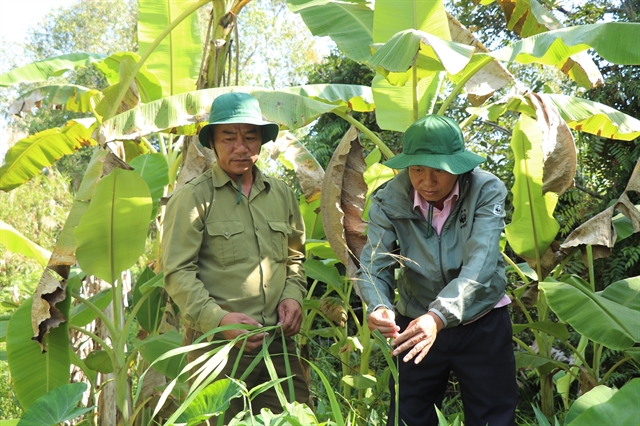
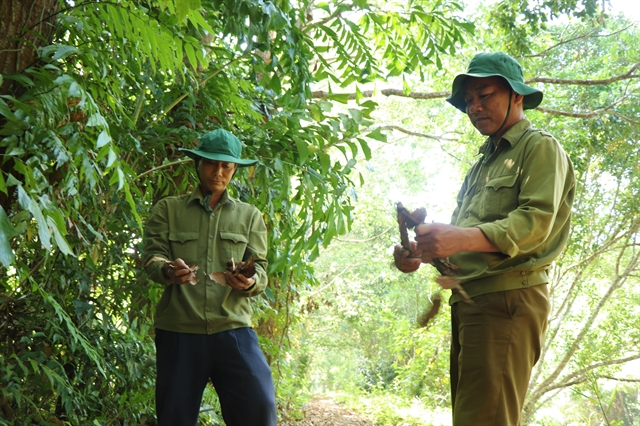
| Officers at the Lung Ngọc Hoàng Nature Reserve in Cần Thơ survey wild rice growing within the reserve. — VNA/VNS Photo Thu Hiền |
MEKONG DELTA — Wild rice is rapidly disappearing in the Cửu Long (Mekong) Delta, prompting urgent conservation efforts to protect this ‘living gene bank’ vital for future resilient rice varieties and climate adaptation.
The plant is described as a “treasure trove” of rare genetic resources. It contains genes resistant to pests and tolerant of salinity, acidic soil, and flooding. These traits are essential for breeding new varieties that can adapt to climate change.
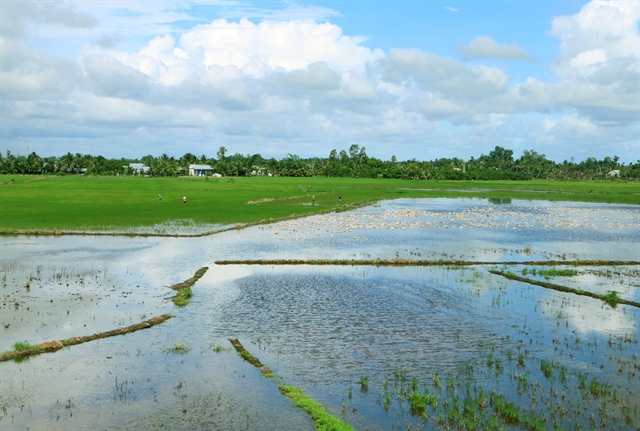
The Mekong Delta, the country’s largest rice-growing region, is the natural home of wild rice species such as Oryza rufipogon and Oryza officinalis. In the past, they grew widely from upstream to downstream areas, especially along canals and in the Đồng Tháp Mười (Plain of Reeds) region.
Recent surveys show that the area of wild rice is shrinking dramatically. The main causes are the expansion of cultivation, aquaculture, and transport infrastructure.
At Tràm Chim National Park in Đồng Tháp Province, maintaining high water levels to prevent forest fires has unintentionally altered the ecosystem, reducing wild rice coverage by nearly half. In addition, the species is often mistaken for harmful “weedy rice,” leading locals to destroy it when it appears near crops.
|
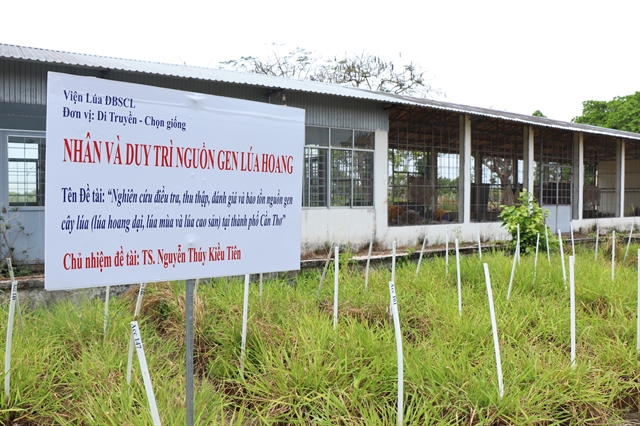
| Wild rice is cultivated at the Cửu Long Delta Rice Institute in Cần Thơ to support the study and evaluation of rice gene sources. — VNA/VNS Photo Thu Hiền |
Dr Nguyễn Thế Cường, from the Cửu Long Delta Rice Research Institute, said that although methods have been applied to introduce valuable genes from wild rice into cultivated crops and to map quantitative trait loci (QTL), exploiting these traits for breeding is still limited.
Meanwhile, countries such as China and Thailand have long regarded wild rice as a special national resource, establishing strict biological reserves for its protection, he said.
According to Cường, the optimal conservation method is in-situ conservation, which preserves the plants in their natural environment. This allows them to continue interacting with their surroundings, increasing genetic diversity and resilience.
In contrast, storing seeds in cold storage at temperatures of minus 10–70 degrees Celsius ensures long-term preservation but halts further evolution.
The Cửu Long Delta Rice Research Institute in Cần Thơ has been implementing programmes to collect and conserve wild rice genes at experimental sites.
Dr Nguyễn Thúy Kiều Tiên, its deputy director, said the institute is studying and evaluating these genetic resources in Cần Thơ to both conserve them and make better use of them in breeding new varieties.
At the 2,800-ha Lung Ngọc Hoàng Nature Reserve in Cần Thơ, wild rice is a key research focus.
The reserve has mapped its distribution and allocated a 1–2ha area for long-term conservation. Activities include planting, monitoring growth, and building a scientific basis for sustainable protection.
In the reserve, which lies within the delta’s ecological core, the rice grows under the forest canopy or along canals in small clusters. It is widely distributed, but the total area has not yet been determined.
“In areas where water exchange is good, wild rice grows stronger. In particular, areas along canals with tidal flows and silt deposits face little competition, so growth is vigorous,” said Lê Thanh Sơn, deputy director of the reserve.
According to Trần Bé Em, head of the reserve’s Science and Wetland Conservation Division, every April, at the start of the rainy season, the seeds germinate. Stems grow tall, leaves expand, and roots can neutralise soil acidity and absorb nutrients. From August to December, the plants elongate and flower. The panicles are large and straight, but the grains are small and sparse. When mature, the seeds naturally fall under sunlight, drift with water, and grow into new plants.
|
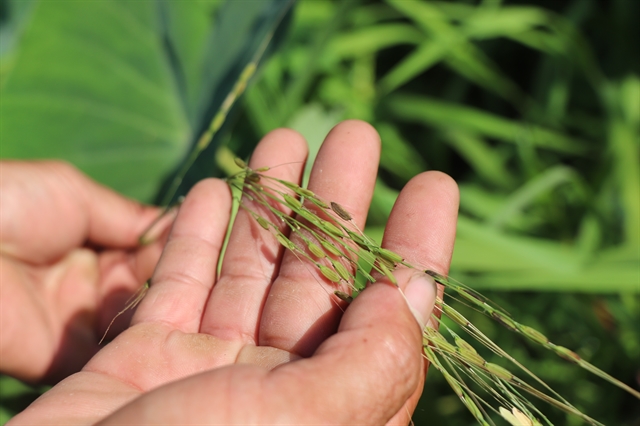
| Unlike cultivated varieties, wild rice possesses a more stable genome as it has not been affected by the domestication process. — VNA/VNS Photo Thu Hiền |
Tiên, deputy director of the Cửu Long Delta Rice Research Institute, noted that the delta has a long history of wild rice with rich genetic diversity. Unlike cultivated rice, the wild variety has a more stable genome because it is not affected by domestication. Traits such as easily shed grains, dark husks, and strong dormancy help the species adapt and evolve continuously.
To create breakthroughs in sustainable rice breeding, experts say a national-level strategy is needed.
Associate Professor Hồ Lệ Thi, from Cần Thơ University’s College of Agriculture, said that the State should provide stable resources and funding for gene banks to maintain cold storage systems and regenerate seeds in a timely manner.
At the same time, international cooperation should be strengthened to decode and fully tap the value of wild rice genomes, she said.
This approach has already proven effective with the development of the AS996 rice variety and other promising lines with strong tolerance to acidic soil and disease, she added. — VNS
Environment
 Environment
 Environment
 Environment
 Environment
 Environment
 Environment
 Environment
 Environment
 Environment
 Environment
 Environment
 Environment
 Environment
 Environment