 Environment
Data centre market faces energy challenges
1.
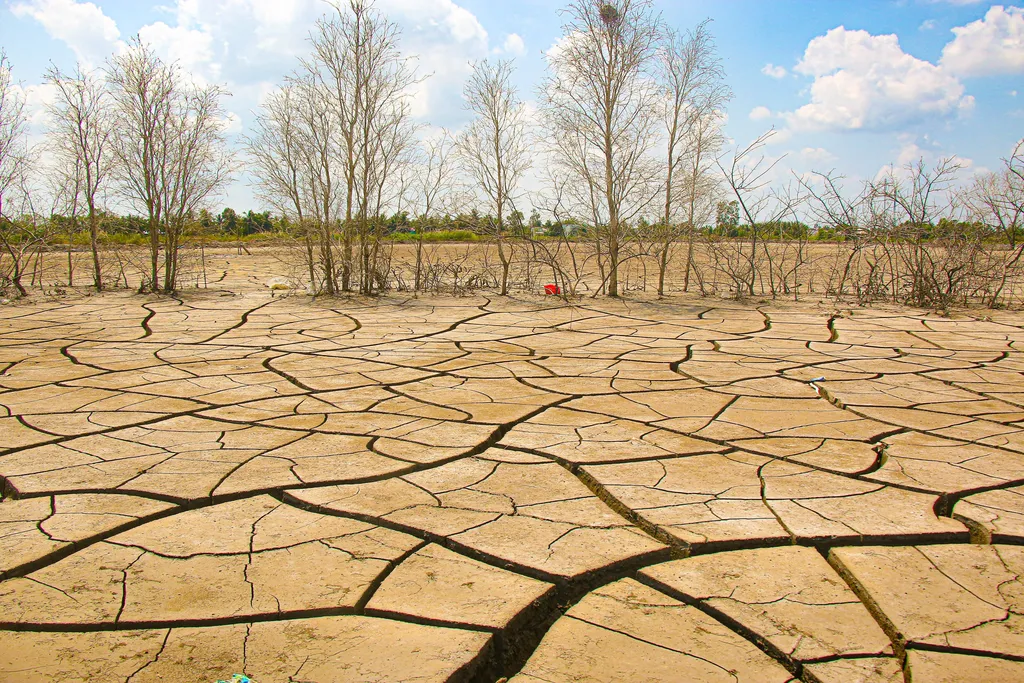 |
| Drought conditions during the 2026 dry season in Phước Long Commune, Cà Mau Province. — VNA/VNS Photo Duy Khương |
From shrinking water supplies to mounting pressure on agriculture and energy, a possible super El Niño is raising fresh concerns across Việt Nam. Meteorological and hydrological expert Nguyễn Ngọc Huy talks to Việt Nam News reporter Thu Vân about the scale of the threat and the urgent need for early adaptation.
The US National Oceanic and Atmospheric Administration (NOAA) recently updated its forecast on El Niño. How likely is it that El Niño will develop this year, and how serious could it become?
On May 18, the US National Oceanic and Atmospheric Administration released its latest update on the development of El Niño. According to the agency, sea surface temperatures in the equatorial Pacific Ocean are warming significantly and are approaching the threshold of +0.5 degrees Celsius compared with long-term averages, which is the benchmark used to determine the onset of El Niño.
Forecasts show that El Niño could form around June or July this year with a probability of up to 96 per cent, meaning it is now considered almost certain. The phenomenon could continue into 2027, possibly lasting through the spring of 2027 or even longer.
According to the World Meteorological Organisation, the 2026-2030 period could include the hottest year ever recorded globally. Under the current El Niño trend, 2027 is likely to become the peak year for global heat, while this year is also expected to be extremely hot, with average temperatures during June, July and August projected to be between 0.75 and 1.5 degrees Celsius above normal.
NOAA has also estimated a 33 per cent probability of a super El Niño, meaning temperatures in the Niño 3.4 region could rise by more than 2 degrees Celsius above average. If that happens, weather and climate conditions across the Pacific region, including Việt Nam, would be affected severely.
One worrying scenario is the possibility of a severe drought similar to, or even worse than, the historic drought of late 2015 and early 2016. The Mekong Delta is forecast to face severe drought and saltwater intrusion from around November 2026 until April or May 2027 due to prolonged rainfall shortages.
If a super El Niño develops, how could it affect weather patterns in Việt Nam?
If El Niño begins developing around June, July or August, and average temperatures in the Niño 3.4 region remain more than 0.5 degrees Celsius above normal for three consecutive months, the phenomenon will officially be classified as El Niño.
When El Niño occurs, rainfall in the central coastal region, Central Highlands, southern region and the Mekong Delta tends to decrease and remain below long-term averages. However, lower rainfall does not mean there will be no rain at all. Localised heavy downpours can still occur in narrow areas, sometimes with extremely high intensity capable of causing flooding in urban and midland regions.
These rain events are usually not widespread or long-lasting, but rainfall intensity can still be very high. Total seasonal rainfall will remain below average overall, but extreme localised rainfall events are still possible. This is typical during the transition phase from La Niña to neutral conditions and then to El Niño.
Another pattern commonly associated with El Niño is a reduction in the number of storms. This is considered a positive factor for Việt Nam because floods remain one of the country’s most destructive natural disasters in terms of both human and economic losses.
However, drought represents a different type of disaster. In English, it is described as a slow-onset disaster, meaning its impacts develop gradually over time. People often fail to notice worsening water shortages until household wells dry up or farmland begins to crack. Because the process happens slowly, many people become complacent until the surrounding water sources disappear entirely.
Areas forecast to face severe water shortages by late 2026 and early 2027 include the South Central Coast, the Central Highlands and the Mekong Delta.
What preparations should people and the agricultural sector make to cope with possible drought and water shortages?
When working with coffee growers in the Central Highlands, one important recommendation is to save water and focus only on maintaining durian, coffee and pepper plantations with secure water supplies. Areas unable to guarantee irrigation water should not be prioritised or overwatered during periods when water conservation becomes critical.
At the same time, farmers should adopt water-saving irrigation methods to preserve crops. For example, if a farm has 10 hectares but available water is only enough for seven hectares, growers may need to abandon three hectares in order to preserve the remaining area.
Another strategy is to avoid forcing trees to produce fruit through excessive watering. This allows trees to survive drought conditions. If trees bear fruit without sufficient irrigation water, they may die completely.
There are many adaptation strategies, but the most important factor is understanding exactly how much water is available and whether it is sufficient for durian, coffee and pepper plantations. This issue is relevant not only in the Central Highlands but also in the Mekong Delta, where many durian orchards have now reached five to seven years of age and are producing high yields with strong economic value.
In the context of increasing water shortages, preserving trees is more important than trying to maximise output in the coming season. This is something both the Central Highlands and the Mekong Delta must pay close attention to.
Returning to the issue of storms, research and observations over the past 20 years show that El Niño years usually bring only around three or four storms affecting Việt Nam. However, the possibility of extremely powerful storms, including super typhoons, still cannot be ruled out. There may also be disturbances forming directly over the East Sea (internationally known as the South China Sea) that intensify rapidly before making landfall. This is another unusual feature of storms during El Niño years.
Another major concern is saltwater intrusion in the Mekong Delta, which will directly affect the region’s three key agricultural sectors: rice, fruit and shrimp.
For rice production, farmers need to pay close attention to crops planted later this year and in early 2027. Areas highly vulnerable to salinity intrusion may need to abandon certain crops to avoid losses from spending money on ploughing, seeds, fertilisers and pesticides without being able to save the harvest.
Lessons from the historic drought and salinity intrusion events in 2016 and 2019-2020 showed that many localities reduced rice cultivation areas, particularly third-season rice crops in the Mekong Delta, in order to minimise losses. Instead, farmers took advantage of brackish water further inland to shift towards shrimp farming adapted to saline conditions.
However, if saltwater intrusion becomes too severe and salinity levels rise too high, shrimp farming will also face difficulties. For example, if salinity reaches around 25 parts per thousand in coastal areas, even black tiger shrimp, which are highly tolerant of saltwater, struggle to grow properly. Farmers have reported that when salinity exceeds this threshold, shrimp shells become too hard, making moulting difficult, slowing growth rates and reducing productivity.
For that reason, shrimp farmers also need strategies to store freshwater. For example, if they have four ponds, they should use only three for farming while reserving one pond for freshwater storage to support operations when necessary.
For residents in the Mekong Delta, Central Highlands and South Central Coast, storing and conserving water will be especially important. During the 2016 drought in Tiền Giang, Bến Tre and Trà Vinh provinces, many household water tanks ran dry because of excessive use and insufficient backup planning.
Therefore, localities need to begin building water storage strategies during the current rainy season and use water very carefully. However, stored water must also be protected from pollution and mosquito larvae to avoid triggering dengue outbreaks during the following rainy season.
The South Central Coast, Central Highlands and Mekong Delta all require comprehensive strategies for domestic water, livestock, irrigation and industrial use. By early 2027, when water becomes increasingly scarce, competition for water resources could emerge between tourism, hospitality, agriculture, livestock farming and energy production.
The energy sector in particular will face enormous pressure. Prolonged heatwaves will sharply increase electricity demand while hydropower reservoirs receive less water because of reduced rainfall. Under a prolonged El Niño and heatwave scenario, many reservoirs in the central coastal region and the Central Highlands may not have enough water reserves for the 2027 dry season.
For that reason, authorities and industries need to look further ahead and prepare response plans early. In that context, energy-saving strategies will become critically important for households, businesses, government agencies and the entire electricity sector.
Beyond weather impacts, what economic consequences could a super El Niño bring to Việt Nam?
As mentioned earlier, El Niño does not cause immediate destruction. Instead, its impacts develop slowly but spread across a very large scale. Looking further ahead, even without being an economist, it is possible to identify several worrying economic trends associated with a super El Niño.
For example, coffee production could decline significantly. This would not only happen in Việt Nam but also in many other coffee-producing countries. As production falls, coffee prices could rise. Similarly, durian production could decrease, leading to higher durian prices. Other products, such as pepper and cashew nuts, could face similar situations, with lower yields and declining quality.
For that reason, priority should be given to protecting agricultural areas with stable and reliable water supplies. Such regions need to be maintained to preserve crop production during prolonged El Niño conditions.
Rice production also faces major risks. Rice prices are currently very low, at only around VNĐ5,500-5,800 per kilogram. Prices may rise later this year, but the paradox is that when prices increase, many farmers may no longer have rice left to sell because drought and water shortages have reduced production. This would represent a major loss for rice growers.
Rice also cannot be stored for too long because its quality declines after around six months in storage. Therefore, it is necessary to clearly identify areas with favourable water conditions and prioritise rice cultivation there in order to reduce El Niño-related risks.
Another major concern is forest fires. The risk could emerge as early as this year’s hot season rather than waiting until the dry season at the end of 2026 or early 2027. Climate scenarios show that even during summer, rainfall in central Việt Nam and the Central Highlands during June, July and August is still expected to decline significantly.
This indicates that the risks of forest fires and water shortages in the coming period are becoming increasingly clear. VNS
Environment
 Environment
 Environment
 Environment
 Environment
 Environment
 Environment
 Environment
 Environment
 Environment
.jfif) Environment
Environment
 Environment
 Environment
 Environment
 Environment