 Economy


Hà Nội adorned in red ahead of Liberation Day
1.
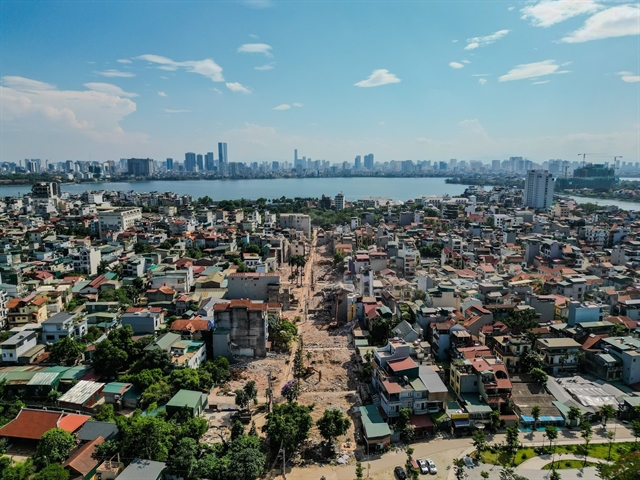 |
| An area in Hồng Hà Ward, Hà Nội, has been designated for site clearance for the Tứ Liên Bridge project. — VNA/VNS Photo Lê Đông |
As Việt Nam targets sustained double-digit economic growth, infrastructure investment has emerged as a central pillar of its national development strategy. Massive transport and urban projects underway in Hà Nội and HCM City are expected not only to ease congestion and improve connectivity, but also to unlock new economic corridors and attract long-term private investment.
Double-digit economic growth is no longer viewed as a distant aspiration but as a strategic imperative for Việt Nam. Against this backdrop, large-scale investment in infrastructure is emerging as a key driver of economic growth and competitiveness, opening up new space for development.
The resolution of the 14th National Congress of the Communist Party of Việt Nam in January stressed that an integrated and modern infrastructure system is one of the strategic breakthroughs expected to drive the country’s development. It is also considered the "key" to unlocking Việt Nam's goal of becoming an upper-middle-income country by 2030.
Rapid and sustainable national development has been identified as a priority in the resolution of the 14th National Party Congress and Conclusion 18 of the second plenum of the Party Central Committee.
Accordingly, Việt Nam is striving for average annual GDP growth of at least 10 per cent while maintaining macroeconomic stability, controlling inflation, ensuring major economic balances and comprehensively improving people’s living standards.
This target forms part of the country’s ambition to become a developing nation with modern industry and upper-middle-income status by 2030, while ranking among the world’s 30 largest economies.
Interconnected growth
To realise this national growth vision, the country’s largest cities are focusing on an unprecedented acceleration in infrastructure investment aimed at unlocking economic flows, expanding development space and enhancing the country’s standing.
Leading urban centres such as Hà Nội, HCM City, Đà Nẵng and Cần Thơ are simultaneously accelerating strategic transport projects over the next five years.
This transformation is most evident in Hà Nội. The capital is implementing a multi-polar, multi-centre urban cluster model, shifting the focus of development from the historic urban core to high-potential satellite areas.
With projected mobilised resources exceeding VNĐ1.5 quadrillion (US$57 billion) over the next five years, Hà Nội is concentrating efforts on major projects such as Ring Road 4 Hà Nội, the metro system and key bridges crossing the Red River.
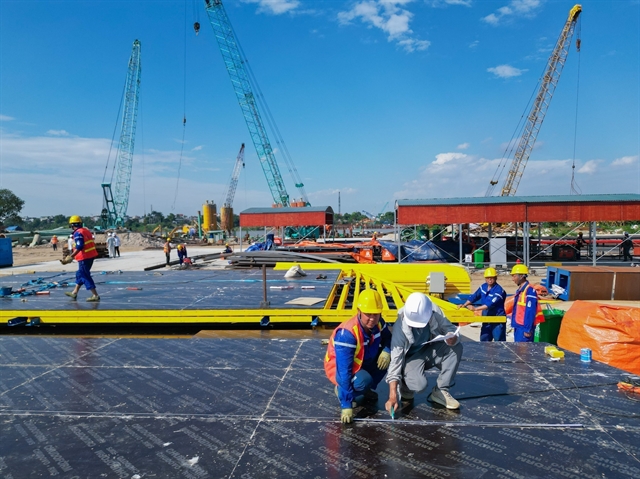 |
| Workers are seen at the construction site of Tứ Liên Bridge in Hà Nội. — VNA/VNS Photo Lê Đông |
The groundbreaking for seven major bridges in 2025 stands as clear evidence of Hà Nội authorities’ determination to expand the space for development.
Among them, the Trần Hưng Đạo and Tứ Liên bridges are designed not only to ease traffic congestion but also to transform the Red River into the capital’s central landscape axis.
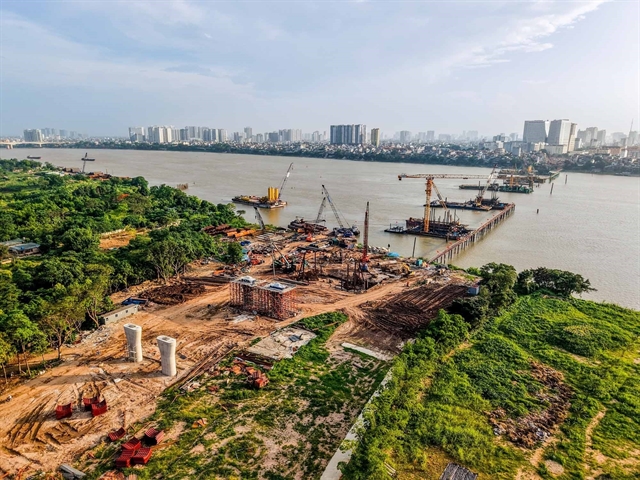 |
| Bridge piers are taking shape for the Trần Hưng Đạo Bridge project in Hồng Hà Ward, Hà Nội. — VNA/VNS Photo Phạm Tuấn Anh |
The Hà Nội People’s Council recently approved the VNĐ736 trillion (US$28 billion) Red River Boulevard project, which is expected to create long-term momentum for riverside urban, infrastructure and economic development.
Stretching from Hồng Hà Bridge in Hà Nội to Mễ Sở Bridge in Hưng Yên Province, the project is considered significant not only for the capital but also for Hưng Yên, as the corridor is expected to improve transport connectivity while shaping new economic spaces along the route.
Following the nationwide administrative merger, Hưng Yên’s advantages have become increasingly evident and strategically important within the Red River Delta region and across the country. The locality now has a 54-kilometre coastline, positioning it as a gateway linking the capital to the sea.
With its new administrative position, Hưng Yên is working to complete its transport network, social infrastructure and planning framework to align with Hà Nội’s growth, particularly as the capital accelerates transport development to restructure its urban space and surrounding areas.
Improved connectivity between Hà Nội and Hưng Yên through new infrastructure projects is expected to support residential shifts from the capital, helping ease mounting housing pressure and rising housing costs in Hà Nội.
Hưng Yên’s development master plan prioritises connecting and completing its road, railway and inland waterway transport networks with the capital. At the same time, the province is also seeking to strengthen transport links with the Hà Nội–Hải Phòng–Quảng Ninh development triangle to facilitate goods circulation and capitalise on regional advantages.
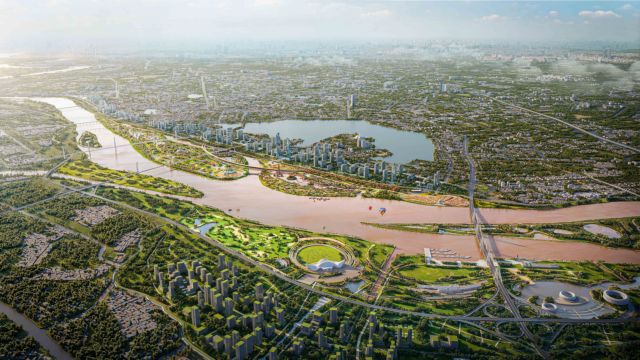 |
| An artistic rendering of the Red River Boulevard project running between Hà Nội and Hưng Yên Province. — VNA/VNS Photo |
Future super-metropolis
Meanwhile, in the south, HCM City is entering a new phase of development following the merger with the former Bình Dương and Bà Rịa Vũng Tàu provinces.
The enlarged city, regarded as the country’s economic engine, has launched a series of major projects expected to shape a super-metropolis of regional and international standing, opening up new development space, strengthening regional connectivity and creating momentum for the long-term growth of the national economy.
In line with government direction, infrastructure investment in HCM City is being aligned with marine economic development, with the centrepiece being the Cần Giờ International Transhipment Port, a project intended to position Việt Nam as an indispensable link in global supply chains.
Alongside projects aimed at supporting economic growth, the city is also developing public spaces focused on preserving and promoting historical and cultural heritage, as well as advancing knowledge-based and eco-urban development.
Several projects were launched in April 2026 to mark the 51st anniversary of national reunification. These included Metro Line 2, the city’s Central Square and Administrative Centre, the renovated Hồ Chí Minh Museum and the International University Urban Area in Xuân Thới Sơn Commune.
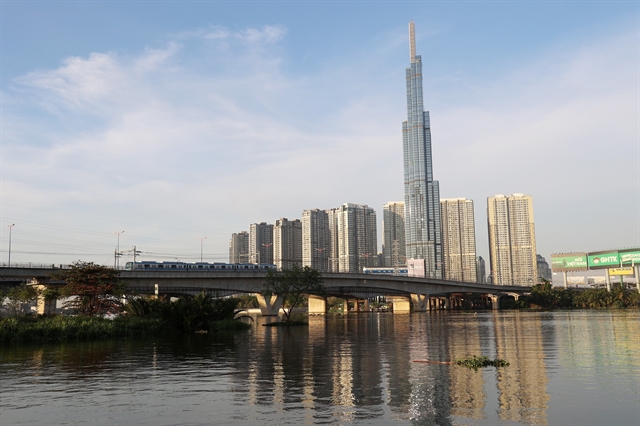 |
| A metro train crosses Sài Gòn Bridge in HCM City. — VNA/VNS Photo Hồng Đạt |
On January 15 this year, city authorities broke ground on the Bến Thành–Tham Lương section of Metro Line 2, along with the Cần Giờ and Phú Mỹ 2 bridges and the Rạch Chiếc National Sports Complex. The combined scale and value of these projects amount to nearly VNĐ500 trillion ($19 billion).
Each project carries particular significance in shaping HCM City’s infrastructure as a future super-metropolis and strengthening regional connectivity. Among the most notable is the metro line project linking the city's centre with the city’s northwestern gateways, the Thủ Thiêm New Urban Area and Tân Sơn Nhất and Long Thành international airports.
Meanwhile, the Phú Mỹ 2 and Cần Giờ bridge projects are expected to ease pressure on existing infrastructure, generate momentum for development in the city’s southern area and enhance connectivity with the new Long Thành Airport and future coastal urban areas.
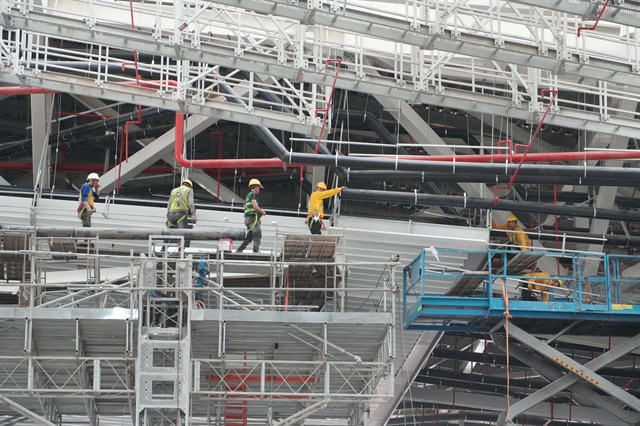 |
| Construction work underway at a section of the passenger terminal at Long Thành Airport. — VNA/VNS Photo Công Phong |
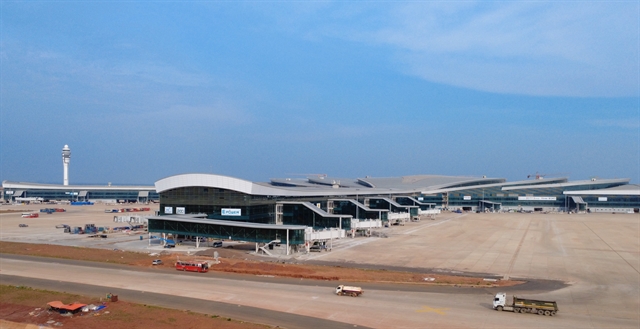 |
| One of the wings of the passenger terminal and the air traffic control tower at Long Thành Airport. — VNA/VNS Photo Công Phong |
Strategic challenges
With a longer-term vision, the HCM City People’s Committee has identified transport infrastructure development as one of its breakthrough programmes for the 2026–30 period, aiming to largely complete the city’s core transport framework by 2030, strengthen interregional connectivity and prioritise urban railway development linked to transit-oriented development (TOD).
The city’s overall plan includes 77 key projects with total investment nearing VNĐ1.8 quadrillion ($68.3 billion), comprising 11 urban railway projects, 51 road projects, 14 technical infrastructure projects and one inland waterway project.
From the perspective of project developers, Trường Hải Group (THACO) chairman Trần Bá Dương said central policies and directives had been implemented resolutely and effectively at the local level. In HCM City, many strategic resolutions had been carried out with determination, particularly those related to urban railway development.
When infrastructure development stays one step ahead, logistics costs decline and the competitiveness of domestic goods improves, according to Đèo Cả Group chairman Hồ Minh Hoàng. More importantly, infrastructure creates room for surrounding industries, services and urban areas to develop, thereby encouraging strong inflows of private investment and foreign direct investment (FDI).
Beyond attracting FDI, infrastructure also acts as a lever to stimulate private investment. For example, when the State invests in a ring road, private enterprises are encouraged to enter supporting sectors ranging from real estate, services and retail to manufacturing and processing industries.
The simultaneous rollout of large-scale infrastructure projects in recent years highlights efforts to translate the Party and State’s major policies on strategic infrastructure development into action, strengthen the role of the private sector and promote effective public-private partnership models in pursuit of growth targets.
Integrated solutions
At a working session with the Ministry of Construction on April 29, Prime Minister Lê Minh Hưng emphasised that Party leadership had outlined clear requirements for the construction sector, namely "to develop an integrated and modern infrastructure system; promote urbanisation, urban development and regional connectivity.”
Specific targets include average annual growth of 12.3 per cent for the industry and construction sector, putting more than 5,000km of expressways into operation by 2030 and completing an additional 645km of railway, including 200km of urban rail. In particular, these targets are expected to contribute to sustainable double-digit growth amid significant current challenges.
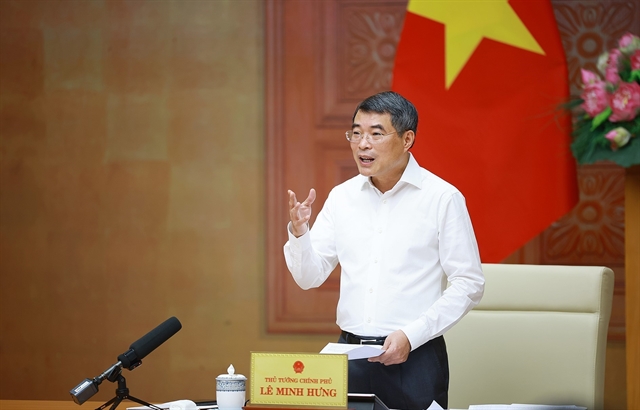 |
| Prime Minister Lê Minh Hưng speaks at a working session with the Ministry of Construction on April 29, 2026. — VNA/VNS Photo Dương Giang |
Despite strong political resolve and a clearly defined roadmap, implementation in practice continued to face bottlenecks that must be addressed promptly, he noted, adding that one of the most significant obstacles is overlap within the legal and administrative framework.
A major infrastructure project would typically involve multiple laws, including the Law on Land, the Law on Construction, the Law on Public Investment and the Law on Public-Private Partnership Investment, Prime Minister Hưng said. When these policies are not aligned, approval procedures could become prolonged, increasing cost pressures and discouraging investors.
At a time when total private investment capital is estimated at around VNĐ3.8 quadrillion ($144.2 billion) for the entire term, while public investment can meet only about 20-22 per cent of demand, Hưng particularly stressed that the Ministry of Construction and the Ministry of Finance should study and propose breakthrough mechanisms to attract investment, especially in transport infrastructure.
This includes studying options for issuing government bonds linked to infrastructure projects that could be held by investors over long maturities ranging from 15 to 30 years.
Land clearance also remains a persistent challenge for every project. Although compensation budgets in urban centres such as HCM City are projected to reach tens of trillions of Vietnamese đồng in 2026, actual disbursement rates continue to face obstacles.
The causes lie not only in compensation levels but also in shortages of quality resettlement housing and residents’ reluctance to leave long-established communities.
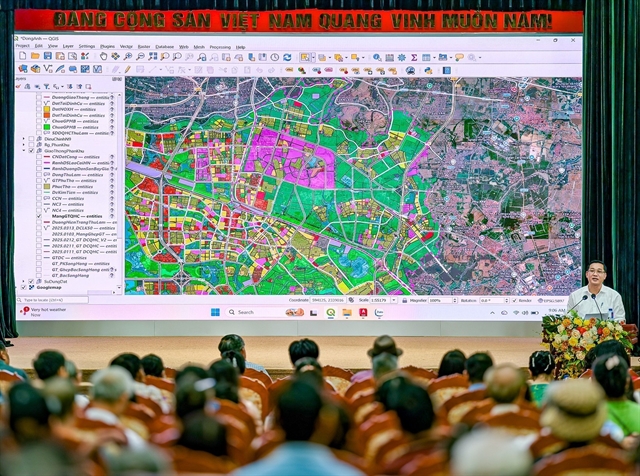 |
| Local authorities in Hà Nội introduce planning details and the locations of resettlement areas in Thư Lâm Commune to residents of Hồng Hà Ward. — VNA/VNS Photo Trung Nguyên |
At a regular meeting of HCM City’s leadership in April, Hoàng Nguyên Dinh, vice chairman of the City's People’s Committee, underscored the need to establish a framework of principles to protect officials responsible for land clearance and site compensation work. At the same time, the city has been asked to proactively review and efficiently allocate housing and land funds for resettlement to hand over cleared sites to projects at an early stage.
“Compensation work must go one step ahead and ensure that residents enjoy living conditions that are better than, or at least equal to, those in their previous homes,” Dinh said.
Alongside physical infrastructure, advancing digital infrastructure and smart urban development is also regarded as an inseparable priority. Hà Nội is actively implementing its smart city initiative, applying artificial intelligence (AI) and big data to coordinate traffic, reduce congestion and manage resources more effectively.
The capital also supports a flexible combination of state budget funding and private investment in smart transport systems, smart parking facilities and environmental monitoring systems.
Accordingly, the spillover effects generated by the growth poles of Hà Nội and HCM City are expected to create momentum for neighbouring provinces and cities such as Hưng Yên, Bắc Ninh, Đồng Nai and An Giang.
Ultimately, Việt Nam’s infrastructure push is about far more than roads, bridges or metro lines. As the country seeks to sustain high growth and strengthen its position in regional supply chains, these projects are expected to reshape economic geography, unlock new development corridors and lay the groundwork for a more integrated, competitive and investment-driven economy in the decades ahead.— VNS
Economy
 Economy
 Economy
 Economy
 Economy
 Economy
 Economy
 Economy
 Economy
 Economy
 Economy
 Economy
 Economy
 Economy
 Economy