 Environment
Việt Nam has five Halal certification bodies recognised by Malaysia
1.
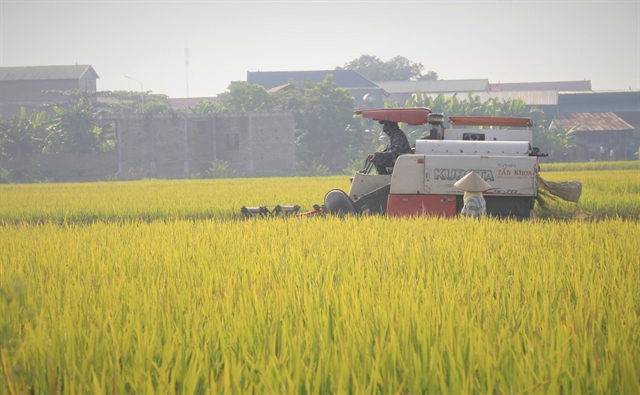 |
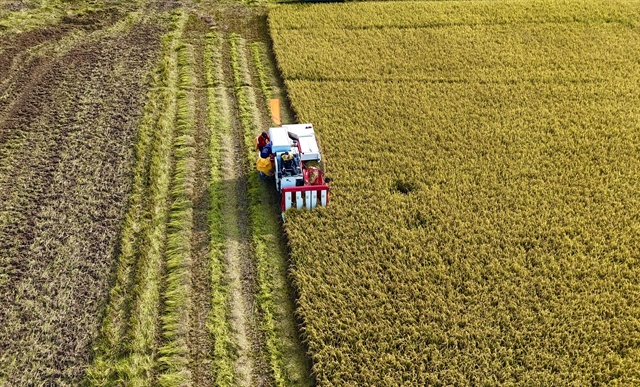
| Low-emission rice field in the Mekong Delta province of Đồng Tháp. — VNS Photo Tố Như |
HÀ NỘI — Agricultural carbon projects are opening up new opportunities for low-emission rice production.
However, revenue is not currently attractive enough due to high implementation costs, stringent data requirements and the long-term challenge of farmers' livelihoods.
Amid increasingly strong global commitments to reduce greenhouse gas emissions, Vietnamese agriculture is facing pressure to transition to a low-emission model.
The big question is whether the carbon market can truly become a sufficiently powerful financial 'lever' for farmers and businesses.
Nguyễn Tuấn Anh, project manager of Rikolto in Việt Nam, said that the project of developing a sustainable rice value chain for smallholder farmers in Đồng Tháp is being implemented from 2022 to 2035 with a scale of approximately 14,500ha, supporting about 8,000 farming households, as he was speaking at the webinar 'Opportunities from the carbon market for smallholder farmers and sustainable agriculture – From the perspective of a low-emission rice production project' organised by the Agriculture and Forestry Policy Research Network on May 21.
According to the plan, the project aims to reduce approximately 1 million tonnes of CO2 by 2035 through the application of the Sustainable Rice Platform (SRP) standard, alternating wet and dry irrigation (AWD), straw management, and reduction of input materials. Simultaneously, farmers' production costs could be reduced by 20-40 per cent.
Tuấn Anh said that the project not only aims to issue carbon credits but, more importantly, to create tangible benefits for farmers from the outset.
“Instead of simply expecting higher market prices, which farmers have little control over, we focus on helping them reduce input costs, as this is a controllable factor,” Tuấn Anh said.
In addition to technical support, the project also implements demonstration models, provides machinery support to cooperatives, advises on SRP certification, and connects them with the market for low-emission rice.
Currently, two cooperatives in Đồng Tháp have completed SRP certification and are expected to export approximately three containers of SRP rice to international markets this year. In addition to low-emission rice production, the project also implements models for utilising rice straw to grow mushrooms, produce organic fertiliser, develop livelihoods for rural women and build a regenerative agriculture model around Tràm Chim National Park to reduce the impact on biodiversity.
According to Trần Hồng Thanh, carbon officer of the Rikolto Rice Programme, the rice farming sector currently emits large amounts of methane, mainly from methane generated during flooded cultivation, post-harvest straw processing and fertiliser use.
"Techniques such as alternating wet and dry irrigation, straw management, and reducing chemical fertiliser use can significantly reduce emissions," Thanh said.
The project is currently aiming for a voluntary carbon market based on the Gold Standard and is expected to complete the assessment in June 2026, issuing the first carbon credits in 2027.
According to experts, the biggest challenge for carbon projects in agriculture today is the collection and verification of emission data.
Thanh said that each cooperative has different planting schedules, irrigation methods and farming conditions.
Monitoring the dry-flood cycle, conducting field measurements, and managing production logs requires significant human resources and costs.
"We have to monitor each plot of land and record data continuously to meet the transparency requirements of international standards," Thanh said.
Investing in carbon currently still resembles a risky investment, especially in a stage where the market is still developing, according to experts. — VNS
Environment
 Environment
 Environment
 Environment
 Environment
 Environment
.jfif) Environment
Environment
 Environment
 Environment
 Environment
 Environment
 Environment
 Environment
 Environment
 Environment