 Environment
Việt Nam, China seek stronger substantive parliamentary cooperation
1.
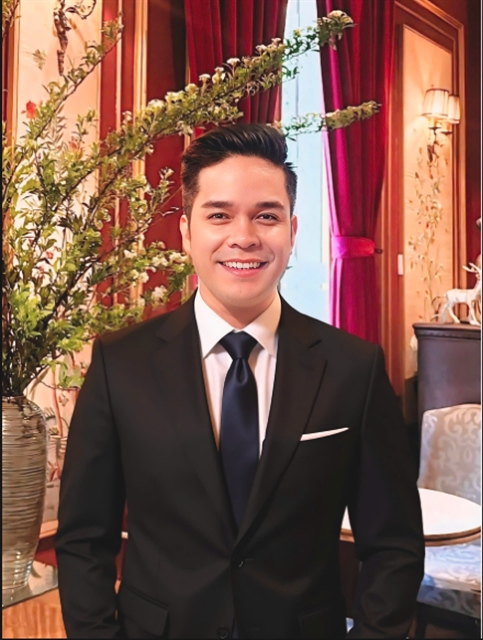 |
| Tạ Duy Linh, director of the Institute for Tourism and Economic Development Research in HCM City. — Photo courtesy of Tạ Duy Linh |
As HCM City seeks to unlock the tourism potential of Cần Giờ, attention is turning to how growth can be aligned with ecological protection. Việt Nam News speaks with Tạ Duy Linh, director of the city’s Institute for Tourism and Economic Development Research, about how to develop without undermining long-term sustainability.
How can tourism development be balanced with conservation in Cần Giờ Mangrove Biosphere Reserve?
In my view, the key lies in redefining the role of Cần Giờ within the broader structure of HCM City.
Rather than treating it as a conventional tourism destination, it should be positioned as a strategic ecological zone of the city.
This means conservation must take the lead, while tourism should be designed as a supporting tool that enhances environmental value and public awareness.
Instead of pursuing growth in visitor numbers, Cần Giờ should shift towards a controlled, high-quality eco-ourism model.
This involves managing carrying capacity, zoning activities carefully, and ensuring that all tourism products align with ecological preservation goals.
In short, tourism should serve conservation, not compete with it.
How does community based tourism contribute to local livelihoods in Cần Giờ?
Community-based tourism, particularly in areas like Thiềng Liềng, offers a distinctive model of development.
It does not replace traditional livelihoods but adds value to them.
Activities such as salt farming or forest protection are transformed into experiential products, allowing visitors to engage directly with local life.
This creates an additional income stream rather than a complete economic shift.
More importantly, it strengthens resilience by preserving cultural identity while improving income stability.
Local communities remain central to both tourism and conservation, which is essential for long-term sustainability.
How will the future Cần Giờ Bridge reshape tourism flows?
The impact of the bridge goes beyond reducing travel time. It fundamentally changes the position of Cần Giờ within the city’s tourism network.
What was once a relatively isolated destination will become more accessible and integrated.
As a result, visitor patterns are likely to shift from occasional day trips to more frequent and diverse travel.
Weekend tourism, short stays, and specialised experiences will become more common.
However, this also means higher pressure on the ecosystem, making it critical to prepare management systems in advance.
Is the current infrastructure sufficient for future tourism growth?
The short answer is no, but the issue is more complex than a simple shortage of infrastructure.
The real question is what type of infrastructure is appropriate for a biosphere reserve.
Cần Giờ does not need large-scale expansion in the traditional sense. Instead, it requires a carefully designed system that prioritises quality over quantity.
Infrastructure should support controlled access, minimise environmental impact, and align with the ecological character of the area. Building more is not the solution; building appropriately is.
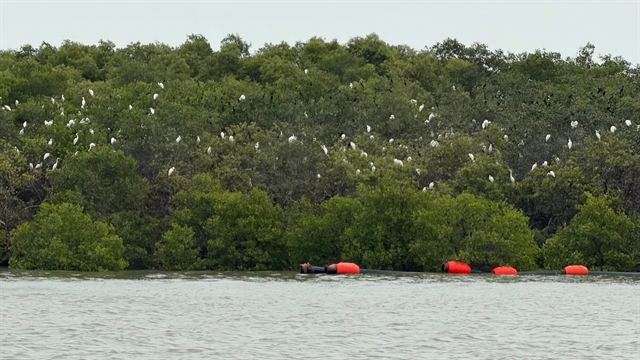 |
| A flock of white birds gathers above the dense mangrove canopy in Cần Giờ, highlighting the area’s rich biodiversity and wetland ecosystem. — VNS Photo Văn Châu |
Can Cần Giờ become a major weekend destination for HCM City?
Yes, but not as a replacement for other coastal destinations. Cần Giờ should be seen as a complementary option that adds diversity to the region’s tourism offerings.
Its strength lies in its unique mangrove ecosystem, which allows for experiences that combine leisure with environmental education.
Families, students, and urban residents can use Cần Giờ as a space to reconnect with nature. This educational dimension gives it a distinct advantage that should be preserved.
What competitive advantages can new infrastructure bring?
New infrastructure can unlock the hidden value of Cần Giờ by improving accessibility and enabling more structured tourism development.
It allows the destination to move beyond fragmented, low-value activities towards more organised and higher value experiences.
However, infrastructure alone does not create competitiveness. Its true value depends on how it is integrated into a sustainable development model.
If used to control flows, enhance quality, and protect the environment, it can create long term advantages.
If used simply to increase visitor numbers, those advantages will quickly disappear.
Is there a risk of tourism overload in the coming years?
Yes, but it should be understood in ecological terms rather than numerical ones.
Overload occurs when the rate of exploitation exceeds the ecosystem’s ability to recover, not simply when visitor numbers rise.
Cần Giờ is currently at a stage where these risks are emerging but still manageable. This is a critical window for proactive planning.
Without proper controls, increased accessibility could push the area towards unsustainable development.
How can Cần Giờ avoid excessive urbanisation and 'concretisation'?
Avoiding over-development does not mean stopping investment, but ensuring that all development follows strict ecological principles.
Clear zoning must be enforced, with core conservation areas fully protected and development limited to appropriate zones.
Equally important is maintaining planning discipline. Modern development should not be equated with dense construction.
Instead, projects should prioritise harmony with nature, low-impact design, and efficient land use.
Ultimately, Cần Giờ should aim to become a model of sustainable integration, where urban development and ecological preservation coexist.
This is not only necessary for environmental protection, but also essential for maintaining its long-term tourism value.— VNS
Environment
 Environment
 Environment
 Environment
 Environment
 Environment
 Environment
 Environment
 Environment
 Environment
.jpg) Environment
Environment
 Environment
 Environment
 Environment
 Environment