 Environment

Tighter controls on livestream sales
1.
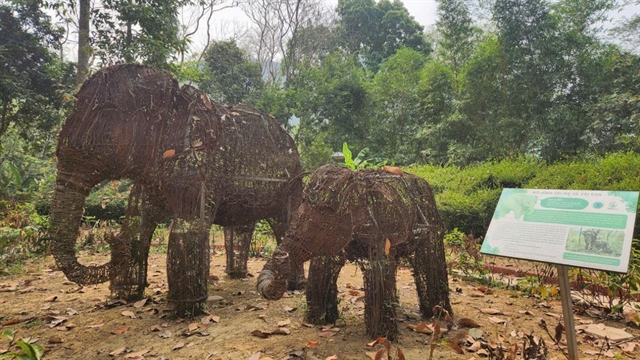 |
| A mother-and-calf elephant sculpture made from14,000 confiscated forest snares, on display at Pù Mát National Park. — Photos Tường Vy |
NGHỆ AN — A mother-and-calf elephant sculpture made from thousands of recycled snare wires now anchors Pù Mát National Park’s public display, symbolising the park’s sustained campaign against poaching and its wildlife protection efforts, with conservation quite literally wired into its message.
Located in western Nghệ An Province, Pù Mát is renowned for its primary forests and scenic sites.
The park's managers say the striking installation, created from 14,000 snares collected during patrols, turns objects of harm into a poignant call for conservation and community action.
Poaching and snaring were once severe threats to the park’s fauna. Coordinated patrols by rangers, NGOs and local communities have significantly reduced illegal activity in the core zone.
From 2016 to 2026, authorities removed nearly 22,900 snares, rescued and released hundreds of animals and handled numerous violations, officials reported.
Surveys estimate about 13 wild elephants still live in the area under strict protection.
Displayed beside a reconstructed elephant skeleton, the sculpture creates a powerful contrast between loss and recovery. Interpretive panels explain how snares work, outline patrol and removal methods and advise visitors and locals on practical actions such as avoiding wildlife products and reporting illegal activities that support protection efforts.
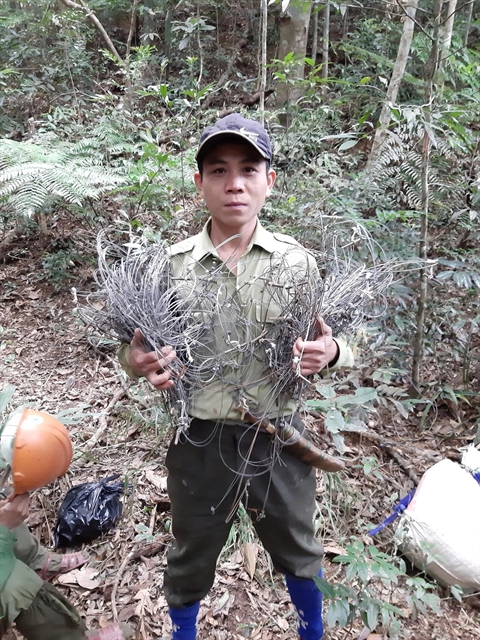 |
| Animal snares seized by Pù Mát rangers and forest guards during patrols. |
Recent biodiversity surveys with Fauna & Flora International used 135 camera traps and 30 AudioMoth recorders, documenting threatened species and reinforcing the need for continued protection. The park also maintains cross-border cooperation with Laos, conducting joint patrols to safeguard the Trường Sơn forest corridor.
Covering more than 94,000 hectares of core zone and about 86,000 hectaresof buffer, Pù Mát was designated an ASEAN Heritage Park in 2025.
Pù Mát hosts one of central Việt Nam’s most diverse ecosystems, home to 2,494 plant species and 1,746 animal species, many listed in Việt Nam’s Red Data Book. Notably, it is the site where the saola or Asian bicorn (Pseudoryx nghetinhensis), one of the world’s rarest mammals, was first discovered. — VNS
Environment
 Environment
 Environment
 Environment
 Environment
 Environment
 Environment
 Environment
.jpg) Environment
Environment
 Environment
 Environment
 Environment
 Environment
 Environment
 Environment