 Environment

Việt Nam, China seek stronger substantive parliamentary cooperation
1.
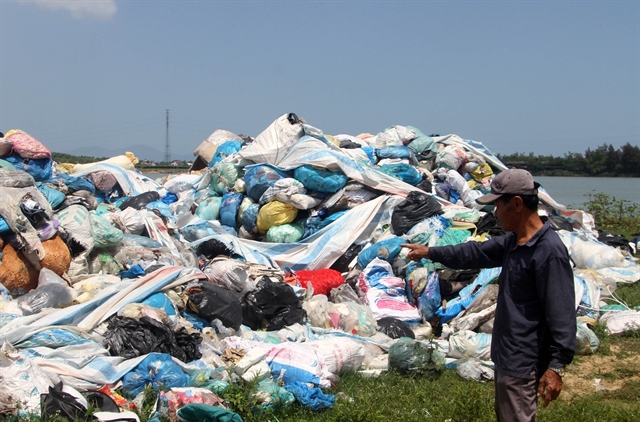 |
| Waste piles up at a temporary collection site in Đà Nẵng City. — VNA/VNS Photo Trần Tĩnh |
Trần Tĩnh
ĐÀ NẴNG — Đà Nẵng is accelerating a series of waste treatment projects as the city seeks to ease mounting pressure from household waste and build a more modern and sustainable trash management system.
In an effort for longer-term treatment capacity, the city is also moving ahead with new waste treatment plans.
Waste pressure
In recent months, many areas in southern Đà Nẵng have been plagued by prolonged waste build-up at temporary collection sites.
This situation was caused by the suspension and overload of several waste treatment plants. The Bắc Quảng Nam Waste Treatment Plant stopped receiving waste in September 2025 due to environmental violations, while the Hội An plant was also temporarily shut down at the end of 2025 due to exceeding capacity.
As a result, all newly generated waste has had to be diverted to temporary collection points.
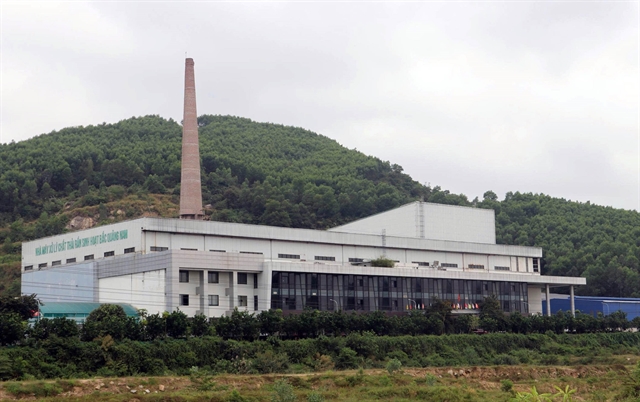 |
| The Bắc Quảng Nam Waste Treatment Plant in Đà Nẵng City has been out of operation since September 2025 due to environmental misconduct. — VNA/VNS Photo Trần Tĩnh |
Temporary collection sites are now close to full capacity, raising risks of overload.
Lê Bá Cường, a representative of a local waste collection and transport cooperative, said the main challenge lies not only in the sheer volume of waste, but also in transport conditions and limited reception hours.
Each round trip takes about an hour, while the time allowed for waste discharge is restricted, making it impossible for treatment efforts to keep pace with actual demand.
The handling of domestic solid waste in the area was assessed as extremely challenging, Văn Bá Quang, vice chairman of the Nam Phước Commune People’s Committee, told a working session held in early March between commune authorities and the waste collection cooperative.
In Hội An Tây Ward, all household waste from several areas has had to be transported to the nearby Cẩm Hà site for temporary stockpiling, with volumes reaching around 120 tonnes per day.
Mounting pressure has left the area facing a serious risk of overload unless timely solutions are put in place.
Local authorities have also warned of possible exhaustion of temporary storage space if prompt measures are not taken, especially during peak periods such as public holidays.
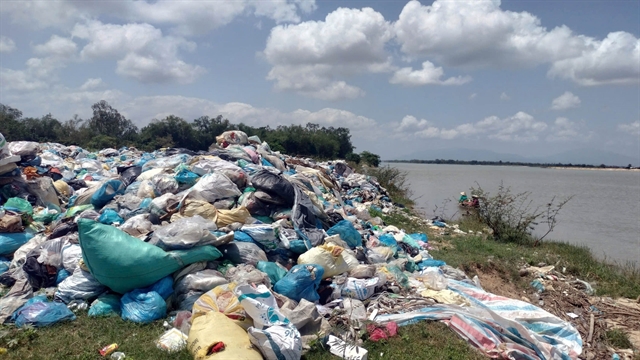 |
| Overloading waste collection points in Đà Nẵng pose increasing environmental risks on the city. — VNA/VNS Photo Trần Tĩnh |
To ease the situation, the Hội An Tây Ward People’s Committee has proposed that the Đà Nẵng Department of Agriculture and Environment allow the locality to sign a service contract with a qualified operator to transport waste to suitable treatment sites.
It has also called for financial support and a definitive solution for the Cẩm Hà dumpsite to address the current prolonged stockpiling.
Local authorities have urged the early resumption of suspended waste treatment plants or additional investment in new treatment capacity to ensure that daily waste volumes can be fully handled and environmental risks minimised.
Residents in the southern part of Đà Nẵng are waiting for clear and decisive action to restore a healthy living space.
Comprehensive solutions
Đà Nẵng has identified the development of an 'environmental city' as a key long-term task.
It has been rolling out a range of coordinated measures, including improving the efficiency of solid waste collection and treatment, promoting waste sorting at source and attracting investment in advanced treatment technologies.
The city also steps up public communication to raise community awareness, with the longer-term aim of gradually building a circular economy model.
Đà Nẵng is also proceeding with new strategic initiatives such as a free trade zone, an international financial centre and a smart urban area, placing even greater demands on green infrastructure, modern environmental governance and sustainable development standards.
Waste treatment and environmental protection need to be prioritised, especially as pressure from household waste remains significant, with the city generating about 4,452 tonnes of domestic solid waste daily.
Of that total, the urban core – covering 15 wards and communes of the former Đà Nẵng area before administrative restructuring – accounts for 1,200-1,400 tonnes per day, while the remainder comes largely from southern parts of the city.
Under the adjusted master plan for solid waste treatment to 2030, with a vision to 2045, Đà Nẵng plans to invest in three waste transfer stations, Ngũ Hành Sơn, Nguyễn Đức Trung and Hòa Vang, across the city.
The city is also accelerating waste treatment plant projects and upgrading or restarting several facilities in an effort to clear the waste backlog that has built up in recent months.
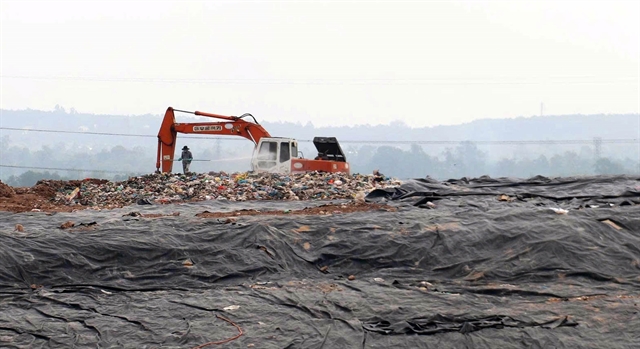 |
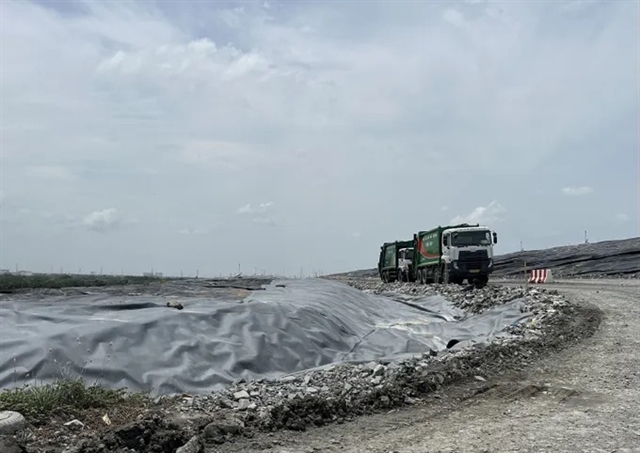
| A dumpsite in Đà Nẵng City. — VNA/VNS Photo Trần Tĩnh |
In Hội An Tây Ward, the Hội An domestic solid waste treatment plant is now in the final adjustment stage ahead of trial operations.
Representing the project’s head investor, Nguyễn Lương Giáp, deputy general director of Civil Engineering Construction and Investment JSC No 579, said the plant is one of the country’s pioneering projects for integrated and comprehensive waste treatment.
Due to the facility’s new and advanced features, several legal procedures have arisen during the investment process that need to be resolved, he said.
The company is now speeding up the remaining procedures, with the goal of putting the plant into operation in the early third quarter of 2026.
Meanwhile, Khánh Sơn waste-to-energy plant in Hòa Khánh Ward is expected to mark a major step forward in the reception and treatment of domestic solid waste and has been designated as a key project for the city’s northern area.
The project is seen as playing an important role in boosting waste treatment capacity, gradually reducing reliance on landfill and making use of energy generated from waste.
With a designed treatment capacity of about 900 tonnes of household waste per day, the plant is also expected to generate 18MW of electricity.
The project’s investor, Việt Nam Environment JSC, is accelerating construction in an effort to complete key works on schedule, with commercial operations targeted for the first quarter of 2027.
Võ Như Toàn, deputy director of Đà Nẵng Department of Agriculture and Environment, said a lasting solution to the waste problem would require a broad set of coordinated measures.
In addition to expanding treatment zones and improving collection and transport capacity, the issue must also be addressed through a combination of policy, infrastructure and community participation, he said.
The city is currently focusing on completing a policy framework that would establish technical and economic norms, pricing structures, and unified tendering or service-ordering mechanisms across the city.
Priority is being given to investment in and modernisation of waste treatment infrastructure, particularly large-scale energy recovery projects with capacities of 650-1,000 tonnes per day, along with new landfill cells to ensure stable and continuous treatment capacity.
The technology application in the management, monitoring and coordination of waste collection, transfer and treatment is also being strengthened, alongside public feedback channels and a more transparent service fee system.
The city is also seeking to diversify investment sources through incentive mechanisms that encourage greater private sector participation under public-private partnership (PPP) and privatisation models, thereby easing pressure on the state budget.
Vice Chairman of Đà Nẵng People’s Committee Trần Nam Hưng said departments and agencies must work closely together, stay proactive and anticipate arising issues in order to prevent waste-related crises.
According to Hưng, accelerating the project is important not only for meeting the investment schedule, but also for helping the city ease mounting waste pressure.
Once operational, the plant is expected to enhance treatment capacity, reduce pressure on landfill sites and gradually complete a more modern and synchronised solid waste treatment system.
In addition, waste collection in local areas, especially the central urban area, needs to become cleaner and more frequent in line with Directive No 14/CT-TU on strengthening leadership and management in urban order and promoting civilised urban lifestyles, issued by the Đà Nẵng Party Committee’s Standing Board.
Balancing economic development with environmental protection, he said, is a strategic choice if Đà Nẵng is to become a greener and more liveable city. — VNS
Environment
 Environment
 Environment
 Environment
 Environment
 Environment
 Environment
 Environment
 Environment
 Environment
 Environment
 Environment
 Environment
 Environment
 Environment