 Environment

LANDMARK Launches ‘Destination CENTRAL’: A District-Wide Invitation to Explore the Dynamism, Luxury, and Soul of Central
1.
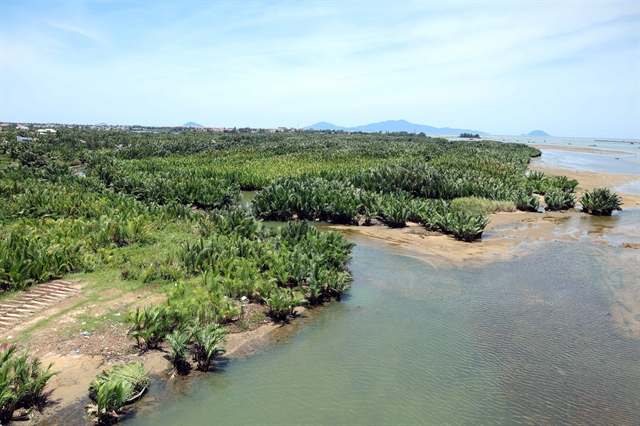 |
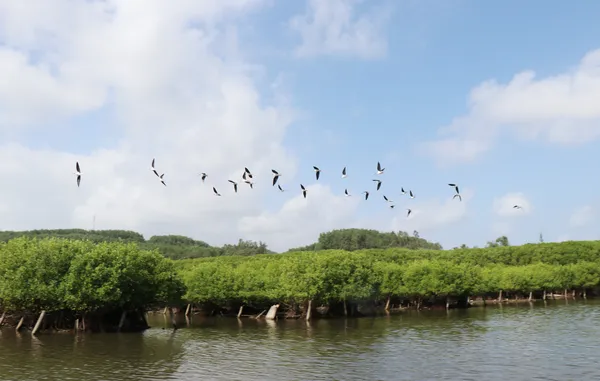
| The Bảy Mẫu mangrove forest is an important buffer zone for the Cù Lao Chàm World Biosphere Reserve in Đà Nẵng City. — VNA/VNS Photo Đỗ Trưởng |
HÀ NỘI — Việt Nam's forest resources last year remained stable, though distribution was uneven, concentrated mainly in mountainous areas, according to the Ministry of Agriculture and Environment (MAE).
Forest status announcements are conducted annually based on data aggregated from localities.
The country's total forest area reached nearly 15 million hectares last year, with a nationwide coverage rate of more than 42 per cent. Việt Nam's total forest area is more than 14.9 million ha, including areas that do not yet meet the criteria for coverage rate calculation. Of this area, natural forest accounts for nearly 10 million ha and planted forest for 4.9 million ha.
Areas that do meet the criteria for coverage rate calculation extend over 13.9 million ha, with natural forest retaining the same area and planted forest covering 3.8 million ha.
By region, the northern midlands and mountains have the largest forest area in the country, at nearly 5.4 million hectares. This is followed by the south-central coast and Central Highlands with over five million hectares, while the north-central coast has nearly 3.2 million hectares of forest.
Following last year's administrative mergers, Lâm Đồng Province now has the largest forest area of any province in the country, with over 1.1 million hectares.
Regarding coverage rates, the north-central coast leads with just over 57 per cent. Lạng Sơn Province has the highest forest coverage rate nationwide, exceeding 64 per cent.
In contrast, the Mekong River Delta has the lowest forest area and coverage rate, with over 221,000ha of forest and a coverage rate of about 5.3 per cent.
Most of the current natural forest area consists of timber forest and mixed timber-bamboo forest. The forest area is primarily managed by forest protection and special-use forest management boards, as well as domestic households and individuals.
The MAE has tasked the Department of Forestry and Forest Protection with building and operating a national database to monitor forest changes, serving sectoral management as required.
Provincial and municipal people's committees are responsible for directing implementation and delegating communes to carry out management of forestry in accordance with the Law on Forestry. They will also use forest status data to update annual forest changes and support local socio-economic development.
For localities where natural forest area decreased last year, the MAE requires reviews, inspections, identification of causes and accountability where applicable. Localities that have not announced their forest status will be punished based on regulations.
Exceeding 60 per cent
Five localities nationwide recorded forest coverage rates over 60 per cent, concentrated mainly in the northern midlands and mountains region.
At the top of the list is Lạng Sơn with 64.31 per cent, significantly higher than the national average. This is followed by Tuyên Quang (62.2 per cent), Thái Nguyên (61.7 per cent), Lào Cai (61.5 per cent) and Quảng Trị (61.01 per cent).
All of these localities have large natural forest areas, hilly and mountainous terrain and low population density.
Lạng Sơn alone has recorded a steady increase in forest area in recent years, from over 550,000ha in 2021 to about 604,000ha last year.
Before the mergers, Bắc Kạn was once the national leader in forest coverage, with over 73 per cent. Provinces like Quảng Bình, Yên Bái, Kon Tum, Hà Giang, Nghệ An and Quảng Nam also frequently rank high in coverage.
The data shows a clear concentration of high-coverage localities in the northern midlands and mountains. Last year, the entire region achieved a coverage rate of over 54.6 per cent, the highest nationwide.
Conversely, lowland regions and areas with high urbanisation rates have lower coverage. The Red River Delta stands at 21.2 per cent, southeast at 16.8 per cent and the Mekong River Delta at just 5.3 per cent.
From 2021 to 2025, Việt Nam's forest area saw a slight annual increase, from 14.7 million hectares in 2021 to nearly 15 million hectares last year. The nationwide forest coverage rate remained stable above 42 per cent.
Planted forest area showed a clear upward trend, from about 4.4 million hectares in 2021 to 4.89 million hectares last year. This demonstrates the effectiveness of efforts to restore and develop forests.
The MAE has urged localities to continue strengthening forest management, protection and development in the next few years, with a particular focus on reviewing areas with declining natural forest to conduct appropriate preservation efforts, ensuring sustainable national forest resource development. — VNS
Environment
 Environment
 Environment
 Environment
 Environment
 Environment
 Environment
 Environment
 Environment
 Environment
 Environment
.jpg) Environment
Environment
 Environment
 Environment
 Environment