 Life & Style

Businesses need to expand share of online export market
1.
|
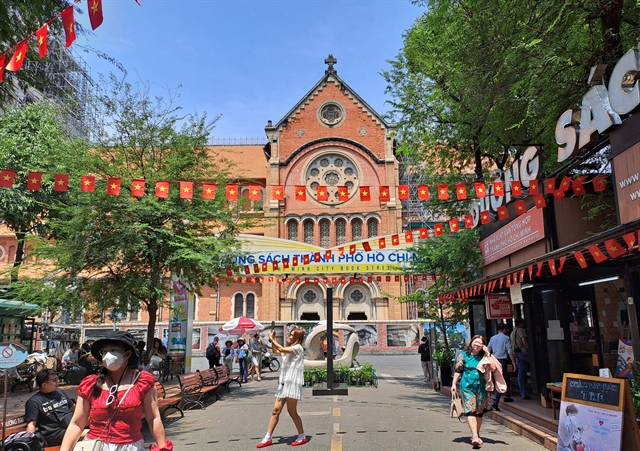
| HCM City Book Street reported revenue of more than VNĐ32.2 billion this year. — Photo bvhttdl.gov.vn |
HCM CITY — HCM City’s publishing sector is looking to unlock new growth by embracing digital publishing, modernising distribution and expanding its links with the wider cultural industries ecosystem.
The publishing, printing and distribution sector in HCM City generated nearly VNĐ3 trillion (US$115 million) in revenue in the first half of the year.
As reading habits and the way people access knowledge continue to change, the sector is shifting towards digital publishing, diversifying distribution methods and strengthening links with other cultural industries.
Market bottlenecks
According to the municipal Department of Culture and Sports, the publishing, printing and distribution sector sold more than 50 million copies of books during the period.
The city’s two publishing houses, Trẻ Publishing House and HCM City General Publishing House, published 780 titles, with nearly 1.9 million copies, along with 600,000 copies of other publications, generating total revenue of VNĐ88.7 billion.
In distribution, Fahasa recorded revenue of more than VNĐ2.1 trillion, while Phương Nam earned over VNĐ312 billion.
HCM City Book Street reported revenue of more than VNĐ32.2 billion.
The figures show that HCM City continues to maintain a large publishing and distribution market.
However, revenue alone does not fully reflect the health of the sector, as purchasing power has shown signs of slowing, reading habits are changing and competition in the digital environment is becoming increasingly intense.
Phạm Thị Yến, Deputy Head of the Press and Publishing Division under the municipal Department of Culture and Sports, said state management in some areas had yet to keep pace with development requirements.
The quality of publications needs to be further improved, particularly content serving political, educational and international integration objectives, she said.
Certain topics, including the struggle against and rebuttal of wrongful and hostile views, and the prevention and combat of corruption, waste and other negative practices, have yet to be adequately explored.
The effectiveness of bringing books to readers also remains limited, while significant disparities persist in access to reading culture between different areas.
The application of technology and management tools to business operations on e-commerce platforms has also yet to meet requirements.
Copyright infringements, pirated printing and the distribution of books of unclear origin continue to affect legitimate publishing businesses.
The sector’s challenge, therefore, is not simply to publish more titles, but also to improve content quality, accurately identify readers’ needs and choose appropriate distribution methods.
The development of digital platforms is creating both opportunities and pressure.
In the first and second quarters of 2026, 40 publishing houses nationwide participated in digital publishing and distribution, up 21 per cent, while the number of digital publications reached 1,815, an increase of 33.8 per cent.
However, the rise in the number of digital publications does not necessarily mean that the digital market has established an effective and sustainable business model.
Nguyễn Nguyên, Director of the Department of Publishing, Printing and Distribution under the Ministry of Culture, Sports and Tourism, said the new development space created following the administrative restructuring gave HCM City greater opportunities to expand its book market, connect library systems and bring publications to a wider range of readers.
According to Nguyên, amendments to the Publishing Law are addressing a number of emerging issues concerning the organisation and management of publishing activities, the decentralisation of authority and the development of digital publishing.
The draft law has been reviewed and revised by the National Assembly Standing Committee for submission to the National Assembly for consideration and approval.
Alongside facilitating new distribution methods, online publishing activities need to be closely managed at intermediary stages, with stronger inspections, enforcement against violations and protection of copyright and intellectual property rights.
.jpg)
|
| HCM City plans to develop a network of community reading spaces. — VNA/VNS Photo |
Expanding the reading market, extending the value chain
Amid changing purchasing power, the growth potential of HCM City’s publishing sector lies not simply in increasing the number of titles or opening more bookshops.
More importantly, it lies in expanding readership, stimulating demand for reading and bringing books to areas where cultural spaces remain limited.
Trần Thế Thuận, Director of the municipal Department of Culture and Sports, said the city needed to complete a project on developing the publishing, printing, distribution and reading culture sectors.
The project would aim to increase the proportion of people who read books while helping residents access both domestic and international book markets, he said.
HCM City has developed various models to bring books to communities, but there are still “significant gaps” to be explored.
Developing a reading culture therefore needs to be a regular effort involving multiple sectors and localities, rather than focusing solely on book fairs or events held at specific times.
The city has piloted residential-area book fairs in Cát Lái Ward and subsequently expanded the model to other areas.
Digital and smart libraries, community bookcases, mobile book buses and reading spaces in residential areas have also been introduced, helping bring books closer to readers who have fewer opportunities to access cultural institutions in central areas.
However, expanding reading spaces is only part of the solution.
According to Thuận, the publishing sector needs to strengthen links with other areas of the cultural industries ecosystem. Literary works can be adapted for cinema, theatre and other art and new media formats, thereby extending the lifespan of products and drawing audiences back to the original works.
The city also plans to develop a network of community reading spaces and strengthen links between publishing and technology, media, education, cultural tourism and exports.
For this value chain to operate effectively, appropriate mechanisms are needed for human resources, product markets, technological investment and intellectual property protection.
Another direction is to renew the way the State supports publishing activities.
Alongside commissioning communication products, the city could explore mechanisms for commissioning cultural, printing and publishing products, as well as purchasing high-quality and award-winning works for libraries and wider public access.
At the same time, the distribution system needs to be modernised with deeper involvement from businesses.
Investment in equipment, development of digital platforms, use of reader data and training personnel capable of adapting to technology will determine the competitiveness of publishing organisations in the new period.
From a market perspective, Phạm Minh Tuấn, Chairman of the Vietnam Publishers Association, said e-commerce was creating new requirements for book distribution.
Rather than focusing solely on discount rates and fees charged by e-commerce platforms, businesses need to proactively develop competitive distribution methods, organise the market and reach readers in the digital environment.
Experience in operating an online book platform during the COVID-19 pandemic showed that technology could expand access to books in many localities.
The model could be further studied and refined to create additional distribution channels while helping publishers and book businesses reach readers directly.
The growth potential of HCM City’s publishing sector therefore lies in its ability to develop content, technology, the market and reading culture simultaneously.
Once bottlenecks in distribution, copyright, human resources and access to books are addressed, publishing can generate more substantive growth and become an important link in the city’s cultural industries ecosystem. HCM City’s publishing sector is looking to unlock new growth by embracing digital publishing, modernising distribution and expanding its links with the wider cultural industries ecosystem. — VNS
Life & Style
 Life & Style
 Life & Style
 Life & Style
 Life & Style
 Life & Style
 Life & Style
 Life & Style
 Life & Style
 Life & Style
 Life & Style
 Life & Style
 Life & Style
 Life & Style
 Life & Style