 Life & Style
Int’l cooperation helps address nuclear power workforce shortages
1.
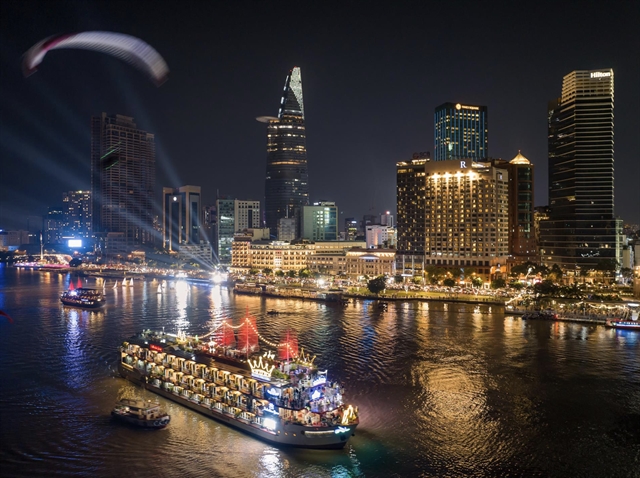 |
| A tourist boat on the Saigon River. — VNA/VNS Photo |
HCM CITY — HCM City is proposing financial support of up to VNĐ1 billion (US$38,700) for each night-tourism model as part of efforts to develop new tourism products, increase visitors’ length of stay and encourage higher spending.
The municipal People’s Committee is collecting feedback on a draft resolution establishing support mechanisms for tourism services, products and activities in the city.
Night tourism is given the highest priority under the draft, covering activities organised along designated streets or within clearly defined areas from 6pm to 6am the following day.
Operators of such models would be required to have plans covering security, fire prevention and fighting, environmental sanitation and noise management.
The draft identifies five priority areas for support: night-tourism service models; waterway tourism models; weekend service chains and events designed to extend visitors’ stays and boost spending; new tourism products, green and digital transformation; and community, agricultural, rural and eco-tourism in rural and island areas.
For night-tourism models, the drafting agency proposes partial financial support for initial investment costs directly serving business operations. Eligible items would include upgrading business premises, payment technology, brand identification and designing products and services for night-time operations.
The proposed support would cover up to 50 per cent of eligible costs, capped at VNĐ1 billion ($38,700) per model.
Items falling under the responsibility of State management agencies, such as public lighting, security and public sanitation, would not be eligible for funding.
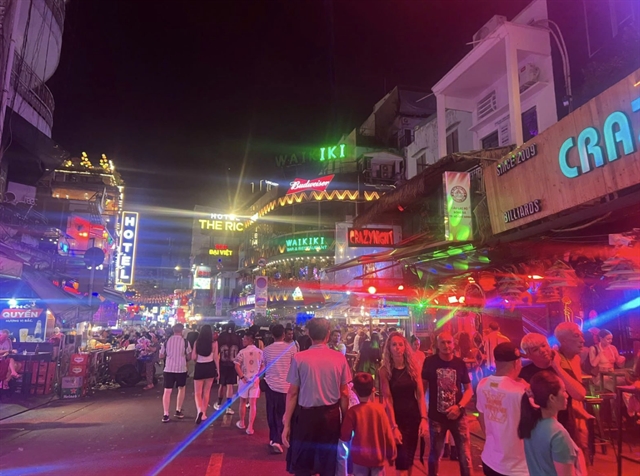 |
| HCM City’s vibrant nightlife is key for attracting both domestic and international visitors. — VNA/VNS Photo |
Support for premises, promotion and access to credit
According to the municipal People’s Committee, following the recent administrative merger, HCM City now has a diverse tourism resource system spanning urban, industrial, agricultural, river and island-based attractions.
However, average tourist spending and length of stay remain relatively low compared with competing cities in the region. Meanwhile, new tourism service models have largely developed spontaneously, with limited seed capital and a lack of an appropriate legal support framework.
The draft resolution aims to establish a mechanism combining financial and non-financial support, with priority given to non-financial assistance.
Under the proposed mechanism, the city would prioritise the leasing and use of State-owned premises, facilities and infrastructure assets for tourism development in accordance with regulations.
These could include surplus premises and facilities following restructuring, waterway wharves and stopping points, as well as public spaces, pavements and roadways permitted for temporary use outside their normal traffic functions.
Supported projects and tourism models could also receive priority and streamlined processing for administrative procedures directly related to their implementation. The mechanism would allow for interconnected procedures and shorter processing times where possible.
The city also plans to provide free promotion of supported tourism products through official tourism portals, applications, digital maps and other official platforms.
Businesses could gain access to tourism data, market information and results of visitor surveys, while being given opportunities to participate in training, professional development and consultancy programmes organised by State agencies.
Another proposed measure is support for access to credit, including consideration of interest-rate support, credit guarantees and preferential loans through the HCM City Finance and Investment State-owned Company and the city’s financial institutions for priority tourism sectors.
Night tourism products taking shape
HCM City already offers a range of night-tourism products, including experiences of urban life, cultural and artistic performances and river-based tourism.
Urban night experiences include sightseeing programmes using double-decker buses and double-decker river buses, as well as tours by vintage cars and Vespa scooters that combine sightseeing with food experiences.
At Vườn Lài Ward (former District 10), walking tours, visits to Hồ Thị Kỷ Flower Market and night food streets have also become popular among visitors.
In the cultural and artistic segment, HCM City’s new circus venue has been put into operation with modern circus performances.
The city also offers shows such as À Ố Show, Vietnam at the Reunification Palace and Chào Show, combining traditional arts with culinary experiences. These programmes have attracted both domestic and international visitors.
River-based tourism has also expanded, with restaurant boats operating in central areas becoming increasingly popular.
Nguyễn Thị Thanh Thảo, head of the Tourism Resources Planning and Development Division under the Department of Tourism, said night-time products had initially helped increase tourist spending, particularly among international visitors.
Such products have encouraged visitors to spend an additional 20-30 per cent on food and beverages, shopping and entertainment, while also extending average stays from half a day to a full day, she said.
However, Thảo noted that HCM City’s night-time economy still relied largely on food and small-scale shopping, while lacking high-end entertainment services capable of generating higher levels of visitor spending.
The biggest bottlenecks were the lack of a comprehensive legal framework and dedicated spatial planning for the night-time economy, she said.
Regulations governing activities after midnight, noise control and licensing for artistic performances remain overlapping, making major investors cautious about developing large-scale projects.
The Department of Tourism has therefore proposed a specialised resolution or planning framework for independent entertainment complexes located separately from residential areas, allowing them to operate around the clock.
It has also called for more flexible business hours and simplified licensing procedures for international artistic events.
The proposed support mechanism is expected to provide a legal and financial foundation for businesses to develop more diverse night-tourism products, while helping HCM City turn its night-time economy into a stronger driver of tourism growth and visitor spending. — VNS
Life & Style
 Life & Style
 Life & Style
 Life & Style
 Life & Style
 Life & Style
 Life & Style
 Life & Style
 Life & Style
 Life & Style
 Life & Style
 Life & Style
 Life & Style
 Life & Style
 Life & Style