 Life & Style

Drive to Great: BAIC FOTON Africa Partners Conference Set to Open
1.
|
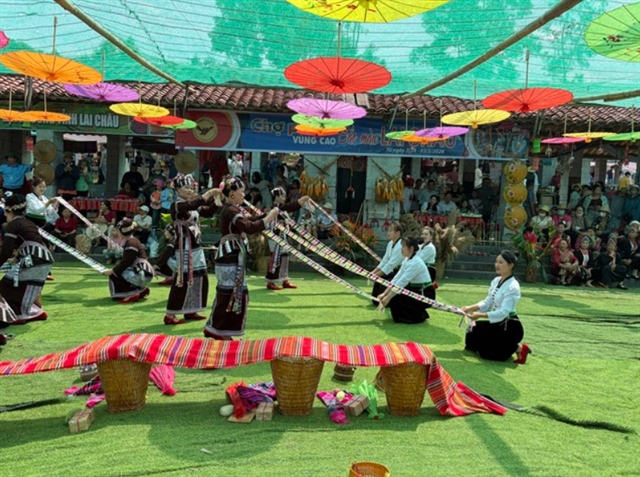
| A traditional dance by ethnic minority women in their costumes is one of the typical cultural activities held annually at the Việt Nam National Village for Ethnic Culture and Tourism to celebrate the National Day. — Photo bvhttdl.gov.vn |
HÀ NỘI — A series of cultural events will take place at the Việt Nam National Village for Ethnic Culture and Tourism in Hà Nội's Đoài Phương Commune to celebrate National Day (September 2).
The events are part of a special annual programme themed Vui Tết Độc Lập (Independence Day Celebration) held from August 29 to September 30, 2026.
Located about 40km from the city centre and easily accessible via Thăng Long Avenue, National Highway 21 and National Highway 32, the village is well-positioned to connect with the western tourism corridor, particularly the West Lake-Ba Vì axis and the capital's 'spiritual green arc'.
Experts highlight the village's unique advantages as it is the only site in the country dedicated to comprehensively preserving the cultures of all 54 Vietnamese ethnic groups, while also boasting a diverse landscape of lakes, hills, and plains set within the capital's western cultural and spiritual zone.
This year, the programme is organised by the village in collaboration with the Departments of Culture, Sports and Tourism of Cao Bằng and Sơn La provinces, Đà Nẵng City, alongside more than 100 locals from 16 ethnic groups who live and regularly participate in activities at the village.
The events will focus on showcasing and promoting ethnic cultural identities, not only contributing to preserving and upholding the traditional values of the ethnic group, but also creating experiential spaces for residents as well as domestic and international tourists during the 2026 national holidays and peak tourism season.
During the five-day holiday from August 29 to September 2, the atmosphere of typical traditional markets in the northern mountain region will be recreated in the village's Ethnic Village Zone 1 under the theme Cao Nguyên Mở Hội (Highland Festival).
About 40 booths will be set up to showcase local specialities and traditional cuisine such as colourful sticky rice, highland-style steamed rice rolls, thắng cố (horse meat stew) and corn wine presented by the Tày, Nùng, Mông and Dao ethnic groups from Cao Bằng Province, the Thái from Sơn La Province and others in local areas.
Visitors will also explore and enjoy various performances such as the sư tử mèo (cat-lion) dance by the Nùng people; a programme of folk songs and dances titled Vui Tết Độc Lập; khèn (panpipe) played by Mông people; a harvest prayer ceremony of the Nùng people from Cao Bằng; a wedding procession of Dao people from Cao Bằng; and the New Rice Festival of the Thai people from Sơn La.
On September 1 and 2, another programme celebrating the National Day will also take place in the village's Ba Na and Raglai ethnic areas.
After the national holiday, the programme will be in full swing with other activities throughout the month, such as performances of local musical instruments and folk games along with traditional crafts and ethnic cuisine according to specific themes and schedules.
New experiential tour
Known as a 'common home' to Việt Nam’s 54 ethnic groups, the village boasts a distinctive cultural atmosphere and expansive landscapes in the west of Hà Nội. It has been targeted to develop into a key cultural tourism destination for the capital.
To realise the goal, Hà Nội is focusing on creating new products and collaborating with travel agencies to develop offerings that attract visitors, including tours specifically designed for the upcoming National Day holiday.
Ngô Thị Hồng Thắm, the village's director, said that its location facilitates convenient connections to cultural, historical, ecological, and resort destinations in Hà Nội and the western region.
Taking this advantage, the village has launched two all-inclusive experience tour packages themed Dấu Chân Bản Làng (Village Footprints) and Về Với Đại Ngàn Tây Nguyên (Return to the Great Highlands) designed for school and university students, according to the village director.
The tours are operated to foster interactivity, allowing participants to explore cultural spaces, engage in themed activities at various locations, and participate in team-building activities.
Initially, a two-day, one-night tour themed Nhịp Sống Bản Làng (Village Life Rhythm) is scheduled to launch before the National Day holiday, targeting families and groups of adults. The itinerary combines relaxation with various activities such as wearing traditional ethnic costumes, exploring the village by bicycle or e-bike, enjoying a relaxing foot soak, staying at the Artists' Camp, and savouring local cuisine alongside evening cultural experiences within the village.
The village is also completing the Em Yêu Việt Nam (I Love Việt Nam) product and will be regularly staging the immersive live-action show Vườn Tượng Kể Chuyện (Storytelling Statue Garden).
Alongside the development of experiential tours within the village, many travel agencies are proactively collaborating with the village to create linked experiential tours.
The city's Department of Culture, Sports and Tourism stated that the village is oriented towards development that combines cultural preservation with tourism exploitation and the growth of cultural industries.
It has set a target to welcome approximately 1-1.2 million visitors by 2030, with foreign tourists accounting for about 5 per cent.
Between 2030 and 2035, the village aims to achieve recognition as a National Tourist Area. Looking toward 2045, it aspires to become Việt Nam's largest centre for the preservation, practice and showcasing the cultures of 54 ethnic groups, a national hub for the ethnic cultural industry and a premier destination for cultural tourism, festivals, and the night-time economy. — VNS
Life & Style
 Life & Style
 Life & Style
 Life & Style
 Life & Style
 Life & Style
 Life & Style
 Life & Style
 Life & Style
 Life & Style
_med.jpg) Life & Style
Life & Style
 Life & Style
 Life & Style
 Life & Style
 Life & Style