 Environment

LANDMARK Launches ‘Destination CENTRAL’: A District-Wide Invitation to Explore the Dynamism, Luxury, and Soul of Central
1.
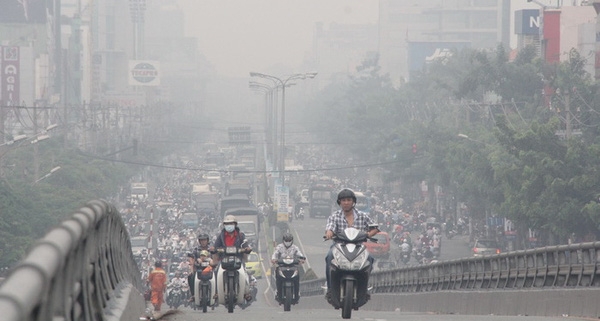 |
| People in Hà Nội suffer from severe air pollution. — VNA/VNS Photo |
HÀ NỘI — The people’s committees of Hà Nội and HCM City have been asked to carry out drastic measures to control and improve air pollution in both cities.
The Government's recently issued Resolution 67/NQ-CP promulgates a plan to improve the effectiveness and efficiency of policies and laws on environmental protection.
Aiming to ensure the timely implementation of Resolution 247/2025/QH15, the plan helps create positive changes in awareness and action, enhancing the effectiveness of environmental protection efforts.
It also contributes to the transformation of the growth model, with a focus on developing a green economy and a circular economy for the country’s sustainable development, as set out by the 14th National Party Congress.
Other goals under the plan include leveraging the combined strength of the entire political system, encouraging active participation from the public and mobilising social resources to achieve the tasks outlined in Resolution 247/2025/QH15.
At the same time, coordination among ministries, sectors and localities will be strengthened to effectively implement the resolution nationwide.
Applying information technology and digital transformation will also be promoted through the initiative, which includes organisation, monitoring, supervision and evaluation of implementation.
According to the plan, the Ministry of Agriculture and Environment (MAE) will review, update and adjust strategies and programmes related to environmental protection and climate change adaptation, assess environmental carrying capacity and publish plans to manage surface water quality in key inter-provincial river basins.
This year, the ministry and the people’s committees of Hà Nội and Bắc Ninh Province must work to improve environmental quality in severely polluted river sections, including the Ngũ Huyện Khê River, Tô Lịch River and the Bắc Hưng Hải irrigation system.
A national environmental database must also be completed and put into operation, ensuring integration, connectivity and real-time data sharing with other national data systems.
This database will be integrated with geographic information systems to develop environmental quality maps for public disclosure, which will initially be applied in major urban areas like Hà Nội and HCM City.
The Ministry of Finance and the MAE will establish and operate a domestic carbon trading platform and finalise legal regulations on the exchange of greenhouse gas emissions reduction results and carbon credits with international partners.
They will also stipulate the proportion of emissions reduction outcomes and minimum retained carbon credits to meet nationally determined contributions, ensuring national interests in line with each development phase and real-world conditions.
In addition, the plan outlines seven tasks to be implemented by 2030 and beyond.
These include preventing, controlling and detecting risks causing environmental pollution and incidents, and forecasting climate change impacts; remedying and improving environmental quality; enhancing the effectiveness of solid and hazardous waste management; and improving the effectiveness of climate change response.
They also include strengthening compliance with environmental protection laws; improving communication, dissemination and education on environmental protection and climate change response; and increasing resources and enhancing the effectiveness of State management in environmental protection. — VNS
Environment
 Environment
 Environment
 Environment
 Environment
 Environment
 Environment
 Environment
 Environment
 Environment
 Environment
 Environment
 Environment
 Environment
 Environment