 Environment

Spouses of Vietnamese, Swiss leaders visit Hà Nội University of Pharmacy
1.
|
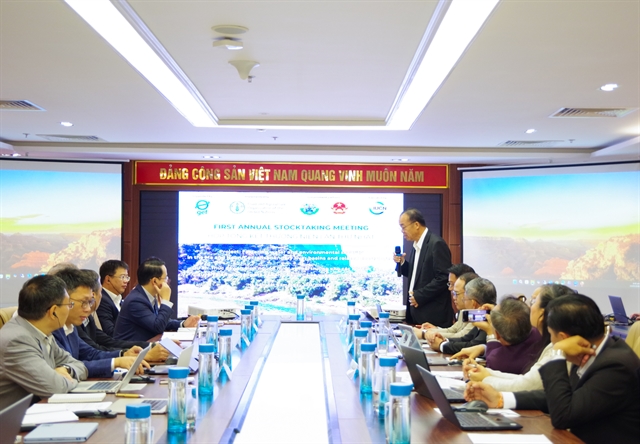
| The annual stocktaking meeting of a joint water security project was convened on Monday in Hà Nội by the International Union for Conservation of Nature (IUCN) and in cooperation with the Laos’ Department of Water Resources of the Ministry of Agriculture and Environment and Việt Nam’s Department of Water Resources Management of the Ministry of Agriculture and Environment. Photo courtesy of the International Union for Conservation of Nature (IUCN) |
HÀ NỘI — As rising environmental risks ripple through the Ma and Neun/Ca river basins, Việt Nam and Laos are turning the tide, strengthening cross-border cooperation to protect water security and livelihoods.
The annual stocktaking meeting of a joint water security project, convened on Monday in Hà Nội by the International Union for Conservation of Nature (IUCN) in cooperation with Laos’ Department of Water Resources and Việt Nam’s Department of Water Resources Management, brought together stakeholders to review progress and chart the next phase of collaboration in managing the shared river systems.
The project, the first bilateral initiative on international waters between Việt Nam and Laos funded by the Global Environment Facility, is implemented by the Food and Agriculture Organisation of the United Nations (FAO), with IUCN as an executing agency and close coordination with the two countries’ ministries of agriculture and environment.
Spanning northern and central provinces in Việt Nam and adjoining areas in Laos, the Ma and Neun/Ca basins are crucial for agriculture, fisheries and rural livelihoods. Early findings from a Transboundary Diagnostic Analysis (TDA) reveal mounting pressures on these ecosystems.
Among the most pressing threats are fish mortality events, likely linked to agricultural pollution, and an increase in flash floods driven by more intense tropical storms. Experts say these risks reflect a combination of climate change impacts and unsustainable land and water use practices.
The TDA, expected to be finalised by the end of 2026, will serve as the scientific foundation for a Strategic Action Programme (SAP) and targeted pilot interventions aimed at restoring ecosystem health and improving water governance.
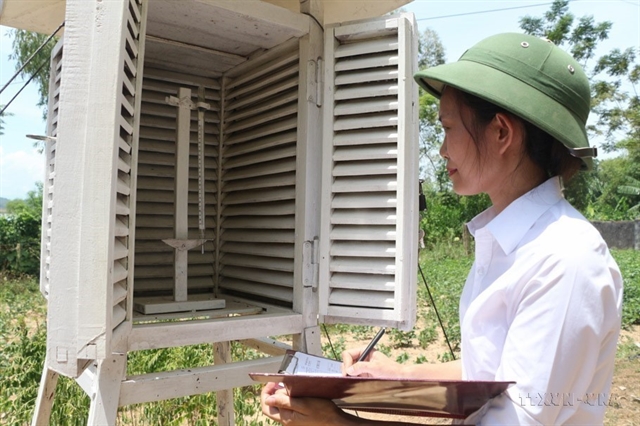
Beyond identifying risks, the project addresses structural gaps in monitoring and data sharing, long recognised as a major barrier to effective transboundary water management. A recent assessment of hydro-meteorological monitoring systems in both countries is expected to guide investments in improved data coverage and early warning systems.
Officials emphasised that technical upgrades must go hand in hand with stronger institutional cooperation. A bilateral agreement on transboundary water management, currently under preparation following high-level talks in late 2025, is expected to provide a legal framework for long-term collaboration.
“Addressing new threats in two river basins effectively is only possible if Lao PDR and Việt Nam cooperate actively,” said Jake Brunner of IUCN, noting that the forthcoming agreement would underpin joint efforts to manage both water quality and quantity.
The project’s broader approach combines scientific analysis with policy dialogue and on-the-ground action. Its five components include conducting the TDA, facilitating cooperation mechanisms, implementing pilot projects, developing strategic and national action plans, and promoting awareness, capacity building and gender mainstreaming.
According to FAO, the initiative demonstrates how shared analysis can translate into coordinated action across borders.
“Strengthening cooperation between Lao PDR and Việt Nam is essential to address evolving water-related risks, protect ecosystems, and support resilient livelihoods,” said Waleed Abouelhassan, Land and Water Officer at FAO.
The meeting, the first under the project, also engaged a broader network of stakeholders, from government agencies and research institutions to civil society organisations and local communities. Discussions covered issues including revisions to water resource laws, basin-wide scenario planning and mechanisms for transboundary coordination.
Held in connection with World Water Day 2026, themed Water and Gender, the meeting highlighted the importance of inclusive water governance. Participants stressed that equitable access to water and sanitation is not only a development priority but also a prerequisite for reducing gender inequalities and achieving the Sustainable Development Goals.
A dedicated session showcased how gender and social inclusion are being integrated into the TDA, ensuring that the needs and roles of women and vulnerable groups are reflected in future policy and planning.
Leaders from both countries’ water resource agencies said the project is already delivering practical benefits. By identifying key challenges such as pollution, ecosystem degradation and increasing disaster risks, it is helping to inform evidence-based policymaking.
At the same time, enhanced monitoring systems, improved data sharing and stronger cooperation mechanisms are laying the groundwork for a more resilient and responsive water governance framework.
As climate pressures intensify and development demands grow, the Ma and Neun/Ca initiative is positioned as a model for transboundary water cooperation in the region, balancing environmental protection with economic needs while ensuring no community is left behind. — VNS
Environment
 Environment
 Environment
 Environment
 Environment
 Environment
 Environment
 Environment
 Environment
 Environment
 Environment
 Environment
 Environment
 Environment
 Environment