 Environment

Atlantis Studio's Two-Player Horror Game Beyond the Dark: Nightwatch to Be Published by Q-Games!
1.
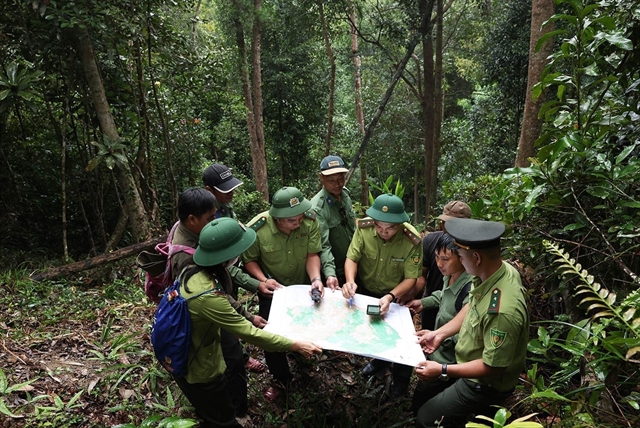 |
| Forest managers go on patrol to prevent forest fire in Gia Lai Province. — VNA/VNS Photo Vũ Sinh |
HÀ NỘI — Việt Nam is ramping up forest fire prevention efforts as intensifying heatwaves threaten to raise the risk of blazes across the country, the Ministry of Agriculture and Environment (MAE) said.
The warning follows forecasts from the National Centre for Hydro-Meteorological Forecasting that temperatures across the northern, central and southern regions are climbing, with widespread heatwaves expected to heighten fire danger.
In Official Letter No. 2515/BNNMT-LNKL recently sent to provinces and cities, MAE Deputy Minister Nguyễn Quốc Trị said forest fire prevention and control have in recent years been carried out in line with forestry laws and related regulations, under the direction of the Party, State, Government, Prime Minister, MAE and other ministries and local authorities.
Those efforts have delivered results, with both the number of fires and the area of forest damaged declining year on year.
But with temperatures rising, the risk remains high. Authorities have been warned against complacency and urged to take proactive, comprehensive measures while staying ready to respond quickly to any outbreaks.
The MAE has instructed provinces and cities to strictly enforce the 2017 Forestry Law and related regulations, while fully implementing the Government’s Resolution No 29/NQ-CP and the Prime Minister’s directives on responding to drought, saltwater intrusion and forest fires. Directive No 22/CT-BNNMT on strengthening forest management, protection and development must also continue to be carried out.
Local administrations have been told to ensure commune-level People’s Committees and relevant agencies fully carry out their responsibilities, with inspections and supervision intensified as a key and ongoing task.
The ministry also called for faster adoption of information technology, Geographic Information Systems (GIS) and other modern tools to improve monitoring, enable earlier detection and support faster responses to fire risks.
Checks in high-risk areas must be stepped up, while existing fire prevention and response plans should be reviewed, updated and effectively implemented.
Authorities are required to ensure sufficient personnel, equipment, vehicles and logistics, ready to respond to emergencies and prevent fires from spreading or becoming prolonged.
Stronger coordination between forest protection forces, police and the military is also required to improve responses to emerging situations.
At the same time, public awareness campaigns are to be expanded, including guidance on safe fire use in and near forests, tighter control of slash-and-burn cultivation, undergrowth clearance and other activities that may pose fire risks.
Localities must closely monitor forest fire warnings issued through the Forestry and Forest Protection Department’s early warning system and promptly report incidents to enable coordinated responses.
In the event of a fire, authorities are instructed to mobilise forces and equipment immediately to contain and extinguish it, minimising damage.
After a fire, localities must quickly address the consequences, restore damaged forest areas, investigate causes and strictly handle violations in accordance with the law.
The MAE urged local people’s committees to implement these measures in full to improve forest fire prevention and control, protect forest resources and minimise damage in the coming period.
According to the MAE, Việt Nam’s total forest area stands at about 14.87 million hectares, with forest cover maintained above 42 per cent. Natural forests account for more than 10.1 million hectares, while planted forests cover around 4.7 million hectares.
Forests play a vital role in environmental protection and climate regulation, while contributing significantly to socio-economic development.
Annual exports of wood and forest products are valued at US$14–15 billion, placing Việt Nam among the world’s leading exporters of wooden furniture.
The forestry sector grows by about five per cent each year, with spillover effects on agriculture, hydropower, tourism and processing industries. — VNS
Environment
 Environment
 Environment
 Environment
 Environment
 Environment
 Environment
 Environment
 Environment
 Environment
 Environment
 Environment
 Environment
 Environment
 Environment