 Environment

PM pledges continued support for Vietnamese community in Cambodia
1.
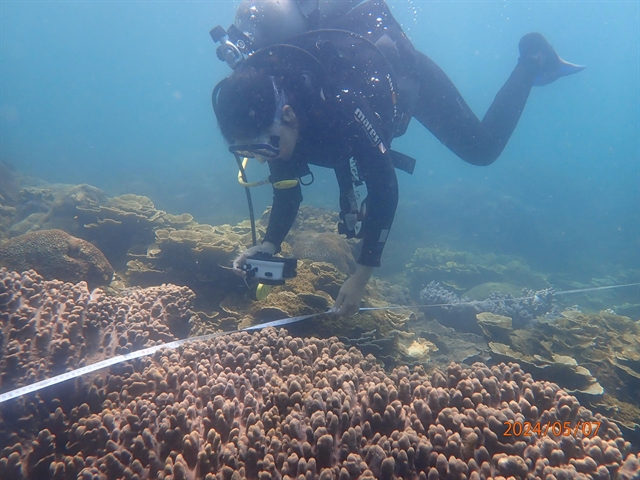 |
| A diver checks a coral reef off the Chàm Islands as part of a reef monitoring programme. ReefCloud, an AI tool, has been helping with conservation efforts for the past year. Photo courtesy of Trần Phương Thảo |
CHÀM ISLANDS – An AI tool is being used as an effective measure to help with conservation and restoration of coral reefs off the coast of the Chàm Islands by speeding up monitoring and data analysis efforts as well as increasing global network connection and knowledge sharing.
The management board of the Chàm Islands Nature Reserve said the AI-based digital tool ReefCloud, which uses machine learning and advanced analysis to rapidly extract and share data from images of coral reefs, has replaced a previous tool called Reef Check.
Reserve staff member Trần Phương Thảo said ReefCloud helped speed up monitoring on coral reefs to 700 times faster than the previous solution.
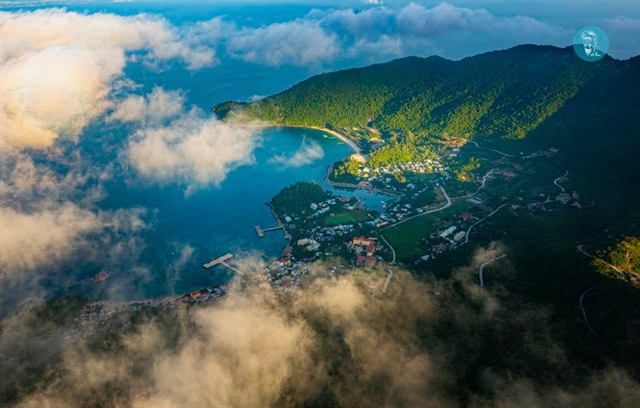 |
| A birds-eye view of the Chàm Islands, off the coast of Hội An ancient town. The site is an ideal eco-tour destination and a well protected nature site in central Việt Nam. Photo courtesy of Võ Rin |
The AI-based tool allows divers to save up to 70 per cent of their time on data analysis by using data annotation, adding a short explanation to a text or image with higher precision reporting, according to Thảo.
The previous tool allowed for limited coral monitoring on the seabed, while analysis of the data was mostly based on real-time observations from divers.
“We had collected a large amount of data into a database using ReefCheck between 2021 and 2024, but it required specialised skills and a lot of manpower, with longer diving times at sea. The tool was not able to recognise different types of coral, or verify them," Thảo said.
“ReefCloud has helped us with faster analysis and reliable accuracy rates of up to 80 or 90 per cent. The tool also uses a convolutional neural network – a specialised deep learning algorithm primarily for analysing visual data, including images and videos – while connected to a global network," she noted.
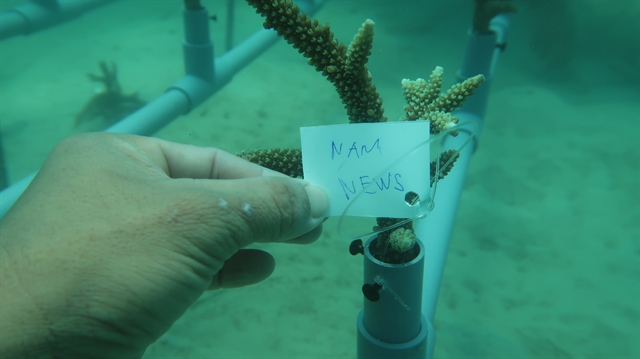 |
| A branch of coral is set in the water off the coast of the Chàm Islands. The nature reserve has restored and conserved coral in an area of 365.4ha. Photo courtesy of Chàm Islands Nature Reserve |
That the tool saves weeks and months of work by identifying the types of coral and changes to the reef.
The Chàm Islands Nature Reserve has been working closely with the Institute of Oceanography of Việt Nam, the Australian Institute of Marine Science and the United Nations Environment Programme on coral conservation and monitoring.
Conservation efforts thus far have preserved and restored 365.4ha of coral reef near the islands, while more than 40 coral nurseries and two restoration areas on a total of 8,000sq.m have been replaced to fill in damaged reefs.
Coral in the waters off the islands' Lá, Dài, Bãi Bắc, Bãi Nần and Bãi Tra beaches had seen the most success, with 300 coral species either conserved or newly restored since 2006, the reserve management board reported.
Nguyễn Văn Long, an expert from the Institute of Oceanography, said coral reefs near the Chàm Islands were doing well, displaying rich biodiversity following decades of conservation work.
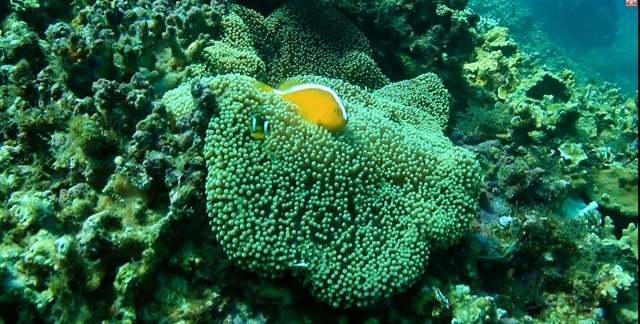 |
| A protected coral reef in the waters off the Chàm Islands. Conservation and restoration programmes have remained active over the past few decades. Photo courtesy of Lê Xuân Ái |
The restoration of coral reefs and the entire ecological system has helped build up the reputation of the Chàm Islands as an example of successful nature conservation.
This success was mostly achieved through positive management programmes and behaviours adopted by local islanders since the area was recognised as a world biosphere reserve in 2009.
Local fishermen and the wider community have strictly adhered to rules banning the use of plastic bags, enforcing no-fishing zones and limiting fishing in the off-season, when the species typically reproduce, to allow populations to recover.
Chàm Islands - Hội An is one of the few places in Việt Nam successfully campaigning against plastic bags and promoting '3R' waste management programmes.
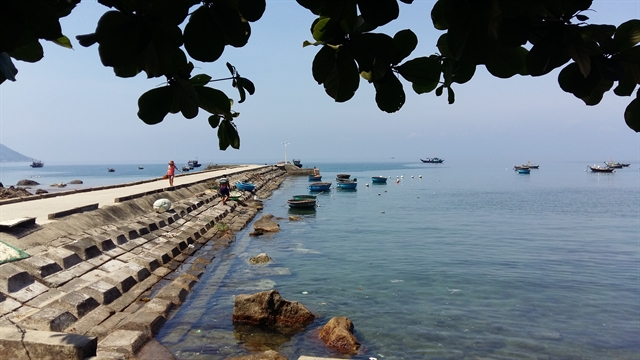 |
| A pier on the Chàm Islands hosts daily cruise trips from the mainland. The site is busy with tourists and boat trips during summer. VNS Photo Công Thành |
The reserve plans to become the first zero waste site in Việt Nam.
One of top destinations in central Việt Nam after the UNESCO-recognised world heritage sites of Hội An ancient town and Mỹ Sơn Sanctuary, the Chàm Islands include eight islets and are home to 3,000 inhabitants. VNS
Environment
 Environment
 Environment
 Environment
 Environment
 Environment
 Environment
 Environment
 Environment
 Environment
 Environment
 Environment
 Environment
 Environment
 Environment