 Environment
Ministry proposes restructuring EVN to advance competitive power market
1.
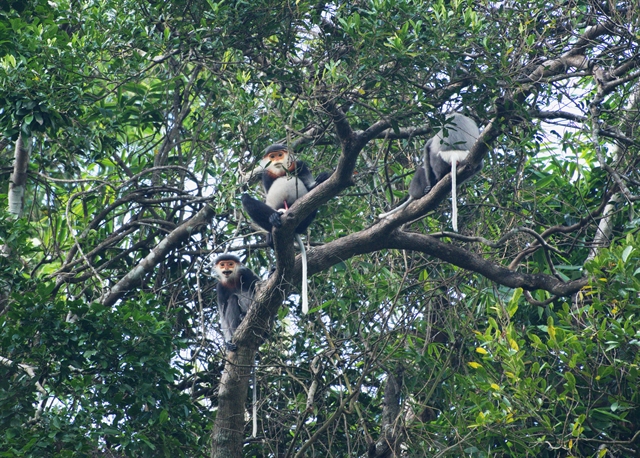 |
| A herd of the grey-shanked douc langurs (Pygathrix cinerea) – a Critically Endangered (CR) primates species -- is found living in a forest in central Việt Nam. Field surveys have been implemented in the province of Quảng Ngãi in finding the best way of protection and conservation of the endangered species. Photo courtesy of GreenViet |
Illegal hunting, forest encroachment for farming and accelerating infrastructure projects are posing serious threats to the survival of the grey-shanked douc langur (Pygathrix cinerea), classified as Critically Endangered by the International Union for Conservation of Nature, conservationists have warned following field surveys in Quảng Ngãi Province during 2024–25.
Trần Hữu Vỹ, director of the Centre for Conservation and Research (GreenViet), an NGO, said surveys conducted in cooperation with Fauna & Flora International and local ranger forces found that primary forests in Ba Tơ, Kon Plông, Măng Bút, Măng Đen and Sơn Kỳ are home to a population of 650 individuals.
Vỹ said the area is regarded as a globally crucial habitat for the long-term conservation of the endangered primate species, with around 2,000 individuals recorded worldwide.
He said the survey programme, funded by Synchronicity Earth, a UK-registered charity focusing on global biodiversity conservation, recorded 30 herds comprising 159 grey-shanked douc langurs along 73 survey routes in forest areas from August 2024 to December 2025.
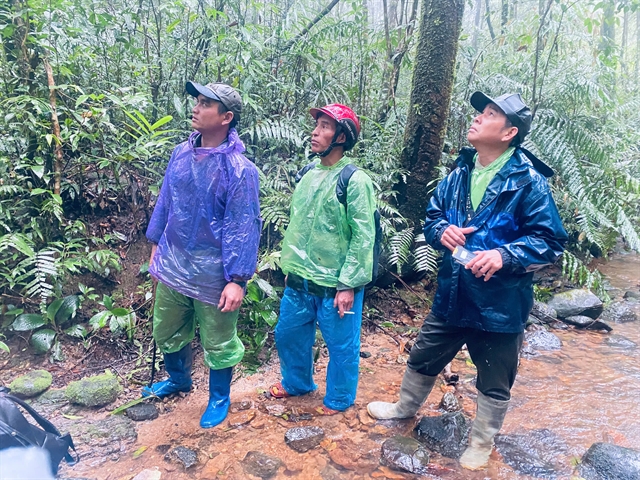 |
| Local rangers and community take a patrol in jungle in protection of the grey-shanked douc langurs population in central Việt Nam. Photo courtesy of GreenViet |
“We began the final survey tour of 2026 by collecting interviews on awareness of protecting the endangered langurs among local communities, and asking for their participation in conserving the primate population and local forests,” Vỹ said.
“The field survey programme is an important step in building effective conservation solutions with the community’s engagement in protecting the Critically Endangered langurs.”
Vỹ added that forest areas in the province have been well preserved, creating relatively safe shelter for grey-shanked douc langurs, but threats from poaching and farming on forest land, as well as declining habitat quality, remain.
“The programme will also help establish a scientific and social database on community-based sustainable conservation activities. The joining hands of the community and the project’s workforce will increase local awareness of protecting the primate species that is found only in Việt Nam.”
Quảng Ngãi is one of five provinces in central Việt Nam, including the former provinces of Bình Định, Gia Lai, Kon Tum and Quảng Nam, where many herds of the endangered primates have been reported living in the remaining well-protected forests, according to Hà Thăng Long, a doctor in biodiversity.
The primary forest area west of Ba Tơ Commune, 70km from Quảng Ngãi provincial centre, has been proposed as a nature reserve and strictly protected area because of its biodiversity value.
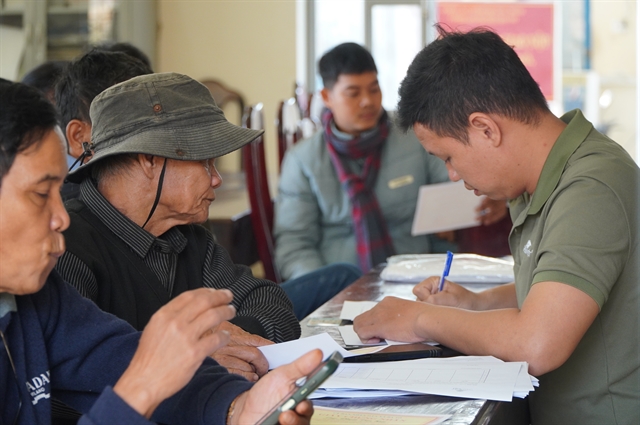 |
| A review on the community in protection of the endangered primates species are taken in central Việt Nam. Primary forests Quảng Ngãi Province are home to a population of 650 individuals of grey-shanked douc langurs. Photo courtesy of GreenViet |
A report from the provincial Sub-department of Forest Protection shows that Ba Tơ forests are home to 1,278 flora and fauna species, of which eight are recognised as critically endangered and 45 as endangered, including grey-shanked douc langurs, yellow-cheeked gibbon (Nomascus gabriellae), Edwards's pheasant (Lophura edwardsi), giant muntjac (Muntiacus vuquangensis) and Sunda pangolin (Manis javanica).
In 2024, Quảng Ngãi Province approved the grey-shanked douc langur conservation project funded by the UK-registered Synchronicity Earth, providing technical support, field surveys and wildlife rescue training for local rangers.
More than 60 grey-shanked douc langurs were found living in Núi Thành Commune in the former Quảng Nam Province, now merged with Đà Nẵng City. — VNS
Environment
 Environment
 Environment
 Environment
 Environment
 Environment
 Environment
 Environment
 Environment
 Environment
 Environment
 Environment
 Environment
 Environment
.jpg) Environment
Environment