 Opinion
Three international exhibitions open in Hà Nội
1.
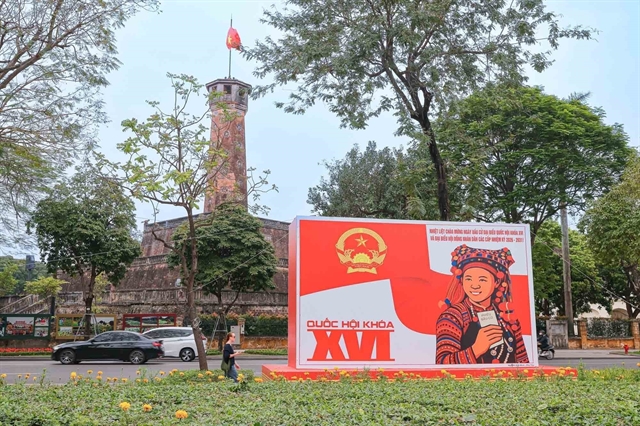
With the election of deputies to the 16th National Assembly and people’s councils for the 2026–31 term now concluded, attention is turning to the expectations placed on the country’s newly elected legislature. Observers and experts from different countries and professional backgrounds have offered perspectives on the achievements of the previous term and the priorities for the years ahead.
Academic observers have highlighted the heavy legislative workload and policy engagement of the outgoing parliament.
 |
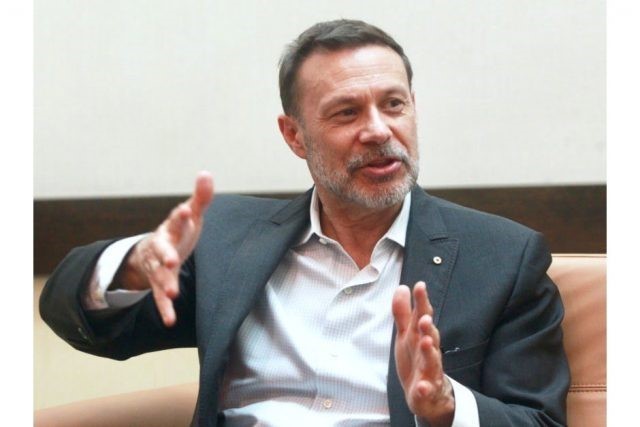
| Professor Carl Thayer from the Australian Defence Force Academy at the University of New South Wales. — VNA/VNS Photos |
Professor Carl Thayer, from the Australian Defence Force Academy at the University of New South Wales, described the workload of the 15th National Assembly (2021–2026) as substantial. During the term, the legislature held ten regular sessions and nine extraordinary ones, with the final sitting alone passing a record 51 laws.
Thayer noted that parliamentary debates increasingly focused on major policy areas such as environmental protection, land administration and food safety. Deputies were also actively engaged in discussions on amendments related to the 2013 Constitution and the Law on the Organisation of Local Administration.
He highlighted the scale of recent institutional reforms, including the restructuring of Việt Nam’s administrative system. The number of provinces and cities was reduced to 34, including 23 newly merged provinces, requiring a reorganisation of local people’s councils.
According to Thayer, the timing of National Assembly elections has also evolved. Elections are now held earlier after the National Congress of the Communist Party of Việt Nam so newly elected deputies can more quickly participate in selecting key state leaders and implementing national development strategies.
The professor also pointed to an increasingly complex global environment, stressing the importance of effectively implementing Việt Nam’s network of free trade agreements to sustain economic integration and growth.
Another assessment comes from the business and engineering community that has closely followed Việt Nam’s economic performance during the same period.
 |
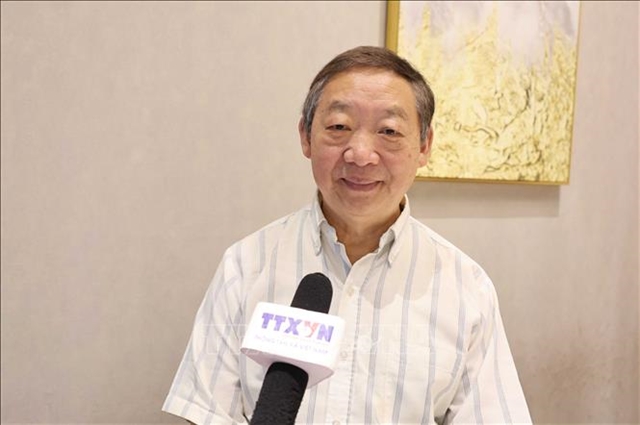
| Senior engineer Lương Thế Huân of Toyo Malaysia Engineering and Construction. |
Senior engineer Lương Thế Huân of Toyo Malaysia Engineering and Construction said the performance of Việt Nam’s National Assembly and people’s councils during the 2021–26 term was particularly significant because it coincided with the difficult post-pandemic recovery period.
He noted that as countries emerged from COVID-19, many economies faced weakening growth, rising inflation and declining purchasing power. In that context, he commended Việt Nam’s Government and legislature for timely policy responses and what he described as proactive, high-quality law making.
Huân pointed to several major legislative reforms, including the amended Land Law, the Housing Law 2023 and the Law on Real Estate Business 2023, as key measures that helped remove legal bottlenecks, improve market liquidity and accelerate infrastructure development across the country.
He also highlighted the National Assembly’s decisive role during the pandemic, particularly the adoption of Resolution 30/2021/QH15, which provided the legal framework for emergency public-health measures. According to Huân, this step helped protect public health while restoring social confidence and supporting economic recovery.
He suggested that future legislation should shift further toward enabling development, including creating legal frameworks that anticipate emerging sectors such as the digital and green economies. He also proposed developing a digital National Assembly and electronic people’s councils to strengthen transparency and improve connections with voters.
Priorities of newly elected legislature
Beyond assessments of the previous term, other experts emphasise the priorities facing the newly elected legislature in the coming years.
 |
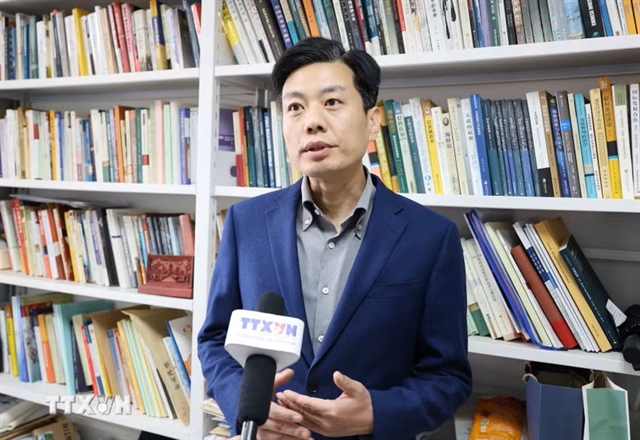
| Lê Văn Tranh, a Vietnamese doctoral researcher in law at Paris Panthéon-Assas University in France. |
From the perspective of legal scholarship, Lê Văn Tranh, a Vietnamese doctoral researcher in law at Paris Panthéon-Assas University in France, believes the next legislative term will require deeper improvements in both law making and oversight.
Tranh said deputies in the new term should demonstrate strong political integrity, sound institutional thinking and the ability to translate policies into workable legislation. Maintaining close connections with citizens and businesses will also be essential to ensure that laws reflect real social and economic needs.
He emphasised that oversight functions should be strengthened, particularly in monitoring the implementation of government commitments and ensuring that adopted policies are effectively carried out.
For local people’s councils, Tranh highlighted the importance of improving the quality of policy decisions and strengthening supervision in areas such as public investment, land management, budgeting, administrative reform and the accountability of local administrative bodies.
Tranh also stressed that parliamentary diplomacy should move beyond symbolic exchanges. With relations established with more than 140 parliaments worldwide and more than 50 parliamentary friendship groups, Việt Nam already has a strong institutional foundation for legislative cooperation.
The challenge now, he said, is to ensure that these relationships become practical channels contributing directly to national development, including through sharing legislative experience, mobilising resources and supporting strategic priorities such as digital transformation, green transition and energy security.
International partners also emphasise the growing role of parliamentary diplomacy in strengthening bilateral relations.
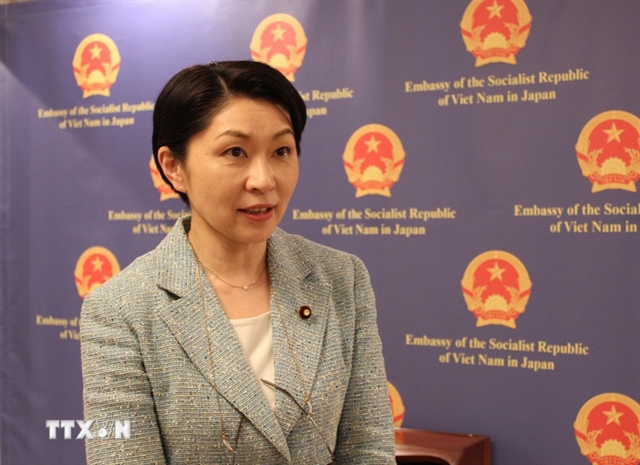 |
| Chairwoman of the Japan-Vietnam Parliamentary Friendship League Obuchi Yukoin. |
According to Obuchi Yuko, chairwoman of the Japan-Việt Nam Parliamentary Friendship League, cooperation between the parliaments of Việt Nam and Japan has long been a key pillar of bilateral ties.
Obuchi noted that both countries place great importance on the rule of law and that Japan has consistently supported Việt Nam’s efforts to develop and refine its legal system. She described parliamentary cooperation as a foundational element that helps deepen mutual understanding among political leaders while supporting broader bilateral initiatives.
She also emphasised the role of the Japan–Việt Nam Parliamentary Friendship League as a “super-partisan” bridge connecting politicians from different political parties. Over the years, several Japanese prime ministers and secretaries-general of the Liberal Democratic Party have participated in the group, reflecting Japan’s strong regard for Việt Nam and providing political momentum for major cooperation projects. She expressed confidence that the legislature would continue representing diverse public voices while promoting international cooperation.
 |
| Dr Julia Roknifard, a senior lecturer in international relations at Taylor’s University in Malaysia. |
Dr Julia Roknifard, a senior lecturer in international relations at Taylor’s University in Malaysia, also shared her assessment of the role of Việt Nam’s highest legislative body in promoting economic development and strengthening multilateral cooperation amid a rapidly changing global landscape.
She said that Việt Nam’s National Assembly, as the highest state authority, ensures coordinated implementation of development plans, underpinning socio‑economic stability and strong growth. She added that it also builds the legal framework – laws on trade, infrastructure, digitalisation and industry–that creates a predictable investment climate amid geopolitical and technological shifts.
Roknifard noted that through parliamentary diplomacy (IPU, AIPA) and strengthened ties such as Việt Nam-Malaysia’s, lawmakers convert political commitments into concrete policies, advancing regional integration, sustainable development and transparency, and she expected the Assembly’s role and international influence to grow after the elections, further supporting domestic stability and Việt Nam’s global standing. — VNS
Opinion
 Opinion
 Opinion
 Opinion
 Opinion
 Opinion
 Opinion
 Opinion
 Opinion
 Opinion
 Opinion
 Opinion
 Opinion
 Opinion
 Opinion