 Opinion
Vietnamese Prime Minister meets Cambodian National Assembly President
1.
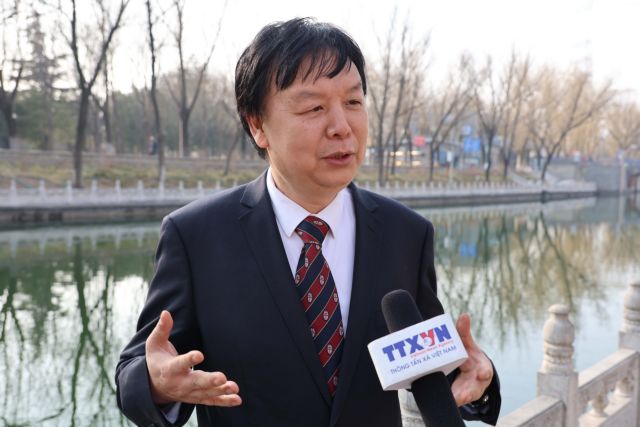 |
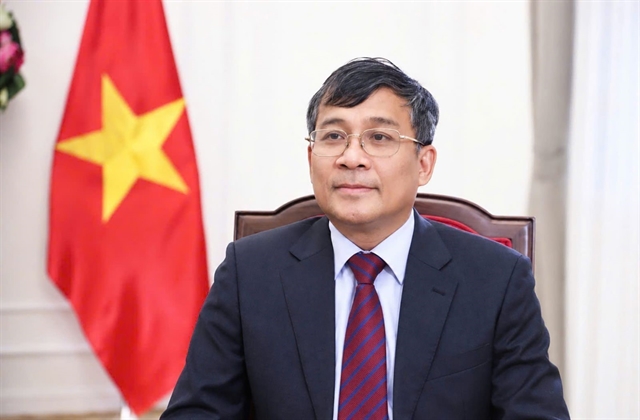
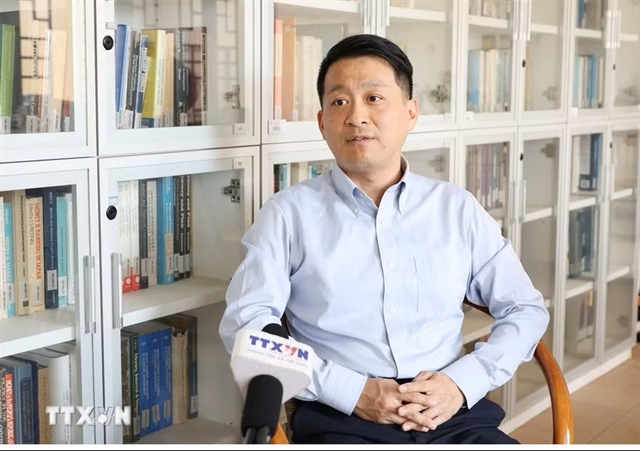
| Professor Mi Liang, Director of the Centre for Southeast Asian Studies at Beijing Foreign Studies University. VNA/VNS Photo Công Tuyên |
BEIJING – Việt Nam’s proposal on discussion themes for the ASEAN Future Forum (AFF) 2026, focusing on the solidarity and resilience of the Association of Southeast Asian Nations (ASEAN), is in line with the interests of all ASEAN member states, according to a Chinese scholar.
Professor Mi Liang, Director of the Centre for Southeast Asian Studies at Beijing Foreign Studies University, made the remark in an interview with the Vietnam News Agency (VNA)'s correspondent in Beijing on the occasion of AFF 2026.
According to the Chinese scholar, the forum’s plenary session will focus on ASEAN’s resilience, solidarity and self-reliance, positioning the event as an open dialogue platform that complements ASEAN’s existing official mechanisms.
The forum highlights the building of a people-centred ASEAN Community and promotes the transition to new growth models amid global uncertainties. It seeks to safeguard the interests and well-being of all people while ensuring that no group is left behind, he said.
Solidarity and resilience are also the most important reasons behind ASEAN’s cohesion, the scholar stressed.
Regarding conflict prevention, he noted that the issue is one of the three core themes of this year’s forum. Discussions on the topic aim to maintain regional peace and stability while creating a secure internal environment for ASEAN’s development.
In his view, relations among ASEAN member states are fundamentally harmonious. He added that ASEAN should continue to make full use of its dialogue, consultation and mediation mechanisms to address differences, thereby preserving a peaceful and stable environment conducive to the development of its members.
On artificial intelligence (AI) and AI-related technologies, Prof. Mi said these are among the most important areas for ASEAN’s future development. He emphasised that keeping pace with emerging technological trends is an essential requirement for countries in the region.
According to the scholar, the promotion of AI technologies to advance regional development, while jointly addressing common challenges related to governance, ethics and cybersecurity, constitutes one of the forum’s key forward-looking agendas and needs continued discussions.
Commenting on Việt Nam’s hosting of the AFF for the third consecutive year, an initiative first announced by Việt Nam at the 43rd ASEAN Summit in Jakarta, Indonesia, in September 2023, Prof. Mi said the initiative has received positive responses from ASEAN member states and that the previous two editions were successfully organised.
Việt Nam’s continued hosting of the event demonstrates its goodwill and sense of responsibility in contributing to discussions on regional issues and to ASEAN’s overall development, he noted, adding that it reflects Việt Nam’s growing influence within the bloc and its rising stature in the region and the world.
The success of the previous two editions, which attracted the participation from senior officials of ASEAN member states as well as regional countries such as China, serves as clear evidence of Việt Nam’s expanding diplomatic influence, he noted.
The scholar expressed his confidence that the AFF will play an increasingly important role in ASEAN's affairs in the years ahead and become a key platform supporting the bloc’s development. VNA/VNS
Opinion
 Opinion
 Opinion
 Opinion
 Opinion
 Opinion
 Opinion
 Opinion
 Opinion
 Opinion
 Opinion
 Opinion
 Opinion
 Opinion
 Opinion