 Opinion
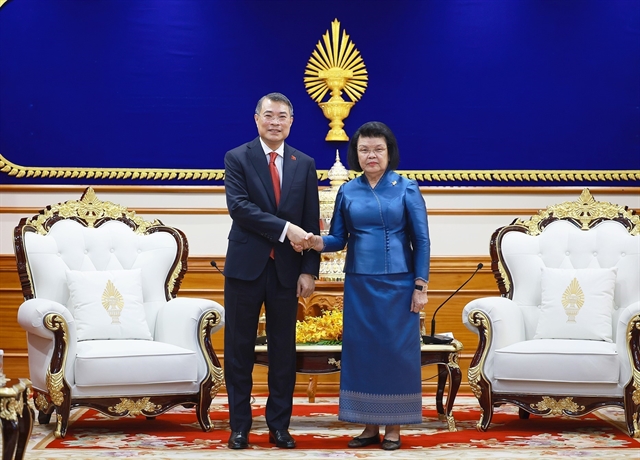
Vietnamese Prime Minister meets Cambodian National Assembly President
1.
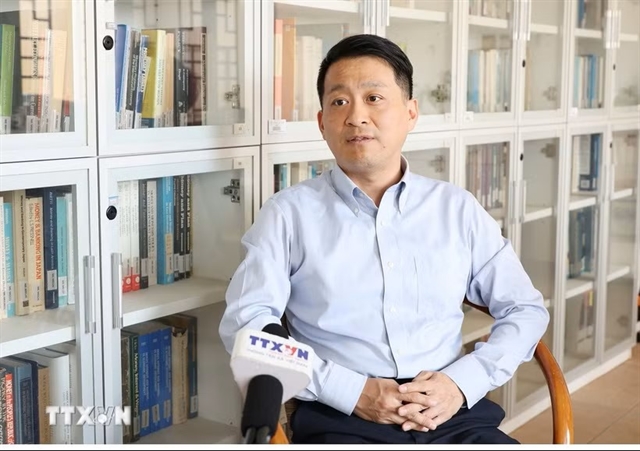 |
| Professor Qu Qiang of the Minzu University of China and commentator for China Global Television Network (CGTN). VNA/VNS Photo |
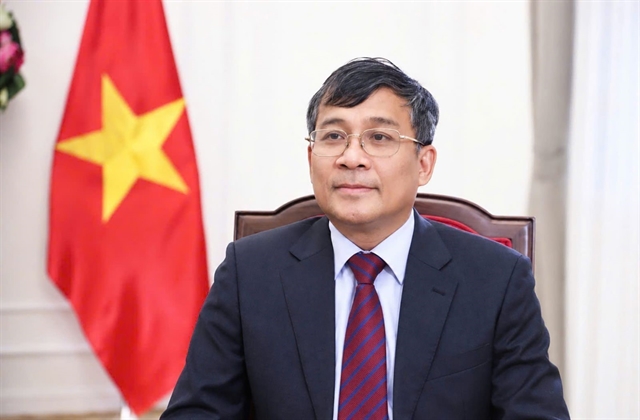
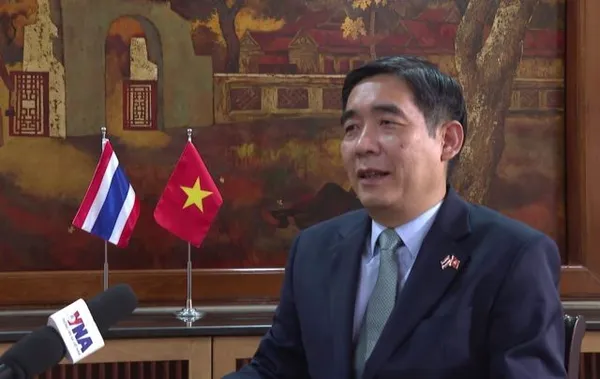
BEIJING – Việt Nam’s hosting of the ASEAN Future Forum (AFF) 2026 reflects its transition from an ''active participant' to an increasingly influential 'agenda shaper' within ASEAN, according to Professor Qu Qiang of the Minzu University of China and commentator for China Global Television Network (CGTN).
Speaking to the Vietnam News Agency’s resident correspondent in Beijing, Qu said the forum’s focus on ASEAN’s resilience and unity demonstrates Việt Nam’s clear understanding of increasingly complex regional and global geopolitical challenges. More than a political slogan, the theme signals a shift towards practical cooperation aimed at strengthening ASEAN’s capacity to respond to external shocks.
The scholar highlighted the inclusion of dialogue among Southeast Asian political parties for the first time, describing it as a breakthrough that expands inter-party engagement from bilateral to multilateral cooperation. He said the initiative reflects Việt Nam’s recognition that traditional intergovernmental mechanisms alone are insufficient to address non-traditional security challenges, which require the involvement of political parties, cities, youth and other stakeholders.
Regarding conflict prevention, Qu said ASEAN is moving towards a more proactive security approach centred on early risk identification, stronger warning systems and emergency communication mechanisms. Amid the prolonged Myanmar crisis, continued complexities in the East Sea and spillover effects from conflicts elsewhere, Việt Nam is helping promote more effective preventive diplomacy within ASEAN, he noted.
Qu also pointed to the forum’s dedicated discussions on artificial intelligence (AI) governance and applications, saying they reflect Vietnam’s ambition to advance an 'ASEAN solution' for technology governance. Such efforts could help ASEAN harness AI for socio-economic development, strengthen supply-chain resilience and play a more active role in shaping global AI standards.
Assessing Việt Nam’s broader role, Qu said the ASEAN Future Forum demonstrates the country’s increasingly prominent functions as an initiator, coordinator and promoter of regional cooperation.
Since proposing the initiative at the 43rd ASEAN Summit in 2023, Việt Nam has consistently invested resources in maintaining the forum as an effective supplementary dialogue channel alongside ASEAN’s formal mechanisms. This approach allows Vietnam to avoid competing with existing ASEAN platforms while creating space for new ideas and initiatives to emerge, he said.
The scholar also noted the significance of AFF 2026 taking place after Việt Nam completed the consolidation of its leadership apparatus for the new term. The event provides an opportunity for the country to reaffirm its foreign policy of independence, self-reliance, peace, cooperation and development, while conveying a message of continuity and stability in both domestic and external policies.
Another noteworthy aspect, according to Qu, is the forum’s emphasis on a people-centred approach, placing it on equal footing with the goals of peace and prosperity. By encouraging participation from cities, young people, businesses and social organisations, Việt Nam is helping broaden the concept of ASEAN centrality from the intergovernmental level to society as a whole, thereby strengthening the connection between regional policies and the interests of ordinary citizens.
Qu further observed that the forum underscores Việt Nam’s growing role as one of the countries helping shape ASEAN’s agenda. Topics such as unity and resilience, conflict prevention and AI governance address some of the region’s most pressing challenges, while new mechanisms, including political-party dialogue and greater participation by cities and youth reflect efforts to modernise regional governance.
According to the scholar, the forum’s greatest value may not lie in resolving current conflicts immediately, but in fostering a habit of strategic dialogue within ASEAN. This, he said, represents a meaningful contribution by Việt Nam to maintaining ASEAN centrality and helping the bloc navigate the impact of intensifying major-power competition. VNA/VNS
Opinion
 Opinion
 Opinion
 Opinion
 Opinion
 Opinion
 Opinion
 Opinion
 Opinion
 Opinion
 Opinion
 Opinion
 Opinion
 Opinion
 Opinion