 Opinion
Vietnamese Prime Minister meets Cambodian National Assembly President
1.
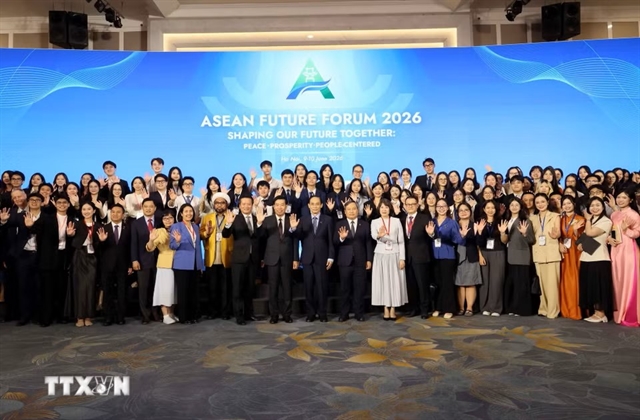 |
| The AFF 2026 is not merely a multilateral gathering but also a clear demonstration of Việt Nam’s growing strategic leadership and international responsibility. VNA/VNS Photo |
KUALA LUMPUR – With the theme “Shaping Our Future Together: Peace, Prosperity and People-Centred,” the ASEAN Future Forum (AFF) 2026 is not merely a multilateral gathering but also a clear demonstration of Việt Nam’s growing strategic leadership and international responsibility.
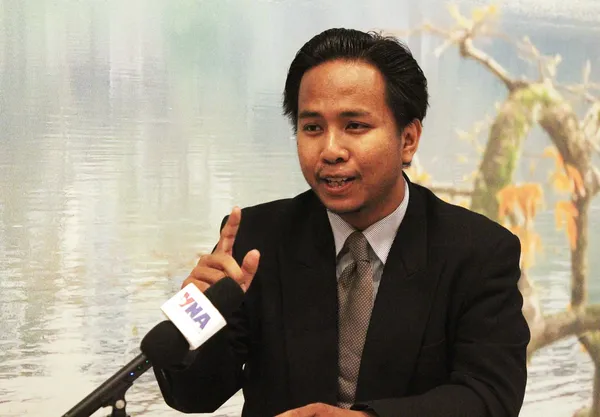
Speaking to a Vietnam News Agency correspondent in Kuala Lumpur, Dr. Julia Roknifard, senior lecturer in international relations at Taylor’s University in Malaysia, said Việt Nam has successfully integrated its foreign policy orientations and strategic vision towards 2030 into the forum agenda.
As a proactive, active and responsible member of ASEAN, Việt Nam has not only contributed to the bloc’s collective voice but also played a direct role in encouraging ASEAN to address long-term challenges facing the global economy.
According to Dr. Roknifard, discussion sessions focusing on contemporary issues as green transformation, the digital economy, artificial intelligence (AI) and supply chain resilience reflect a forward-looking and long-term vision. Rather than merely reacting to global uncertainties, Việt Nam is working alongside ASEAN to proactively position the region as a hub for innovation and high-quality human resources development in the future.
The scholar noted that intensifying competition among major powers, along with the growing risks of supply chain and economic fragmentation, is posing direct challenges to stability in Southeast Asia. Against this backdrop, the theme of this year’s forum serves as a unifying anchor, helping ASEAN member states find common ground.
By prioritising the core values of peace and prosperity, Việt Nam has skilfully guided discussions away from divisive disputes and redirected attention to ASEAN’s fundamental principles. This sends a strong message that the bloc’s success should ultimately be measured by the well-being of its people, thereby helping maintain solidarity and unity within ASEAN.
Roknifard described the continued organisation and elevation of the AFF into a reputable Track 1.5 dialogue platform as one of the most significant achievements of this year’s event. She said the initiative represents a strategic effort to address structural gaps in the region’s policymaking process.
Unlike official Track 1 meetings, which are sometimes constrained by diplomatic protocols and rigid frameworks, the Track 1.5 format provides a flexible platform that brings together government officials, academics, business leaders and representatives of civil society organisations.
This innovation has turned Hà Nội into an important incubator for practical and breakthrough policy ideas, directly supporting the implementation of the ASEAN Community Vision 2045 while making regional governance more adaptive and inclusive.
The Malaysian scholar emphasised that the successful organisation of a forum of such scale and substance not only enhances Việt Nam’s national prestige but also helps reinforce ASEAN centrality in its engagement with external partners.
Việt Nam’s success on the international stage, she said, serves as a direct source of strength for the entire bloc. By creating a high-level strategic dialogue platform within the region itself, Việt Nam has helped ASEAN preserve its autonomy in addressing internal issues.
This ensures that important discussions about Southeast Asia’s future are conducted based on agendas set by ASEAN members themselves.
According to Roknifard, AFF 2026 will leave a lasting mark not only on Việt Nam’s foreign affairs efforts but also on ASEAN’s approach to future challenges. The outcomes of the forum are expected to strengthen the foundations for realising the bloc’s long-term visions and further affirm ASEAN’s position on the global geopolitical and economic map. VNA/VNS
Opinion
 Opinion
 Opinion
 Opinion
 Opinion
 Opinion
 Opinion
 Opinion
 Opinion
 Opinion
 Opinion
 Opinion
 Opinion
 Opinion
 Opinion