 Opinion

Lotte, Phát Đạt combine strengths in Thu Thiem project
1.
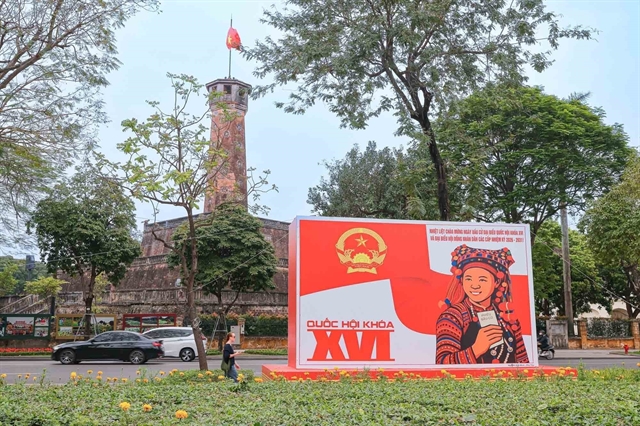 |
| Many streets, residential areas and agencies in Hà Nội capital city are adorned with national flags, banners, posters and slogans promoting the country's important political event – the election of deputies to the 16th National Assembly and the people's councils at all levels for the 2026–2031 term, taking place on March 15. — VNA/VNS Photo Tuấn Anh |
Female leaders spoke to Việt Nam News reporter Thu Trang about the role, position and political participation of Vietnamese women on the occasion of the election for the 16th National Assembly.
In the list of 864 candidates for National Assembly (NA) deputies for the 16th term announced by the National Election Council at the end of last month, more than 45 per cent are female candidates. So how do you assess this rather high proportion of female candidates? How does this affirm the role and position as well as the political participation of Vietnamese women?
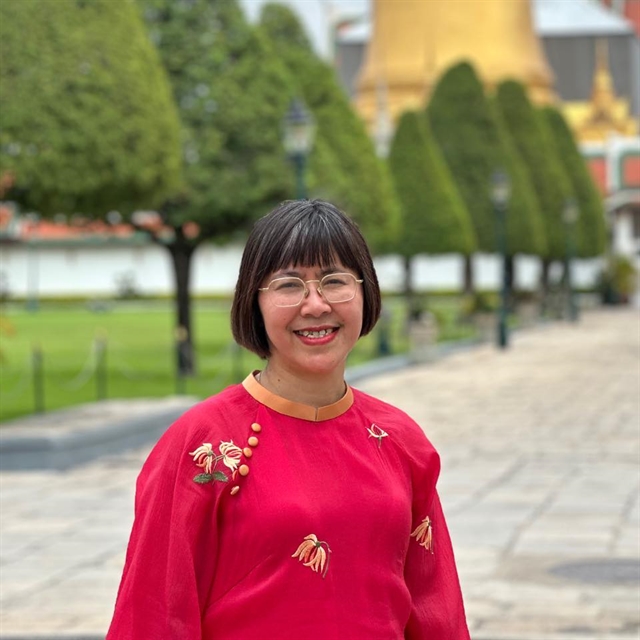
Caroline Nyamayemombe, UN Women Representative in Việt Nam
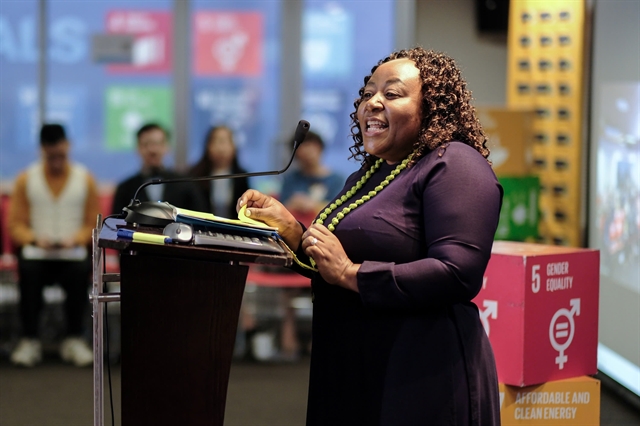 |
| Caroline Nyamayemombe, UN Women Representative in Việt Nam. — Photo courtesy of the UN Women |
The fact that 45 per cent of candidates for the 16th NA are women is a very encouraging and positive development. This is in line with Việt Nam’s electoral law which stipulates that at least 35 per cent of official candidates should be women.
For me this reflects three things.
First, women themselves are interested and capable of contributing to decision making and bringing their perspectives to laws and their implementation for the nation’s prosperity. This usually comes through life experience and courage. Vietnamese women have always shown resilience in confronting challenges at all levels and they can see the results of their contribution to the nation’s growth.
Second, I assume these candidates have been supported by their families. This is a good indication that there is a growing understanding among Vietnamese families that women should play a significant role in public affairs. One of the barriers to women’s participation in politics has been stereotypes around leadership. In many countries, women’s role in family responsibilities is given greater importance than their participation in the political sphere. So many women end up not considering contesting an election.
Third, I think this is a testimony to a new era created by Việt Nam’s strong laws and policies promoting gender equality. Investments made in education and capacity building have helped to create this supportive environment. People in Việt Nam are increasingly recognising that women are capable leaders and decision-makers.
From UN Women’s perspective, this trend confirms the growing role and position of Vietnamese women in politics and it sends an important message to younger generations that political participation is both achievable and valued.
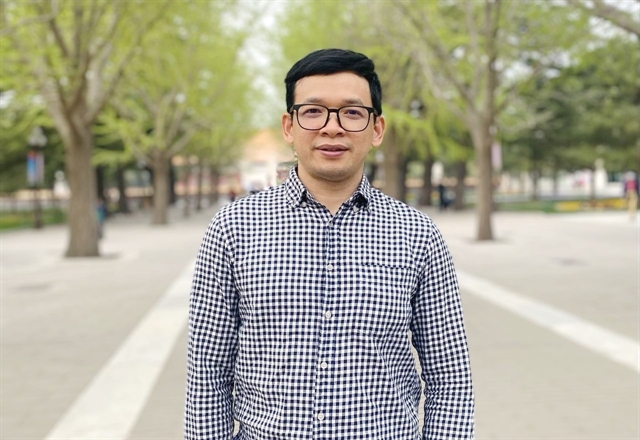
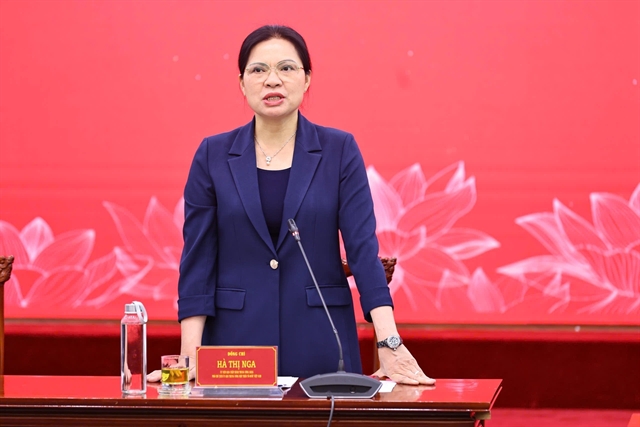
Hà Thị Thanh Vân, Deputy Director of the Việt Nam Women's Academy
When reviewing the list of candidates for NA deputies for term 16, I analysed the relevant criteria myself. Seeing the 45.77 per cent ratio of female candidates (392 out of 864), I had four levels of emotion.
Firstly, I am not surprised as some people have been because this ratio is not too high compared with the regulation, as the regulation only sets the minimum level of at least 35 per cent official candidates are female, and this ratio is also equivalent to that of NA term 15 (45.27 per cent (393/868)).
Secondly, I’m happy because the opportunity gap for women's candidacy over two consecutive terms has reached above the 45 per cent threshold, the threshold considered safe to have at least 30 per cent official female deputies in the NA.
Thirdly, I’m worried that if the stages in the election process, especially voters' choices, do not overcome prejudices, then the ratio of female NA deputies for term 16 may not reach that of term 15 due to the equivalent candidacy ratio but low re-election rate (compared with male re-election, female is 12 per cent lower).
Most are first-time candidates, subject to two double standards: ethnic groups (17.8 per cent higher than males) and non-Party members (6.8 per cent higher than males). On the other hand, this term implements an earlier election timeline than other terms, with consultation rounds two and three before and after the Lunar New Year of the Horse, so organising capacity training and support for first-time female candidates, although still concerned with and implemented by the Việt Nam Women's Union at all levels, also has certain difficulties.
Fourthly, I’m proud because the ratio of female candidates for NA term 16 shows that the role and position of Vietnamese women has clearly changed. On one hand, it proves that women have earnestly participated, contributed effort, intellect and results to the common cause of the nation, people and locality and have been recognised, honoured and given opportunities by the Party, State, local Party committees and local authorities. On the other hand, it shows changes in mindset and perception of equality in society, especially in families that have supported, assisted and created conditions for women to participate and contribute in the fields of political, social and community life.
I believe female candidates will present their action programmes well and demonstrate capabilities from the first voter contact in order to gain trust and support from voters. I also believe voters will be impartial and fair in evaluation, perception and selection of deputies.
How does women's participation in politics contribute to promoting gender equality, improving the quality of public governance and diversifying voices at the parliamentary rostrum?
Caroline Nyamayemombe
Gender equality is about creating equal opportunity and benefit for all people. Achieving this requires a system of governance that is inclusive of all diverse groups of people. So when women participate in politics this helps bring their perspectives, realities and capacities to the table. It contributes directly to more inclusive, responsive and effective governance. Evidence from UN Women and global parliamentary data shows that when women are meaningfully represented, decision-making bodies are more likely to address issues that affect everyday life, such as health, education, social protection, equality before the law and community well-being.
Globally, women currently hold about 26 per cent of parliamentary seats, an improvement over the past decade but still short of parity, underscoring the importance of continued global efforts. In the 15th National Assembly in Việt Nam, women accounted for around 30–31.6 per cent of NA deputies, placing the country among those with relatively high female representation in the Asia-Pacific region.
When diverse perspectives are present in the NA, debates are richer, policies are better informed by lived realities and governance becomes more people-centred and inclusive, benefiting society.
Hà Thị Thanh Vân
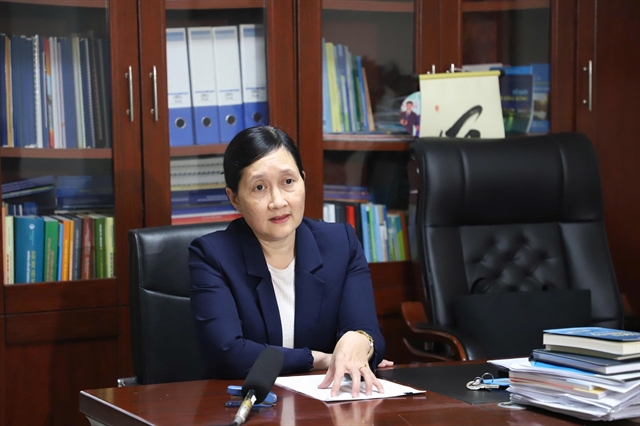 |
| Hà Thị Thanh Vân, Deputy Director of the Việt Nam Women's Academy. — Photo courtesy of the Việt Nam Women's Academy |
The standards to become NA deputies and People’s Council deputies for women and men are the same. Each person has distinct characteristics arising from actual gender and the natural role of father and mother, so when women and men participate together in political activities at equal ratios it not only ensures and promotes gender equality but also means every policy and activity is viewed multidimensionally, from many aspects, considering the gain-loss angles carefully before deciding, always ensuring loss smaller than gain, accordingly bringing high practical value when implemented.
Men and women both have strengths and weaknesses as human beings and as fathers and mothers, but the strengths and weaknesses of one person can combine with those of another in the opposite direction to create higher value in every decision. In other words, women and men participating in politics together create a special strength in balancing decisions and ensuring the best development opportunities at all levels.
How are Vietnamese women being provided with favourable conditions to participate deeply in politics and assume leadership and management positions?
Caroline Nyamayemombe
Việt Nam has done a couple of things right which other countries can learn from to enable women’s deeper political participation. I will reference three that come to mind.
One is having a National Strategy on Gender Equality (2021–2030) that sets clear targets for women’s representation in elected bodies and leadership positions across the political system, public service and business. All these domains create a pathway for women’s participation in politics.
Second, mass organisations like the Việt Nam Women’s Union and Youth Union create a significant platform for engagement of women, offering opportunities for targeted mobilisation, talent identification, training and mentoring of women in politics.
Third are investments in leadership training. The Hồ Chí Minh Political Academy is an example of intentional efforts to provide orientation to future leaders and managers. I do not know if there are specific targets set for training women, but this would be good to ensure the pipeline has enough women. These efforts are also complemented by the development cooperation Việt Nam has with several countries where cultural exchange and people to people diplomacy is actively influencing perceptions of women’s role in society and creating several opportunities for higher tertiary learning for women in science, administration and diplomacy. UN Women, UNDP and UNESCO are some of the agencies contributing to tailored programmes in women’s leadership.
Hà Thị Thanh Vân
As mentioned above, the standards for participating in the political field and assuming leadership and management positions for men and women are the same. However, due to many objective and subjective reasons there remains a disparity in the ratio of participation of men and women in State power agencies, localities and other agencies in the political system.
Accordingly, in recent years the Party and State have issued many guidelines, policies and legal regulations of a temporary nature to promote women's participation, reflected in regulations on the ratio of women participating in Party committees, NA deputies, People’s Councils at all levels and in the management and leadership of agencies and organisations. At the same time, training and fostering activities to improve capacity exclusively for women have also been prioritised. These are measures to promote gender equality. Through that, women's opportunities are increased.
Nevertheless, reality has not yet ensured full gender equality because the nature of gender equality can only be achieved when all activities, legal regulations and policies are carefully reviewed, harmonising aspects related to men and women before decisions are made. Therefore, alongside the measures and solutions already implemented and being implemented, competent entities need to continue paying attention to clearly distinguishing two aspects: social and biological factors that govern actual human capabilities. From there they can determine equal treatment based on similarities in physical structural characteristics and differential treatment based on complete differences between men and women in the natural roles of father and mother in order to create substantive equality in the true sense.
What advantages and difficulties do women face when participating in political activities? What qualities do women need to perform this task well?
Caroline Nyamayemombe
I want to start with the qualities. I really think that to be good leaders both men and women need to develop the same qualities such as empathy for people, analytical and critical thinking, decisiveness, integrity and negotiation and conflict resolution skills. These qualities are important for all leaders across all genders.
Women who participate in political activities may have some advantages and disadvantages in building these qualities because many of them are acquired through learning and experience.
Women in Việt Nam today benefit from greater access to education, labour force participation, commune level structures of engagement and supportive policies such as maternity leave and the Law on Gender Equality.
However, challenges remain in advancing their leadership and meaningful participation. These include a high load of care work within the family, social expectations and gender stereotypes in the public sphere and the marketplace.
So a supportive policy, institutional and social environment is necessary for women to thrive in public life.
Hà Thị Thanh Vân
As human beings and citizens, when participating in political activities women have the same advantages as men in terms of standards and requirements. However, women face more difficulties than men in gaining support from their own family members, colleagues and friends. Social prejudices attaching women's roles to family and children are also a cause that makes not a few women unable to overcome their own barriers. On the other hand, social prejudices tend to push men into society more than women, which also creates gaps in genuine sharing between men and women in family, local, agency and national activities. Narrowing these gaps is not simple without sufficiently strong, impartial and equal measures.
When participating in politics, people in general regardless of gender must meet many standards, criteria and requirements. Among these, clearly understanding issues, having vision and strategic thinking, courage, confidence, self-respect, decisiveness, creativity and awareness of limits are particularly important and indispensable qualities. Women, from the natural role of mother and the process of nine months and ten days of pregnancy, besides the above qualities also have some other special qualities, including sensitivity to even very small changes, meticulousness, caution and tolerance. Therefore, when participating in politics women will continue to promote these qualities in their work environment, creating many unique values that are distinct, sustainable and long-term.
Việt Nam is entering a new era. What recommendations or proposals do you have for women to participate more and more effectively in political activities?
Caroline Nyamayemombe
As Việt Nam moves into a new development phase, continued investment in both systems and people is essential to strengthen women’s political participation.
Key priorities include:
Strengthening implementation of existing gender equality policies and leadership targets under the National Strategy on Gender Equality. These require monitoring and resourcing of initiatives to meet the targets.
Expanding leadership training, mentoring and networking opportunities for women, especially young and first-time candidates and those in public service.
Continuing efforts to address gender stereotypes and promote shared responsibility for unpaid care work, enabling women to also study, travel and network.
Women should rise and shine in the new era of the nation’s rise.
Hà Thị Thanh Vân
Throughout the country’s development, the Party and State have issued many guidelines, solutions, policies and legal regulations on gender equality and specifically for women. Accordingly women have made many changes and have participated and contributed in many fields.
The guidance of the Party and State to date retains full value. In the era of the nation's rise, the 14th National Party Congress also determined to promote the building of Vietnamese women of the new era, promoting traditions, potential, strengths, intellect and the aspirations of women to rise, and actively build progressive, civilised, prosperous and happy Vietnamese families and to pay attention to discovering, training, fostering and utilising talents, building teams of scientific and technical cadres, female cadres, young cadres, ethnic cadres and State-owned enterprise managers.
Accordingly, it is suggested that these important orientations together with existing guidelines and directions in Politburo Resolution No.11-NQ/TW dated April 27, 2007, on women's work in the period of accelerating industrialisation and modernisation, the Party Secretariat's Directive No. 21-CT/TW dated February 20, 2018, on continuing to strongly promote women's work in the new situation, the Law on Gender Equality, and many other documents of the Party and State should receive greater attention for more effective implementation with sufficiently strong, visionary and responsible solutions so that women can participate more effectively in political activities.
In addition, the Việt Nam Women's Union also needs to continue innovating the content and methods of operation, strengthening activities to discover and nurture female cadres and training and fostering capacity enhancement for female cadres and female deputies of Party committees, the NA and People’s Councils to help them know themselves, understand others and act effectively. — VNS
Opinion
 Opinion
.jpg) Opinion
Opinion
 Opinion
 Opinion
 Opinion
 Opinion
 Opinion
 Opinion
 Opinion
 Opinion
 Opinion
 Opinion
 Opinion
 Opinion