 Society
Vietnamese Prime Minister meets Cambodian National Assembly President
1.
|
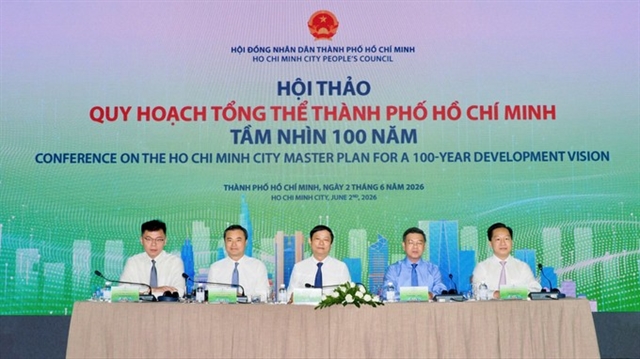
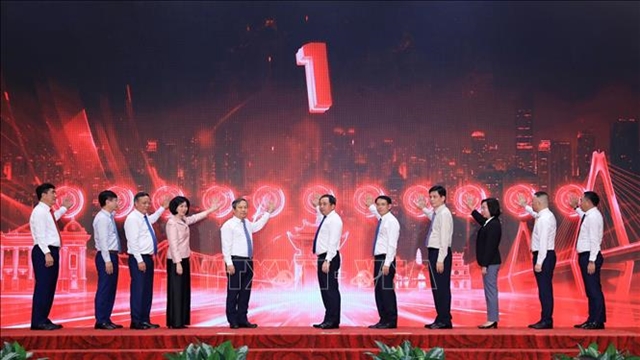
| Officials, planners and experts attend the first workshop on HCM City's 100-year master plan on Tuesday. — VNA/VNS Photo |
HCM CITY — HCM City aims to become one of the Asia-Pacific region's leading economic, financial and innovation hubs under a new master plan with a 100-year vision, as Việt Nam's largest metropolis seeks to manage rapid growth while preparing for long-term challenges such as climate change and global urban competition.
City officials, planners and experts gathered on Tuesday for the first workshop on the master plan, which is being developed following the recent expansion of HCM City into a super-city of more than 6,700sq.km and over 14 million residents.
The planning initiative follows Politburo Resolution No. 09 on the construction and development of HCM City in a new era, which calls for a comprehensive master plan with a century-long outlook to unlock the city's full potential and create new growth drivers.
The move comes after Hà Nội became the first locality to adopt a master plan with a 100-year vision, as Việt Nam's two largest cities seek to prepare for demographic, economic and climate challenges that extend beyond traditional planning horizons.
Speaking at the event, Võ Văn Minh, chairman of the city People's Council, said the expanded city had emerged as Việt Nam's largest growth engine and one of Southeast Asia's most important investment destinations.
The city currently contributes more than 23 per cent of the country's GDP, over 30 per cent of State budget revenue and 20.7 per cent of total import-export turnover, while serving as the nation's leading financial, commercial and innovation centre.
Challenges
However, officials and experts said the city's growing scale had also presented unprecedented challenges.
The merger of HCM City with neighbouring development areas transformed the urban region into one of the largest metropolitan areas in Southeast Asia, creating increasing pressure on transport infrastructure, housing, public services and environmental management.
Experts warned the city must also prepare for climate change, land subsidence, demographic shifts, economic restructuring and intensifying competition from regional cities seeking to attract investment, technology and skilled workers.
Dr Phạm Viết Thuận, director of the HCM City Institute of Economics, Resources and Environment, said these challenges required a planning horizon far beyond the conventional 20- to 30-year framework.
"The city is evolving into a regional super-city with a very large population and geographical area," he said. "Challenges such as climate change, land subsidence, economic transformation, population ageing and competition among global cities all unfold over much longer cycles."
He said the city needed a master plan that would serve as an "urban development charter" capable of guiding spatial development, infrastructure, environmental protection and economic transformation for generations.
Under the draft framework, HCM City is projected to have a population of 20-22 million by 2050 and an economy worth around US$1.2 trillion, with average annual GRDP growth of at least 10 per cent between 2025 and 2050.
By mid-century, the city aims to rank among the world's top 100 cities for quality of life and become a major Asia-Pacific centre for finance, trade, logistics, tourism, education, healthcare, science, technology and innovation.
Officials said the city would adopt a multi-centre development model supported by modern transport networks, smart governance systems and climate-resilient infrastructure.
Strategic growth pillars
The master plan identifies five strategic growth pillars: high-tech industry, logistics linked to seaports and airports, an international financial centre, tourism and cultural industries, and education, healthcare, science and technology.
Thuận proposed concentrating development around four key economic engines: an international financial centre in the urban core, an innovation hub in the former Thủ Đức area, advanced manufacturing in the northern development belt and a marine economy cluster in the city's southeastern coastal zone.
He also recommended organising the expanded metropolis around five strategic spatial zones, including a global urban core, a smart manufacturing corridor, a maritime economy belt, ecological reserve areas and a network of satellite cities designed to reduce pressure on the city centre.
Environmental planning would be critical to the success of the century-long vision, experts said.
"A city planned for the next 100 years cannot be measured by GDP alone," Thuận said. "It should also be measured by commuting times, air quality, green space, access to healthcare, education and culture, and housing affordability."
He called for preserving waterways, protecting mangrove forests, particularly in Cần Giờ, and developing flood-adaptation infrastructure capable of helping the city cope with rising climate risks.
Experts at the workshop were also asked to provide recommendations on regional connectivity, urban restructuring, environmental protection and governance reforms, with the final master plan expected to serve as the overarching framework for the city's development over the next century.
The long-term vision is for HCM City to become one of the most sustainable, innovative and liveable super-cities in the Asia-Pacific region while balancing economic growth with environmental protection, social inclusion and cultural preservation. — VNS
|
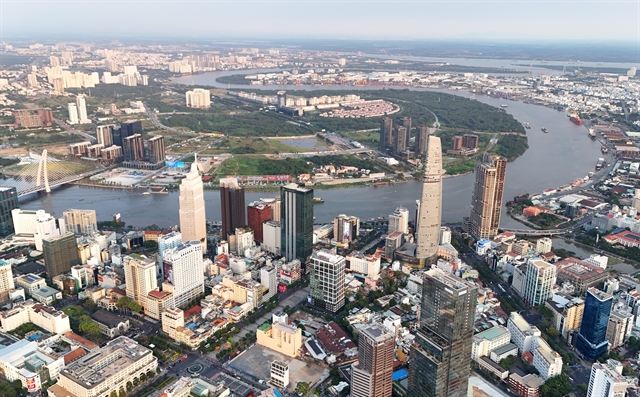
| The skyline of HCM City. The city is preparing a 100-year master plan aimed at transforming it into one of the Asia-Pacific region's leading economic, financial and innovation hubs. — VNA/VNS Photo |
Society
 Society
 Society
 Society
 Society
 Society
 Society
 Society
 Society
 Society
 Society
 Society
 Society
 Society
 Society