 Society
Vietnamese Prime Minister meets Cambodian National Assembly President
1.
|
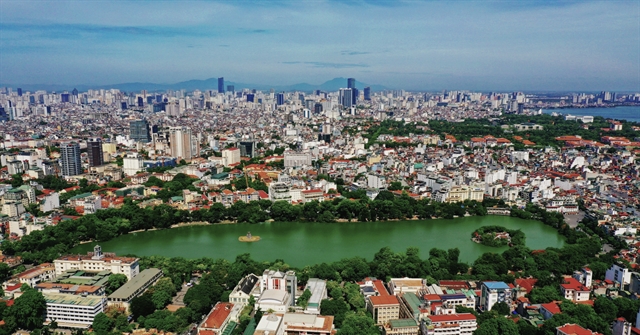
| The historic Hoàn Kiếm area is set to be the first to experience the implementation of low-emission zone. — VNA/VNS Photo |
HÀ NỘI — The Hà Nội People's Council has once again postponed approval of a proposal to establish a low-emission zone (LEZ) within the capital's densely populated Ring Road 1 area, requesting further study and refinement of the plan.
Speaking at the council's third session on Tuesday, Vice Chairman Trần Thế Cương said the municipal People's Committee had submitted a proposal on May 29 seeking approval for a resolution on the "Low-Emission Zone in Ring Road 1, Hà Nội."
The proposal – aimed at addressing the city's persisting air pollution issues – is accompanied by policies aimed at supporting the adoption of clean-energy vehicles, encouraging the use of public transport and reducing the operation of polluting vehicles.
The council had previously declined to consider the proposal during its second session on May 11, citing insufficient information and documentation.
Under a revised submission made on May 29, the city no longer proposes banning petrol-powered motorcycles within the pilot area. Instead, both commercial and private fossil-fuel-powered motorcycles would be "encouraged" to limit their operations. The revised plan also expands the list of vehicle restrictions to be applied during certain hours in the proposed low-emission zone.
The implementation roadmap remains unchanged and is divided into three phases.
The first phase, running from July 1 to December 31 this year, would pilot the low-emission zone in the historic Hoàn Kiếm Ward, called the "core area" in the proposal. This core area is bounded by 11 streets, including Tràng Tiền, Hàng Khay, Lê Thái Tổ, Hàng Đào, Hàng Ngang, Hàng Buồm, Mã Mây, Hàng Bạc, Hàng Mắm, Nguyễn Hữu Huân, and Lý Thái Tổ.
Within this zone, all road vehicles, including motorcycles, motorbikes and cars, would be prohibited from entering between 7pm and midnight on Fridays, Saturdays and Sundays.
A second area covering much of the Old Quarter would be enclosed by Tràng Thi, Phùng Hưng, Hàng Đậu, Trần Nhật Duật, Trần Quang Khải, Tràng Tiền, and Hàng Khay streets.
Priority vehicles and those with permits issued by competent authorities would be exempt from restrictions.
Ride-hailing motorcycles using fossil fuels would be encouraged to reduce operations, while private petrol-powered motorcycles would be encouraged to switch to cleaner energy sources and comply with future emissions standards set by the Government and city authorities.
The city government said the softer approach towards ride-hailing motorcycles reflects concerns about the social impact on technology-platform workers, delivery drivers and others who depend on such vehicles for their livelihoods.
Under the second phase, from January to December 2027, the pilot area would be expanded to cover Hoàn Kiếm and Cửa Nam wards. The third phase, from 2028 to 2029, would extend the low-emission zone across the entire Ring Road 1 area.
Support package scaled back
The revised proposal also significantly reduces direct financial support for vehicle conversion.
Earlier drafts had included cash subsidies for residents living within Ring Road 1 and for poor and near-poor households citywide to replace fossil-fuel-powered motorcycles with cleaner alternatives.
According to an appraisal by the People's Council's Science and Technology Committee, the original support package was expected to require more than VNĐ6.4 trillion (about US$243 million) from the city budget between 2026 and 2030. The committee requested additional assessments of funding sources and the city's ability to balance its budget.
Facing mixed public reactions, the municipal People's Committee has removed direct cash assistance for residents within Ring Road 1, as well as general fee and charge reductions linked to vehicle conversion.
The revised draft instead focuses support on vulnerable groups, particularly poor households across the city. Assistance would include preferential loans, interest-rate support and measures to encourage greater use of public transport.
The estimated budget requirement for these revised measures has been reduced to approximately VNĐ1.045 trillion. — VNS
Society
 Society
 Society
 Society
 Society
 Society
 Society
 Society
 Society
 Society
 Society
 Society
 Society
 Society
 Society