 Society
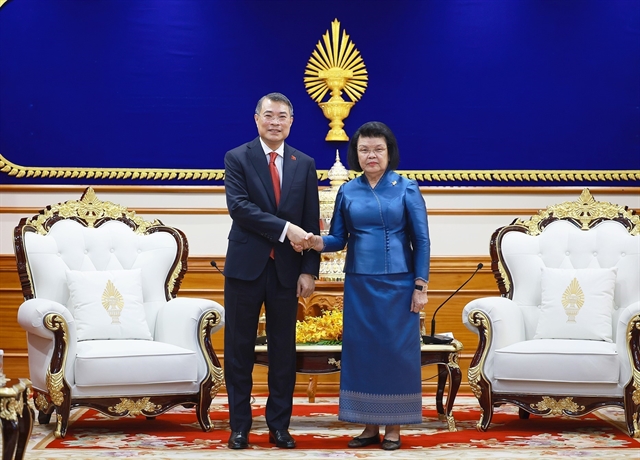
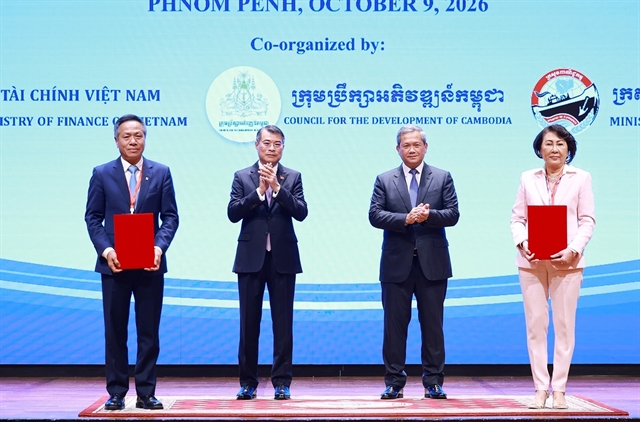
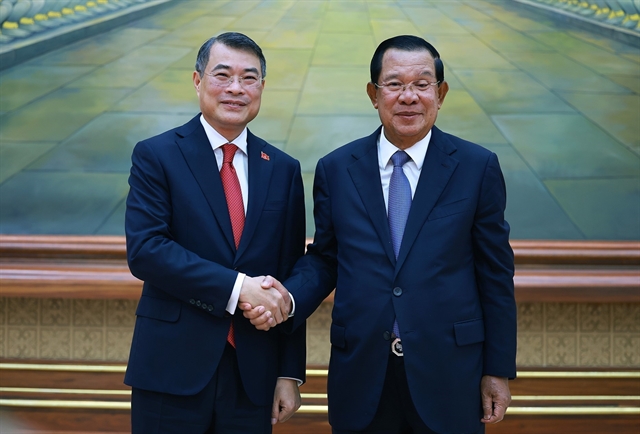
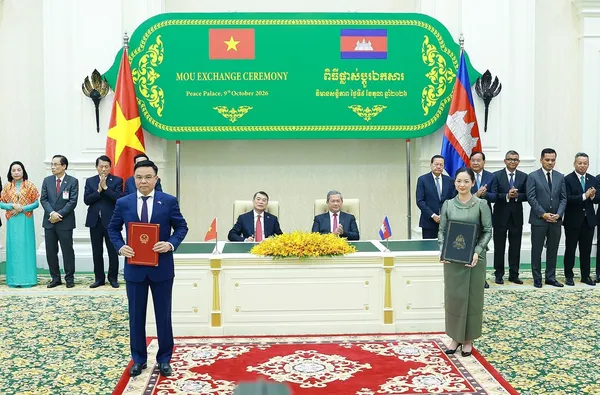
Vietnamese Prime Minister meets Cambodian National Assembly President
1.
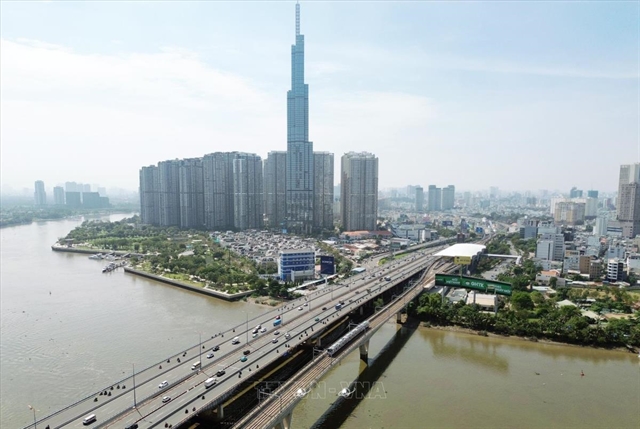 |
| HCM City’s Metro Line No.1. The city is shifting towards a multi-centric urban model interconnected by mass public transit to reduce reliance on personal vehicles. — VNA/VNS Photo Quốc Khánh |
HCM CITY — The Politburo’s Resolution No 09-NQ/TW on building and developing HCM City in the new era is set to fundamentally reshape the southern metropolis by driving Transit-Oriented Development (TOD) and a knowledge-based economy.
Experts and policymakers view this landmark resolution as a structural breakthrough, providing the essential legal and institutional frameworks to transform the city into a regional economic, financial, and innovation hub.
For decades, the city has expanded horizontally. Residential areas have sprawled into the suburbs, while high-rises and commercial centres have crowded the inner city.
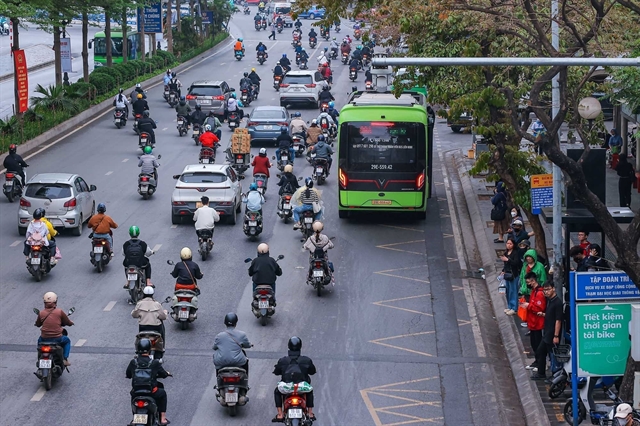
Because public transport failed to keep pace with this expansion, the city became heavily reliant on private vehicles.
This imbalance has triggered severe consequences across the megacity.
First, severe traffic congestion and prolonged commute times cause substantial economic losses by directly lowering workforce productivity.
Second, the heavy reliance on personal vehicles inflicts a deep environmental strain through worsening air pollution.
Finally, widespread infrastructure overload heightens social pressure by increasing daily stress and reducing the residents' overall quality of life.
Therefore, restructuring urban space is no longer just a traffic management task. It is a vital requirement to sustain the city's economic competitiveness.
Metro networks as backbone of urban planning
Resolution 09 shifts the city's planning focus from short-term traffic solutions to a long-term, 100-year vision.
The core strategy is TOD. This model organises the megacity into multiple urban centres, all interconnected by a high-volume public transport network.
Global metropolises like Tokyo, Seoul, and Singapore demonstrate that mass transit must serve as the backbone of a competitive economy.
Metro lines do not just transport passengers; they shape how land is used, where populations settle, and how commercial zones develop.
As the city develops its urban railway network, including Metro Line No 1, new economic zones will naturally form around transit stations.
This alignment reduces overall transport costs, optimises land use, and opens up clean land funds for high-value development.
The core of TOD lies in fundamentally rearranging urban life.
Under this model, essential spaces such as housing, workplaces, schools, and hospitals are all strategically located within walking distance of mass transit stations.
By placing daily necessities close to public transport, this approach effectively removes the necessity for private vehicle ownership.
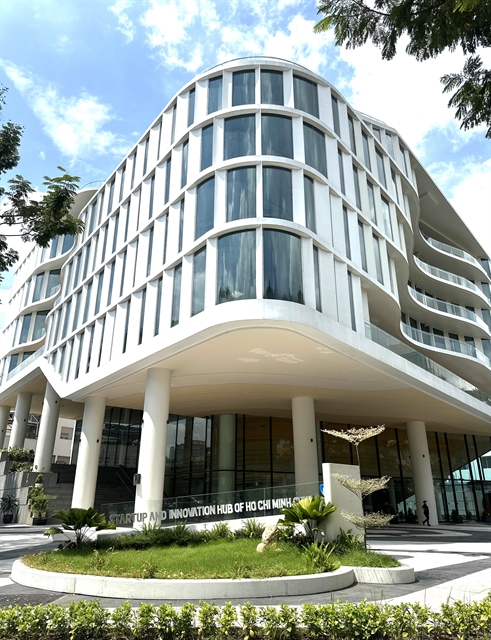 |
| The HCM City Startup and Innovation Hub is a key institutional platform dedicated to supporting tech start-ups and advancing the city's digital economy goals under the Politburo's Resolution 09. — VNS Photo Nguyễn Diệp |
Driving growth through technology and data
To maintain its role as the nation's economic engine, the city must transition from traditional infrastructure expansion to a growth model driven by science, technology, and digital data.
Resolution 09 elevates science and technology to primary growth drivers.
To support this shift, the upcoming Special Urban Law must grant the city the power to establish legal ‘sandboxes’.
These controlled environments will allow the city to pilot emerging technologies—such as Artificial Intelligence (AI), fintech, blockchain, and autonomous vehicles—without being delayed by rigid, outdated administrative procedures.
In a modern smart city, digital data is as critical as physical infrastructure.
According to experts, the new legal frameworks must ensure open data access, seamless sharing across government agencies, and effective public data management. Without a unified data foundation, building an efficient digital government is impossible.
Cultivating high-quality human resources
The city aims for the digital economy to contribute 40 per cent of its Gross Regional Domestic Product (GRDP) by 2030.
To achieve these goals, upgrading the local workforce has become a critical priority for the city.
As the city transitions into a new development phase, it aims to increase the digital economy's share to 40 per cent of its Gross Regional Domestic Product (GRDP) by 2030.
While the current high-tech workforce only meets the national average – which remains insufficient to compete globally – the city plans to have over 50 per cent of its workforce certified in high-tech industries to match the standards of major hubs like Seoul (in South Korea) and Taipei in Taiwan (China).
Shifting away from its standard economic trajectory, the city is targeting a minimum annual GRDP growth rate of 10 per cent to secure long-term, sustainable development.
To close the skills gap in high-tech fields like semiconductor design and AI, the city must shift from simply offering financial incentives to building a collaborative ecosystem.
A recommended solution is the ‘training alliance’ model.
Under this setup, major tech corporations receiving investment incentives must partner with local universities, such as Việt Nam National University-HCM City, to transfer technology and co-develop training programmes that meet international standards.
The resolution goes beyond introducing temporary, specific incentives. Instead, it creates a brand-new institutional foundation designed for a massive megacity region.
The city aims to become a modern, dynamic, and innovative metropolis, serving as a leading economic and cultural hub in Asia by 2045.
By 2075, it envisions evolving into a global smart city with high living standards, strong climate resilience, and a sustained annual GRDP growth rate of at least 10 per cent.
Ultimately, the true value of the city’s massive infrastructure projects—including the metro network and the upcoming Cần Giờ deep-sea superport—extends far beyond physical construction.
These projects represent the city's political determination to completely re-engineer its future for generations to come. — VNS
Society
 Society
 Society
 Society
 Society
 Society
 Society
 Society
 Society
 Society
 Society
 Society
 Society
 Society
 Society